Friday, May 24, 2013

CLP BREASTFEEDING STORY DESIGN WORKSHOPS END

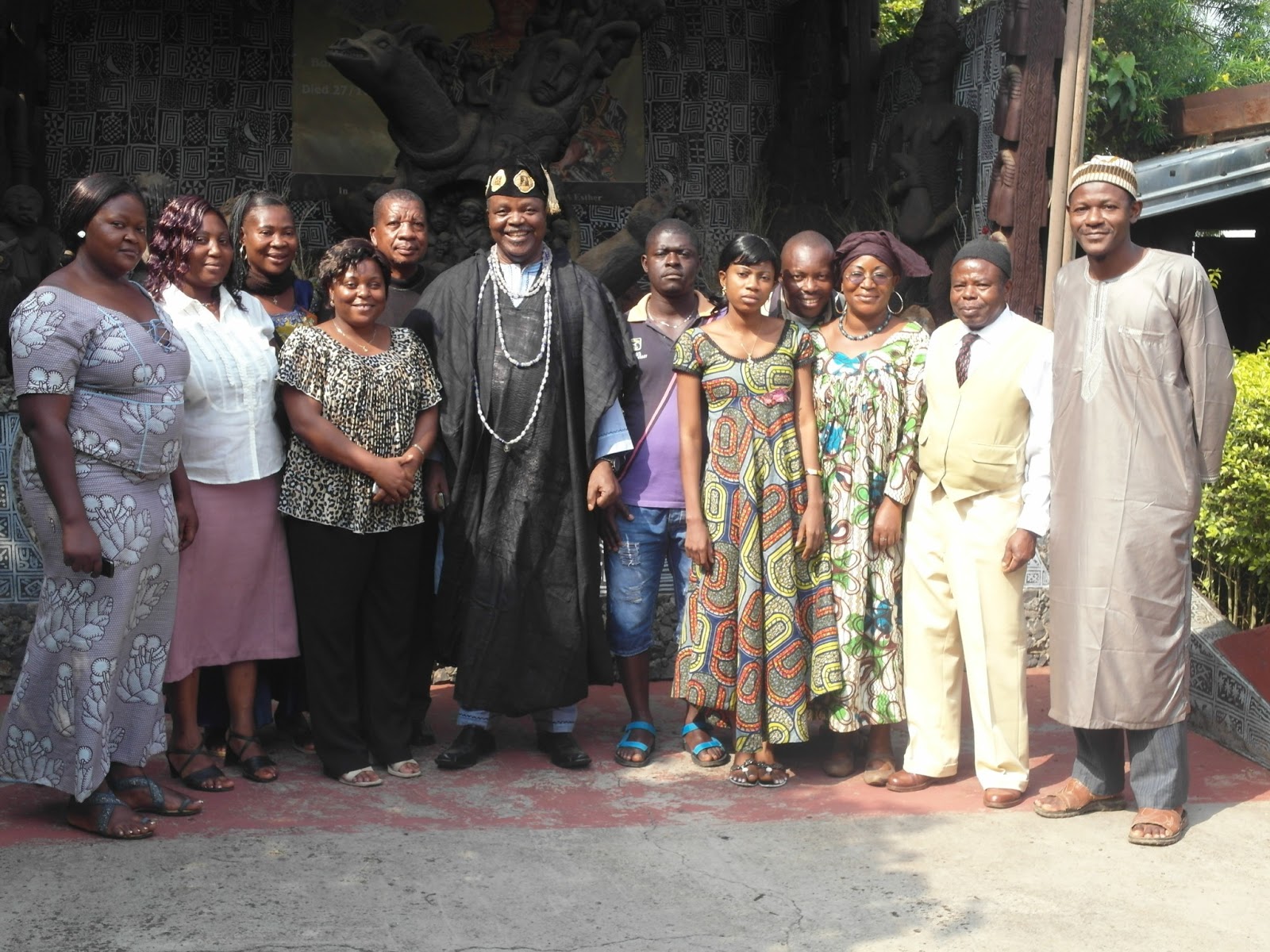
By Cooh Odette Behn, camlink Douala A 3-days workshop ended at the Ocean City Radio Kumba in the south west region of Cameroon on 16th May 2013. The training was a platform for exchange between COL Cameroon link partnership initiative and the radio production staff on how to ameliorate the process of designing health programmes targeting pregnant women and breastfeeding mothers. Welcome the facilitators and trainees, the Station Manager, Richard Shengang, it was a great learning opportunity for the volunteer-broadcasters, most of who are holders of a first degree but never received any training in journalism. He reminded the radio staff that the training had been announced in the CLP Cameroon plan during the training organized at the Women’s Empowerment Centre in Kumba last January 2013. Mr. James ACHANYI FONTEM, COL Cameroon link partnership liaison and key training resource person explained that the development of underprivileged communities and their wellbeing through healthy community initiative is the awaited outcome of open distance learning using community radio stations. Four community radio stations in four health districts of two regions in Cameroon have benefited from the training on radio story design programming on mother and child health care with special focus on breastfeeding. The southwest and west regions were selected for the start of the scaling up phase of the project in Cameroon. Infant and young child feeding and especially breastfeeding was agreed upon as the issue of discussion and investigation by the broadcasters. The resource person justified the choice with the fact saying, statistics have shown that only 20% of the Cameroonian women breastfeed their children exclusively for the first six months after delivery and there is a call for concern to improve on the rate through behavior change communication initiatives. Breastfeeding, he continued is a natural way that guarantees food security and safety of babies since it promotes attachment of baby to the mother and encourages normal growth. The trainees received some tips on how to come up with good and attractive programmes through formative research, involvement of the listeners who are the beneficiaries and health experts. The broadcasters were trained on the techniques of conducting face to face interviews with mothers, pregnant women and experts on the subject. Men and youths were also interviewed in the process to talk about their roles and how they contribute in assisting mothers. He added that throughout the process in Bonakanda, Medumba and Bare Bakem, programme coordinators were encouraged to exchange their productions with other community radios to increase variety of programmes on the issues treated. He observed that, this consequently leads to an increase in the radio audience. At each station the trainees went to the field in groups of four to practice what they learnt during the training and how to research for materials to build programmes. In Kumba, Group one treated the issue of exclusive breastfeeding, while group two tackled the issue of breastfeeding in emergency situations. In Bangangte, the programme focused on preparation of the world breastfeeding week in medumba langauge. The programme from Bonakanda was in pidgin and in Bare Bakem the programme was produced in French. The broadcasters talked to people in the hospitals, health centres, handicapped persons centre, food markets, administrative offices and the streets in the different localities. Kumba for example has a population of 600.000 inhabitants and 75% are farmers and over 60% are women involved in petit trading. Men interviewed approved of the fact that it is their duty to encourage their wives to breastfeed children and assist them at home, but very few accomplish their responsibilities. When the broadcasters returned to their stations, they were given the opportunity to exchange on the material gathering process, the difficulties faced in accessing information and how they resolved them. After editing the voices collected, the team members put their heads together to construct the script production and mixing. Speaking about difficulties, it was observed that many people are shy to speak when the recorder is shown to them. Some fear to make mistakes but were advised to speak in the language they master. On the other hand, some women think breastfeeding is a matter of choice and not a child right. A woman said, a person can chose to breastfeed or choose not to do so depending on the circumstance.. During the workshop evaluation, broadcasters expressed their satisfaction. Many said, the training got them not only to increase their knowledge on how to inform the public rightly through CLP, but they as learners benefited a lot on how to come out with good and attractive programmes. The polite and friendly approach, they stated, is one of the tools for collecting interviews. The trainees through the station managers, expressed their thanks and gratitude to the Commonwealth of Learning and Cameroon link for creating the great learning opportunity on how to develop health programmes on mother and child issues, A participant added that the knowledge gained will be useful throughout their lives. Certificates of participation were handed over to the trainees at the closing session on the third day of the workshop.

Cooh Odette Behn Joins Cameroon Link Team

By James Achanyi-Fontem, camlink99@gmail.com Farm Radio International (FRI) has engaged the Services of COOH Odette Behn as Media and Broadcasters Liaison Officer to join the Cameroon Link team in Bonaberi-Douala. Odette has a BSc in Social Communication. This job position was created to support Cameroon Link, acting as the FRI Focal Point and strategic partner in Cameroon. The engagement got into effect on the 15th May 2013 and covers a period of 12 months. It is valued at US $ 7000. The Responsibilities of Cooh Odette Behn, Media and Broadcasters Liaison Officer include to : Gather stories, images and sounds from our work with broadcasters and farmers for use in our social media and communication materials •Expand the number of radio practitioners that make regular use of FRI’s resources for broadcasters. This will involve identifying, contacting and sometimes meeting with hundreds of radio producers, hosts, reporters, presenters etc and encouraging them to join FRI’s Farm Radio Resource Packs program, Farm Radio Weekly and Barza. •Support radio practitioners in making regular, productive use of resources for broadcasters by contacting them, orienting them to the resources, assisting them in adapting, using and sharing the resources, and contributing their own resources to the network •Provide feedback to FRI team on how resources can be improved/enhanced so they better meet the day-to-day needs of rural broadcasters. •Strengthening and Follow up relationships with partner Radio stations in the usage of Farm Radio Resource Packs, Barza training and E-learning courses. •To measure impact and make a continuous assessment in Cameroon on Farm Radio Resource Packs (FRRPs). The skills required for this job include: •Strong media skills, including photography, video, interviewing and writing short stories about farming, rural families, and radio broadcasters that serve them •Excellent networking and communication skills •Regular, reliable, documentation of activities and communication with central office •Able to manage time and meet deadlines •Excellent coaching, mentoring and facilitation skills •Knowledge of rural radio and experience in development communications •Respect and appreciation of work of farming women and men. FRI is a non-profit corporation and a registered Canadian Charity (registration number 11 888 4808 RR001). Its mission is to support broadcasters in developing countries to strengthen small-scale farming and rural communities. FRI develops radio scripts, information packages, a weekly electronic news service, and an on-line community called Barza, and share them with hundreds of African broadcasters. They, in turn, use these resources to research, produce and present relevant and engaging programs for their audience of millions of farmers. These resources are: •aimed at increasing food supplies and improving nutrition and health; •simple, safe, affordable and practical; •ecologically sound and environmentally sustainable; •suitable for communication by radio; •proven useful and transferable within the developing world; •appropriate to both female and male small-scale farmers. FRI intermediary and focal point, Cameroon Link is a national umbrella NGO of professional dialogue groups of communication specialists, journalists, agriculture, health and social welfare workers. It was put in place following a crucial lack of good circulation of information on self-help development policies, social welfare, infant and young child nutrition and food self-sufficiency in Cameroon. Cameroon’s target audience through community radio is 20,000,000 listeners, 65% of who are peasant farmers and breeders with very low income sources. Cameroon Link was broadcasting partner with Developing Countries Farm Radio Network Canada for over 20 years before becoming a strategic partner of Farm Radio International.

Tuesday, March 12, 2013

COL CLP Targets Commonwealth Day for Outreach

Women’s Emancipation at the Centre of Open Day By Cameroon Link, Email: camlink99@gmail.com Commonwealth Day was an opportunity to promote understanding on global issues, international co-operation and the work of the Commonwealth of Learning partners in Cameroon.The open door workshop at Cameroon Link aimed at highlighting the impact of the community of learning programming with the involvement of community radio broadcasters and women's development groups to improve the lives of citizens. Over the past years, the day has been an opportunity to learn and explore both the history of the Commonwealth association as well as current concerns that are common to all nations of the Commonwealth Family. COL Cameroon Link Partnership team joined the rest of the international community in celebrating the Commonwealth Day 2013 against a backdrop of what officials described as promoting the strides in women’s emancipation with the creation of labour opportunities. An open day was organised at Cameroon Link head office in Bonaberi-Douala, to show case the work realised with the community of learning partnersship since October 2010. Colourful events took place in most of the English speaking communities of Cameroon after the launching ceremony in Yaoundé presided at by the Minister Delegate in the Ministry of External Relations in charge of relations with the Commonwealth, Joseph Dion Ngute, during which he highlighted the achievements in Cameroon since its admittance into the Commonwealth family. Cameroon Link focused its presentation during the reception of visitors at its office on “Women as agents of change”. Its on-going community of learning initiative, outreach meetings and workshops, emphasis is put on the preparation of the PCF7 in Abuja, Nigeria this year. Talking to Canal 2 Tv International prime time news in English and French on Commonwealth Day, the COL Cameroon Link Partnership Liaison, James Achanyi-Fontem, highlighted was Cameroon has benefited and is benefiting by being a member of the Commonwealth family. The open door made it possible to review passed activities, successes and weaknesses, while planning for the future. The healthy communities’ activities including the involvement of community radio stations for informing and educating women on maternal and child health care issues is gaining ground as more mothers attend health facilities for medical check-ups. The issue on the agenda of story design training in Kumba, English speaking south west region and Melong, the French speaking territory of Cameroon was “Breastfeeding”. A good number of programmes have been conceived and in-house training within four selected community radio stations: Ocean City Radio Kumba, Radio Bonakanda in Buea, Radio Medumba in Bangangte and Radio Bare Bakem, has been planned to take place before the end of the project in June 2013. Cameroon Link received over 100 visitors on the Commonwealth Day and these were persons from media, women’s, youths’, and civil society development organisations. So far, 12 community radio stations have been engaged in the process of producing story design programmes on mother and child health on a weekly basis in the official English, French and national languages. Speaking to Commonwealth partners in Yaoundé, H.E. Dion Ngute, said Cameroon could not afford to be indifferent to the core values of the Commonwealth which among others include gender equality, development and good governance. He said although the number of women in positions of authority still remains low vis-à-vis their proportion in the country’s population, strides have been made and that with on-going reforms and programmes, there was hope in the horizon. Cameroon has a ministry in charge of Women’s Empowerment and the Family and women have been appointment to top positions increasing the number in decision-making bodies. Workshops are being organised regularly with the support of the Commonwealth of Learning to empower them on how to improve on their well-being. The British High Commissioner to Cameroon, Bharat Joshie, highlighted the non-negligible contribution of women in development, promising Britain’s unwavering support to girl-child education. Selected female artists and actors, in song and dance, showcased the prowess of the popular folk which was variously described as indispensable for socio-economic development of a country. One of the high points of the celebration was the reading of Queen Elizabeth II’s speech on the occasion in which she lauded the great role played in making society better. “While some people use this day to acknowledge the love, admiration and respect for the Commonwealth, others use it to remember the great social and political strides made. A gaint march past was organised in Yaounde Douala and Bamenda, to celebrate the Commonwealth Day. It was attended by several government ministers from External Relations, Youths and Civic Education, Basic Education, Culture, Secondary Education, and the Minister Delegate in Charge of the Commonwealth. High Commissioners and representatives from diplomatic missions of Commonwealth countries were also present at the event.

Monday, March 11, 2013

GENDER AGENDA GAINS MOMENTUM

COL CLP International Women’s Day Outreach in Douala,Cameroon Cameroon Link added a CLP touch to the global march for A Life Free From Violence Against Women and Girls during the International Day of Women celebrated on March 8 in Bonaberi-Douala. This is the global day to celebrate the economic, political and social achievements of women past, present and future. Women's rights have improved a lot over the last decades, with more women accessing equitable opportunities, resources and life prospects but this is not enough as yet many women particularly in Cameroon are still not able to shape their own lives and contribute to the development of their families and communities as they would like. With the community of learning (CLP) initiative supported by the Commonwealth of Learning, a one-day workshop was organized in Bonaberi-Douala to highlight progress realized through advocacy, information, education and communication actions with community radio stations in Cameroon. During the presentations and exchange of views, participants agreed that there are still immense disparities that exist between males and females; hence the urgency to accelerate efforts to empower women and girls to fully participate in the economic and social development of their communities. This year’s IWD theme “elimination of all forms of violence against women and the girl child” very appropriately seeked to raise awareness on the need to provide women with the opportunity to participate fully in society, on equal terms with their male counterparts. Cameroon Link’s mandate is to protect, promote and support optimal infant and young child nutrition within the clp partnership agreement with the Commonwealth of Learing. The women’s march this year was a collective global effort to respond to the theme of the United Nations focused on the advances States have made in the elimination and prevention of all forms of violence against women and girls. To this end we advocated that Cameroon needs to respond, protect, and prevent violence against women and girls in all their diversity. The women from all walks of life gathered in various regional headquarters of Cameroon as bearers of various affirmations on development, peace, political and gender equality, employment, education access and human rights as they passed along their capital cities. One of the partnership initiative areas is on promoting Maternity Protection and this fits with this year’s IWD theme on gender equity and employment. This gives us an opportunity to bring to the fore the importance of putting into effect strong maternity protection in the workplace in order to safeguard women's employment and income security during and after maternity. Maternity protection is also essential for ensuring women's access to equality of opportunity and treatment in the workplace, and progress towards Millennium Development Goal 3: promoting gender equality and women's empowerment. Furthermore, maternity protection is important in promoting the health of the mother and the child through breastfeeding; thus contributing to the achievement of Millennium Development Goals 4 and 5, which seek to the reduce child mortality and promote improvement to the health of mothers. Strengthening maternity protection and extending it to all women in all types of economic activity is an important goal, as well as ensuring it is implemented as extensively as possible. Maternity protection has two aims: • to preserve the health of the mother and her newborn; • to provide a measure of job and income security (protection from dismissal and discrimination, the right to resume work after leave, and maintenance of wages and incomes during maternity) The most recent standard available for the protection of working women is the Maternity Protection Convention No. 183 (2000) and Maternity Protection Recommendation No. 191 (2000). Convention No. 183 broadens the scope of coverage to include all employed women, including those women employed in so‐called atypical forms of employment, which is, women who work on fixed term contracts; casual, contract, seasonal and part‐time workers, home workers, piece workers, temporary agency workers; unorganized and informal employment, who often receive no protection, as well as extending to them entitlement to 14 weeks of leave. This wider scope of Convention No. 183 is of critical importance in ensuring the health and well‐being of greater numbers of women workers and their children worldwide. Cameroon Link made a call for the government to: 1. Take concrete steps to end impunity! 2. Fund Gender Equality and Human Rights initiatives! 3. And Protect Women Human Right Defenders! More than 30 organizations, many of whom are partners of the Cameroon Link umbrella network, the Federation of Cameroon Breastfeeding Promotion Associations (FECABPA) and the Cameroon Association of Broadcasters (CAB) responded by demanding that the government should rise to the challenge. Women’s Development Group leaders who participated in the community of learning one day workshop on International Women’s Day concluded that, it was a day of challenges, often rolled into one. In realising how far we have come towards ensuring genuine equality of opportunity for women as for men, it becomes clear how far we still have to go. Statistics reported in Cameroon show that it is one of the countries in which 10% percent of women experienced sexual violence – a figure which is too high. There are parts of the country where no less than 33% percent have been confronted and affronted with such crime. Participants observed that many children are out of primary school, living below the poverty line, suffering from HIV and the disenfranchised persons are women. Cameroon’s current and unprecedented economic growth is strong, but it is flawed because the riches are not shared, and it is not environmentally sustainable. Real growth has to be for women as much as for men, for younger people as for older, for rural communities as much as urban. And we know that economic growth alone does not suffice

COL CLP International Women’s Day Outreach In Cameroon

GENDER AGENDA GAINS MOMENTUM

Cameroon Link added a CLP touch to the global march for A Life Free From Violence Against Women and Girls during the International Day of Women celebrated on March 8 in Bonaberi-Douala. This is the global day to celebrate the economic, political and social achievements of women past, present and future. Women's rights have improved a lot over the last decades, with more women accessing equitable opportunities, resources and life prospects but this is not enough as yet many women particularly in Cameroon are still not able to shape their own lives and contribute to the development of their families and communities as they would like. With the community of learning (CLP) initiative supported by the Commonwealth of Learning, a one-day workshop was organized in Bonaberi-Douala to highlight progress realized through advocacy, information, education and communication actions with community radio stations in Cameroon. During the presentations and exchange of views, participants agreed that there are still immense disparities that exist between males and females; hence the urgency to accelerate efforts to empower women and girls to fully participate in the economic and social development of their communities. This year’s IWD theme “elimination of all forms of violence against women and the girl child” very appropriately seeked to raise awareness on the need to provide women with the opportunity to participate fully in society, on equal terms with their male counterparts. Cameroon Link’s mandate is to protect, promote and support optimal infant and young child nutrition within the clp partnership agreement with the Commonwealth of Learing. The women’s march this year was a collective global effort to respond to the theme of the United Nations focused on the advances States have made in the elimination and prevention of all forms of violence against women and girls. To this end we advocated that Cameroon needs to respond, protect, and prevent violence against women and girls in all their diversity. The women from all walks of life gathered in various regional headquarters of Cameroon as bearers of various affirmations on development, peace, political and gender equality, employment, education access and human rights as they passed along their capital cities. One of the partnership initiative areas is on promoting Maternity Protection and this fits with this year’s IWD theme on gender equity and employment. This gives us an opportunity to bring to the fore the importance of putting into effect strong maternity protection in the workplace in order to safeguard women's employment and income security during and after maternity. Maternity protection is also essential for ensuring women's access to equality of opportunity and treatment in the workplace, and progress towards Millennium Development Goal 3: promoting gender equality and women's empowerment. Furthermore, maternity protection is important in promoting the health of the mother and the child through breastfeeding; thus contributing to the achievement of Millennium Development Goals 4 and 5, which seek to the reduce child mortality and promote improvement to the health of mothers. Strengthening maternity protection and extending it to all women in all types of economic activity is an important goal, as well as ensuring it is implemented as extensively as possible. Maternity protection has two aims: •to preserve the health of the mother and her newborn; •to provide a measure of job and income security (protection from dismissal and discrimination, the right to resume work after leave, and maintenance of wages and incomes during maternity) The most recent standard available for the protection of working women is the Maternity Protection Convention No. 183 (2000) and Maternity Protection Recommendation No. 191 (2000). Convention No. 183 broadens the scope of coverage to include all employed women, including those women employed in so‐called atypical forms of employment, which is, women who work on fixed term contracts; casual, contract, seasonal and part‐time workers, home workers, piece workers, temporary agency workers; unorganized and informal employment, who often receive no protection, as well as extending to them entitlement to 14 weeks of leave. This wider scope of Convention No. 183 is of critical importance in ensuring the health and well‐being of greater numbers of women workers and their children worldwide. Cameroon Link made a call for the government to: 1.Take concrete steps to end impunity! 2.Fund Gender Equality and Human Rights initiatives! 3.And Protect Women Human Right Defenders! More than 30 organizations, many of whom are partners of the Cameroon Link umbrella network, the Federation of Cameroon Breastfeeding Promotion Associations (FECABPA) and the Camerooon Association of Broadcasters (CAB) responded by demanding that the government should rise to the challenge. Women’s Development Group leaders who participated in the community of learning one day workshop on International Women’s Day concluded that, it was a day of challenges, often rolled into one. In realising how far we have come towards ensuring genuine equality of opportunity for women as for men, it becomes clear how far we still have to go. Statistics reported Cameron as one of the countries in which 10% percent of women experienced sexual violence – a figure which is too high. There parts where no less than 33% percent have been confronted and affronted with such crime. Participants observed that many children are out of primary school, living below the poverty line, suffering from HIV and the disenfranchised persons are women Cameroon’s current and unprecedented economic growth is strong, but it is flawed because the riches are not shared, and it is not environmentally sustainable. Real growth has to be for women as much as for men, for younger people as for older, for rural communities as much as urban. And we know that economic growth alone does not suffice to create gender equality. It requires political and practical will to drive the gender agenda forward.

Friday, February 22, 2013

Commonwealth of Learning Workshop Goes To West Cameroon

The Commonwealth of Learning (COL) story design open distance learning programming is being scaled up in Cameroon using the community radio stations to promote healthy communities and the reduction of infant mortality. After Kumba, in the south west region, the interactive and participative story design workshop moved to the west region. According to the COL Cameroon Link Partnership project coordinator, James Achanyi-Fontem, twelve (12) community radio stations in Cameroon have already been engaged in the process of informing and educating mothers on how the achieve better health conditions and wellbeing by participating and listening to radio programmes designed by them on mother and child health protection. The participants in the workshop that just ended in Melong were drawn from the community radio stations in the west region, women’s community development organizations, experts from the health and social welfare sectors. The focus of programme content was infant and young child feeding with particular attention to breastfeeding. The radio story design community of learning programming aims at reducing maternal and infant mortality. Apart from the Commonwealth of Learning agency based in Vancouver, Canada supporting the project technically, a United Kingdom based not-for-profit organization, Development Media International has just joined the wagon and started by holding talks with top officials at the WHO office in Yaoundé and the ministry of public health on how to contribute to maternal and infant mortality reduction in Cameroon. The Development Media International delegation was led by Will Snell, the head of public engagement and development. Seven Community Radio Stations in the English Speaking South West Region of Cameroon joined the Community of Learning Programme Wagon during a five-day long story design workshop in Kumba, Meme Division from Tuesday, 15th January to 19th January, 2013. The workshop was organized by Cameroon Link with the technical and financial support of the Commonwealth of Learning (COL) at the Women’s Empowerment Centre in K-Town. At the end of the CLP pilot phase in June 2012, mother and child health care remained a major challenge in all regions of Cameroon with mothers and children considered the most vulnerable target groups within communities. Maternal and infant malnutrition is very high and a cause for concern. This explains why Cameroon Link and stakeholders of the initiative are focusing attention on infant and young child feeding, particularly breastfeeding during the radio story design programming process. On the other hand, non-communicable diseases, principally cardiovascular diseases, diabetes, cancers and chronic respiratory diseases are increasing the burden of health care provision in the urban and rural areas. Mother to Child Transmission of HIV is also complicating the nutrition efforts and there is urgent need for appropriate and adequate health information, education and communication for mothers to make well informed choices on how to feed and care for their children.

Thursday, February 21, 2013

DMI United Kingdom Plans Mass Media Child Survival Campaign In Cameroon

By Cameroon Link, Email: camlink99@gmail.com Cameroon Link and the Development Media International (DMI) U K held business profile exchange talks at the Djuega Palace Hotel in Yaoundé on the 20th February, 2013. Cameroon Link was represented by James Achanyi-Fontem, Executive Director, while Will Snell, Head of Public Engagement and Development, led the DMI United Kingdom delegation, accompanied by Lavoie Mathew, Burkina Faso Country Director of DMI and Bassirou Kagone, DMI Broadcast Liaison Manager. Similar meetings took place at the WHO Cameroon office, ministry of public health, UNESCO and Cameroon Radio Television. The purpose of the meetings was aimed at lay the foundation for a mass media child survival campaign in Cameroon to be undertaken BY DMI and other partners. The Commonwealth of Learning connected Cameroon Link to DMI. Executive summary In Cameroon, almost one in eight children dies before the age of five. This number could be reduced using simple interventions and behaviour change. For example, malaria accounts for 16% of under-five deaths, but only 21% of children sleep under insecticide-treated nets. Our campaigns could lead to dramatic increases in the uptake of this and other basic interventions. We can reach 60% of the population through radio messages alone (compared to 43% for television). Our model indicates that a DMI mass media campaign in Cameroon would save 14,000 lives every year. About Development Media International DMI is a social enterprise with non-profit and for-profit arms. It was established in 2005 by Roy Head, who ran the Health Division of the BBC World Service Trust for eight years, running 15 campaigns with 150 staff. DMI's experts have led some of the world's largest and most successful media health campaigns in Africa, Asia, and South America over 30 years. DMI was created to distil this experience into a set of systems to run campaigns much more comprehensively, cost-effectively and sustainably. The team has a proven track record of managing multi-million dollar projects (involving 500 to 8,000 broadcasts) on TV and radio. Funders of previous campaigns include DFID, PMNCH, WHO and USAID. For examples of the impact of previous DMI mass media projects on health behaviours, see www.deveIODmentmedia.net. Project outline Many barriers to healthy behaviours (e.g. use of ORS/ORT and malaria bed nets) are due to a lack of knowledge and mistaken beliefs. For example, many mothers believe that the colostrum (first milk) is unhealthy, or that the best way to stop diarrhoea is to stop providing the child with food and liquids. In Cameroon, just 15% of infants are exclusively breastfed up to six months. A key barrier is the mistaken belief that breast milk is not enough to meet the nutritional needs of an infant during the first six months. DMI's media campaigns will increase the coverage of key interventions by promoting healthy behaviours and dispelling mistaken beliefs. This will save lives: in Cameroon, 37,000 children under five die every year from diarrhoea, pneumonia and malaria. Many deaths are due to unhealthy behaviours. DMI has developed a unique statistical model, combining data from the Lancet Child Survival Series and its own evidence base for the impact of behaviour change campaigns. The model predicts how many under-five lives we can save by changing behaviours for particular health issues in each country, enabling us to design campaigns with maximum impact. It predicts that a mass media campaign alone can reduce child mortality in Cameroon by 16%, more cost-effectively than almost any other health intervention (at $6.08 per disability-adjusted life year or DALY). DMI is running a $12m randomised controlled trial in Burkina Faso in partnership with LSHTM, funded by the Wellcome Trust and Planet Wheeler Foundation. This is the largest, most rigorous evaluation ever of a mass media intervention. Our objective is to design and implement a radio and TV child mortality behaviour change campaign in Cameroon, in partnership with the Ministry of Health & Public Hygiene and major radio and television broadcasters. We would develop health messages in collaboration with the Ministry of Health & Public Hygiene, the World Health Organisation and UNICEF. The main broadcast format is 60-second adverts (in local languages), but longer-format interactive shows are also possible. There is also potential to integrate mobile phones into the campaign, for example by encouraging listeners to call in to radio shows, or by partnering with existing Health initiatives (such as helplines. Project deliverable •DMI researches the social attitudes and beliefs of target audiences and identify key barriers to behaviour change. •Produce creative outputs that target those barriers, using international producers and local script-writers. •Broadcast the outputs at scale (e.g. 6-10 radio spots per day) in all major languages, on all key media stations. •Build the capacity of local partners, including broadcasters and (where feasible) Ministries of Health. •Collaborate with national and global public health authorities, including WHO, UNICEF and Ministries of Health. •Evaluate the impact of campaigns using baseline/end line, time-series and dose-response analyses. The DMI approach is to campaign on all key maternal and Child health Issues. Once key staff has been trained, and the infrastructure and relationships established, the marginal costs of conducting additional campaigns are very low. Campaigns can be conducted on a different issue every month for little more than the cost of a single-issue campaign: January: Breastfeeding February: Water and sanitation March: Diarrhoeal diseases April: Giving birth in a health facility May: Malaria prevention and treatment June: Birth spacing and family planning