


 The prevention and control of non-communicable diseases was at the centre of a one day Community of Learning Issues workshop in Yaoundé on the 30th May, 2012 how these diseases affect lactating mothers, the family and relatives. The workshop was presided by the Sub-Director for disease prevention at the ministry of public health, Dr SEPDE OUMAROU, who emphasized that the problem has become a public health issue in Cameroon. Cameroon Link led by James Achanyi-Fontem chaired the session to adopt the statute and internal regulation of a consortium of associations and put in place an administrative board to work out strategies to prevent and control non-communicable diseases in Cameroon.
These common diseases which are avoidable have socio-economic and ecological impact that limits access to treatment. Early screening can act as primary preventive measures that modify common risk factors in health promotion.
Non-communicable diseases are classified in four groups which include hypertension, diabetes, la chronic renal infections and cardiovascular infections in the first group. Cancer, Asthma and other respiratory problems fall in the second group. Dental, visual and ear problems are classified third, while epilepsy, neurological infections, sickle cell disorder, rheumatism and mental disorders considered to be genetic infections are in the fourth class.
The prevention and control of non-communicable diseases was at the centre of a one day Community of Learning Issues workshop in Yaoundé on the 30th May, 2012 how these diseases affect lactating mothers, the family and relatives. The workshop was presided by the Sub-Director for disease prevention at the ministry of public health, Dr SEPDE OUMAROU, who emphasized that the problem has become a public health issue in Cameroon. Cameroon Link led by James Achanyi-Fontem chaired the session to adopt the statute and internal regulation of a consortium of associations and put in place an administrative board to work out strategies to prevent and control non-communicable diseases in Cameroon.
These common diseases which are avoidable have socio-economic and ecological impact that limits access to treatment. Early screening can act as primary preventive measures that modify common risk factors in health promotion.
Non-communicable diseases are classified in four groups which include hypertension, diabetes, la chronic renal infections and cardiovascular infections in the first group. Cancer, Asthma and other respiratory problems fall in the second group. Dental, visual and ear problems are classified third, while epilepsy, neurological infections, sickle cell disorder, rheumatism and mental disorders considered to be genetic infections are in the fourth class. WHO Statistics in 2010 showed that the prevalence of hypertension in men is 39.6%, while 34.2 % of women are affected in Cameroon. In 2008, mortality rate in men is put at 39.7 and 46.1 % in women. This is even worse for aged persons before 70 years as statistics are put at 63.1% for men and 62.6% for women. The situation is worsen by the limited financial resources to take care of patients.
Focusing attention on cancer, it was revealed that there are 12.000 new cases of cancer registered each year, 25.000 persons are said to be currently living with cancer. This figure may double by the year 2020 experts say. The most frequent cancers of cancers affected the breasts, uterus, prostate gland and liver. More than 80% of persons affected do the first screening test only the infection is at an advanced stage and these persons die within the 12 months that follow diagnosis.
Asthma et chronic respiratory affections are on the increase and morbidity is visible in Cameroon, because of the low age of the population, the rapid demographic increase, the decrease in infectious diseases, increase in urbanisation and industrialisation and progress changes in life style. Chronic respiratory infections occupy an important place in the epidemiologic profile.
No real statistics exist on the number of deaf persons in Cameroon and a study undertaken in two primary schools in Yaounde in 2002 showed a 15.5% rate. The psychologic impact leads to stigmatisation, exclusion and poor academic performance. This is also leading to an increase on spending in family health, weak socio-professional performance and academic failures.
WHO Statistics in 2010 showed that the prevalence of hypertension in men is 39.6%, while 34.2 % of women are affected in Cameroon. In 2008, mortality rate in men is put at 39.7 and 46.1 % in women. This is even worse for aged persons before 70 years as statistics are put at 63.1% for men and 62.6% for women. The situation is worsen by the limited financial resources to take care of patients.
Focusing attention on cancer, it was revealed that there are 12.000 new cases of cancer registered each year, 25.000 persons are said to be currently living with cancer. This figure may double by the year 2020 experts say. The most frequent cancers of cancers affected the breasts, uterus, prostate gland and liver. More than 80% of persons affected do the first screening test only the infection is at an advanced stage and these persons die within the 12 months that follow diagnosis.
Asthma et chronic respiratory affections are on the increase and morbidity is visible in Cameroon, because of the low age of the population, the rapid demographic increase, the decrease in infectious diseases, increase in urbanisation and industrialisation and progress changes in life style. Chronic respiratory infections occupy an important place in the epidemiologic profile.
No real statistics exist on the number of deaf persons in Cameroon and a study undertaken in two primary schools in Yaounde in 2002 showed a 15.5% rate. The psychologic impact leads to stigmatisation, exclusion and poor academic performance. This is also leading to an increase on spending in family health, weak socio-professional performance and academic failures. 1% of the population of Cameroon has eye problems. The national prevalence of the blind is 3%. The main causes of blindness are cataract, glaucoma, trachoma, refractive opacity of the corn and diabetic retinopathy. The fight against blindness in Cameroon is witnessing an important development due to the training of local specialists and an increase in the technical know-how.
There are 50 million cases of epilepsies around the world and 30 million of the cases are located in Asia, while 10 million are in Africa. In Cameroon, we find cases of epilepsies in all regions.
The areas with high prevalence are Mbam (6%) , lékié (5,9%), DS . Mbengwi, DS. Batibo, Nkam Division, and in the north, Garoua has the highest number. These rates are highest in sub Saharan Africa, especially among persons aged between 10 and 29 years of affected populations. The lack of knowledge of the origin of epilepsy, economic difficulties and limited access to treatment available contribute to the expansion of the problem.
Sickle Cell Disorder is a genetic disease, which wide spread around the world and 80% of children affected die before the age of 5 years. The population is advised to do a blood cells diagnosis before engaging marriage. On the other hand, rheumatism prevalence in Cameroon is put at 9.4% with women constituting 62.31% of persons affected.
225 out 1.000 inhabitants of Cameroon are said to have mental problems according to WHO statistics in 2008. The health professionals trained in this field is very low and the rate is put at 0.33 for 100.000 inhabitants, making only 1.79 for every 1.000.
The risk factors of non-communicable diseases are tobacco consumption in all its forms. The statistics available show that 10.5% of men smoke tobacco, while 1.1% of women smoke. 8% of men smoke cigarettes, while 0.6 % women smoke cigarettes in Cameroon. This leads to overweight in 30.2 % in men and 40.5% in women. The obesity rate is 6.4% for men and 14.1% for women. The lack of participation in physical exercises and excessive intake of alcohol are also considered to have negative impact on the body.
1% of the population of Cameroon has eye problems. The national prevalence of the blind is 3%. The main causes of blindness are cataract, glaucoma, trachoma, refractive opacity of the corn and diabetic retinopathy. The fight against blindness in Cameroon is witnessing an important development due to the training of local specialists and an increase in the technical know-how.
There are 50 million cases of epilepsies around the world and 30 million of the cases are located in Asia, while 10 million are in Africa. In Cameroon, we find cases of epilepsies in all regions.
The areas with high prevalence are Mbam (6%) , lékié (5,9%), DS . Mbengwi, DS. Batibo, Nkam Division, and in the north, Garoua has the highest number. These rates are highest in sub Saharan Africa, especially among persons aged between 10 and 29 years of affected populations. The lack of knowledge of the origin of epilepsy, economic difficulties and limited access to treatment available contribute to the expansion of the problem.
Sickle Cell Disorder is a genetic disease, which wide spread around the world and 80% of children affected die before the age of 5 years. The population is advised to do a blood cells diagnosis before engaging marriage. On the other hand, rheumatism prevalence in Cameroon is put at 9.4% with women constituting 62.31% of persons affected.
225 out 1.000 inhabitants of Cameroon are said to have mental problems according to WHO statistics in 2008. The health professionals trained in this field is very low and the rate is put at 0.33 for 100.000 inhabitants, making only 1.79 for every 1.000.
The risk factors of non-communicable diseases are tobacco consumption in all its forms. The statistics available show that 10.5% of men smoke tobacco, while 1.1% of women smoke. 8% of men smoke cigarettes, while 0.6 % women smoke cigarettes in Cameroon. This leads to overweight in 30.2 % in men and 40.5% in women. The obesity rate is 6.4% for men and 14.1% for women. The lack of participation in physical exercises and excessive intake of alcohol are also considered to have negative impact on the body. To find a solution these problems, an inter-sectorial Synergy has been put in place in Cameroon within the context of the health sector strategy 2001 – 2015 as recommended by the World Health Organisation. Civli society organisations and the community need to be strongly involved for the promotion information, education and communication action for behaviour change.
According to WHO records, diabetes, hypertension of high blood pressure, heart attack, cancer, and chronic respiratory problems represent 31% of the causes of deaths in Cameroon and women are the most vulnerable group, though it affects without discrimination all other groups in the society. This comes to increase the health problems already caused by persistent transmissible infections. Within the framework of the community of learning initiative, it was agreed that a very serious action plan should be designed to tackles the difficult incidences that make the rural populations poorer as they spend their little resources for health consultations and treatment. Participants agreed that the situation constitutes an infringement to the socio-economic development of the population and a menace to the emergence of Cameroon.
The determinants of most of the diseases are the social, cultural, environmental, attitudes, economic and health policies by the government. The development of health offers do not correspond to the increasing popular demands. The achieve positive results, a multi-sectored action plan is needed.
The health strategic orientations need to reflect appropriate policy in the execution and delivery of services. This resides on consideration of the determining elements of the sectorial problems already registered.
The actors must translate policies for the amelioration of transparency, competence, sharing of national resources and responsibilities in the management of public affairs. Health system decentralisation must be reinforced and partnership between the different actors should be developed.
To find a solution these problems, an inter-sectorial Synergy has been put in place in Cameroon within the context of the health sector strategy 2001 – 2015 as recommended by the World Health Organisation. Civli society organisations and the community need to be strongly involved for the promotion information, education and communication action for behaviour change.
According to WHO records, diabetes, hypertension of high blood pressure, heart attack, cancer, and chronic respiratory problems represent 31% of the causes of deaths in Cameroon and women are the most vulnerable group, though it affects without discrimination all other groups in the society. This comes to increase the health problems already caused by persistent transmissible infections. Within the framework of the community of learning initiative, it was agreed that a very serious action plan should be designed to tackles the difficult incidences that make the rural populations poorer as they spend their little resources for health consultations and treatment. Participants agreed that the situation constitutes an infringement to the socio-economic development of the population and a menace to the emergence of Cameroon.
The determinants of most of the diseases are the social, cultural, environmental, attitudes, economic and health policies by the government. The development of health offers do not correspond to the increasing popular demands. The achieve positive results, a multi-sectored action plan is needed.
The health strategic orientations need to reflect appropriate policy in the execution and delivery of services. This resides on consideration of the determining elements of the sectorial problems already registered.
The actors must translate policies for the amelioration of transparency, competence, sharing of national resources and responsibilities in the management of public affairs. Health system decentralisation must be reinforced and partnership between the different actors should be developed. The community which is considered the beneficiary of the policies must be involved during planning and decision making process including organisation and management. The information system needs reinforcement in the management of resources, coordination and regulation of the control of activities.
New approaches to health policy need to be defined which include the integration of economic opportunities and new technologies through promotion of partnerships to compliment public services.
Three commissions were put in place as follows:
Media, Public Relations and Sponsorship Commission in charge press coverage and the elaboration of media strategies and the road map for the expansion of activities. It is composed of :
1.Norbert ELOUNDOU ENGAMA
2.Mr. Anselme Ndopata (Yaoundé)
3.Mr Roger Mamoun (Yaoundé)
4.Mr Bebe Roger (Douala)
5.Mr Parfait SIKI
6.Mr Donchieu Fabien (Douala)
7.Mme Bikai Emilie Hortense (Douala)
8.Mr ALemju Funtu (Kumba)
9.Mr James Achanyi Fontem (Douala)
The logistic commission is in charge of putting in place the functional modalities of the consortium and the organisation of materials and protocol services. This commission was constituted of:
1.MATANGA Philippe (Yaoundé)
2.M.MABEE Jean Marie (Douala)
3.M.DINGONG Francis
4.Mme BANDA NOMBOL Judith
5.Mme Mballa Pancrace Ep Songo (Douala)
6. Nlend Paul (Douala)
7. Mme Ngo Bindoo Hanna Ep Billè (Douala)
8.Mr. Irené Gaping Tchongo (Yaoundé)
9.Mlle Ndolo Bep Christine (Yaoundé)
The third commission is in charge of planning, follow up, monitoring and evaluation. It is expected to set the base of the working groups and their priority interventions, which will be integrated in the road map of activities of the consortium.
The member are:
1.Dr DISSONGO Jean II
2.Dr NNOMZO’O ETIENNE (YAOUNDE)
3.M. NDAYA ANDRE DEMAISON (YAOUNDE)
4.M. ZOMBOUDEM ZOMBOUDEM
5.M. KUEDA Zacharie.
6.M. MBONJO Martin Martial
7.M. SIME EWONDE
Coordinating the discussions of reports by the commissions, James Achanyi-Fontem, the chairman, emphasized that participants should always consider the fact the consortium aims at federating energies for the mobilisation of human and financial resources. Advocacy action should tackle the actors of the public and private sectors. Women, youths, professionals, traditiona and religious authorities should be involved for action.
The community which is considered the beneficiary of the policies must be involved during planning and decision making process including organisation and management. The information system needs reinforcement in the management of resources, coordination and regulation of the control of activities.
New approaches to health policy need to be defined which include the integration of economic opportunities and new technologies through promotion of partnerships to compliment public services.
Three commissions were put in place as follows:
Media, Public Relations and Sponsorship Commission in charge press coverage and the elaboration of media strategies and the road map for the expansion of activities. It is composed of :
1.Norbert ELOUNDOU ENGAMA
2.Mr. Anselme Ndopata (Yaoundé)
3.Mr Roger Mamoun (Yaoundé)
4.Mr Bebe Roger (Douala)
5.Mr Parfait SIKI
6.Mr Donchieu Fabien (Douala)
7.Mme Bikai Emilie Hortense (Douala)
8.Mr ALemju Funtu (Kumba)
9.Mr James Achanyi Fontem (Douala)
The logistic commission is in charge of putting in place the functional modalities of the consortium and the organisation of materials and protocol services. This commission was constituted of:
1.MATANGA Philippe (Yaoundé)
2.M.MABEE Jean Marie (Douala)
3.M.DINGONG Francis
4.Mme BANDA NOMBOL Judith
5.Mme Mballa Pancrace Ep Songo (Douala)
6. Nlend Paul (Douala)
7. Mme Ngo Bindoo Hanna Ep Billè (Douala)
8.Mr. Irené Gaping Tchongo (Yaoundé)
9.Mlle Ndolo Bep Christine (Yaoundé)
The third commission is in charge of planning, follow up, monitoring and evaluation. It is expected to set the base of the working groups and their priority interventions, which will be integrated in the road map of activities of the consortium.
The member are:
1.Dr DISSONGO Jean II
2.Dr NNOMZO’O ETIENNE (YAOUNDE)
3.M. NDAYA ANDRE DEMAISON (YAOUNDE)
4.M. ZOMBOUDEM ZOMBOUDEM
5.M. KUEDA Zacharie.
6.M. MBONJO Martin Martial
7.M. SIME EWONDE
Coordinating the discussions of reports by the commissions, James Achanyi-Fontem, the chairman, emphasized that participants should always consider the fact the consortium aims at federating energies for the mobilisation of human and financial resources. Advocacy action should tackle the actors of the public and private sectors. Women, youths, professionals, traditiona and religious authorities should be involved for action.
 The LFA-Local Fund Agent for the Global Fund, Mrs. Madeline Kayem, visited Cameroon Link on June 3, 2013. She told the Executive Director of Cameroon Link, that she had come to discuss how the Scaling Up Malaria for Impact Project went on in the Health District of Bonassama. It should be recalled that Cameroon Link was designated as the Civil Society Organisation coordinating the SUFI Project in Bonassama District. The first phase of the consultation ended in December 2012 and the LFA-Local Fund Agent for the Global Fund is evaluating the impact of the activities and outcomes in the different health areas covered by the civil society organisations in Cameroon.
Also in attendance were Mr. Francis Dingong of the Regional SUFI Coordination office in the Littoral. He sat in during the discussion on behalf of Plan International Cameroon. Helen Ayamba, the CAMLINK SUFI Project Administrative Assistant and Cooh Odette Behn, Media Liaison Officer were
Mrs. Kayem discussed the over all process of the 110 Community Based Organizations (CBOs) that were recruited to undertake home visits to verify the use of long lasting impregnated mosquito nets in the district. CAMLINK SUFI Project coordinator explained that out of the 110, only 78 showed up to participate, only 72 CBOs worked for six months and 62 CBOs were validated for payment by the end of the month of December 2012.
On the role of the CBOs, he explained that the CBOs moved from house to house, verified whether LLIN were installed and where it had not been installed, the gather information on the reasons before educating them on the importance of the nets for preventing malaria, and the reason for the head count in each household to know whether the right number of mosquito nets were received.
The LFA-Local Fund Agent for the Global Fund wanted to know how often the CBOS brought feedback from the field to Cameroon Link SUFI office. The answer given was “monthly”. How was the information collected? The CBOs were given monthly reporting forms for data collection and planning of their activities in the health with the help of the health area technical supervisor covered by the PR1 part of the Global Fund Project. She was shown one of the reporting forms and explained the type of information that was collected for evaluation purposes.
The information from all the health areas were assembled into one monthly report that was shared with the Regional SUFI coordinating office and Plan Cameroon office in Yaoundé. She received information on the problems some of the CBOs encountered during their work as they moved from home to home. Some of the problems included lack of trust in the exercise, health taboos, stigmatization and so on. Some people refused the CBO SUFI investigators access to their houses because of no trust. Some areas were not accessible because of their marshy nature.
On how often the Cameroon Link CSO went on the field, the response was monthly and that three supervision missions were programmed by Plan to make sure the project was executed smoothly. The feedback was verified and confirmed by regular national and regional coordination missions planned by the national project director, Dr. Kwake. Cameroon Link staff went on the field once every month to verify the feedback received from the CBOs.
On the criteria of validating the reports from the CBOs, Mr. Achanyi-Fontem said, Plan set the criteria and marks were given over 14. Any CBO that got 7 or more marks out of 14 points was validated. These criteria were set based on the activities the CBOs had to carried out within the month, which included holding advocacy meetings, educative talks, home visits, planning for the next month and so on.
The LFA-Local Fund Agent for the Global Fund, Mrs. Madeline Kayem, visited Cameroon Link on June 3, 2013. She told the Executive Director of Cameroon Link, that she had come to discuss how the Scaling Up Malaria for Impact Project went on in the Health District of Bonassama. It should be recalled that Cameroon Link was designated as the Civil Society Organisation coordinating the SUFI Project in Bonassama District. The first phase of the consultation ended in December 2012 and the LFA-Local Fund Agent for the Global Fund is evaluating the impact of the activities and outcomes in the different health areas covered by the civil society organisations in Cameroon.
Also in attendance were Mr. Francis Dingong of the Regional SUFI Coordination office in the Littoral. He sat in during the discussion on behalf of Plan International Cameroon. Helen Ayamba, the CAMLINK SUFI Project Administrative Assistant and Cooh Odette Behn, Media Liaison Officer were
Mrs. Kayem discussed the over all process of the 110 Community Based Organizations (CBOs) that were recruited to undertake home visits to verify the use of long lasting impregnated mosquito nets in the district. CAMLINK SUFI Project coordinator explained that out of the 110, only 78 showed up to participate, only 72 CBOs worked for six months and 62 CBOs were validated for payment by the end of the month of December 2012.
On the role of the CBOs, he explained that the CBOs moved from house to house, verified whether LLIN were installed and where it had not been installed, the gather information on the reasons before educating them on the importance of the nets for preventing malaria, and the reason for the head count in each household to know whether the right number of mosquito nets were received.
The LFA-Local Fund Agent for the Global Fund wanted to know how often the CBOS brought feedback from the field to Cameroon Link SUFI office. The answer given was “monthly”. How was the information collected? The CBOs were given monthly reporting forms for data collection and planning of their activities in the health with the help of the health area technical supervisor covered by the PR1 part of the Global Fund Project. She was shown one of the reporting forms and explained the type of information that was collected for evaluation purposes.
The information from all the health areas were assembled into one monthly report that was shared with the Regional SUFI coordinating office and Plan Cameroon office in Yaoundé. She received information on the problems some of the CBOs encountered during their work as they moved from home to home. Some of the problems included lack of trust in the exercise, health taboos, stigmatization and so on. Some people refused the CBO SUFI investigators access to their houses because of no trust. Some areas were not accessible because of their marshy nature.
On how often the Cameroon Link CSO went on the field, the response was monthly and that three supervision missions were programmed by Plan to make sure the project was executed smoothly. The feedback was verified and confirmed by regular national and regional coordination missions planned by the national project director, Dr. Kwake. Cameroon Link staff went on the field once every month to verify the feedback received from the CBOs.
On the criteria of validating the reports from the CBOs, Mr. Achanyi-Fontem said, Plan set the criteria and marks were given over 14. Any CBO that got 7 or more marks out of 14 points was validated. These criteria were set based on the activities the CBOs had to carried out within the month, which included holding advocacy meetings, educative talks, home visits, planning for the next month and so on.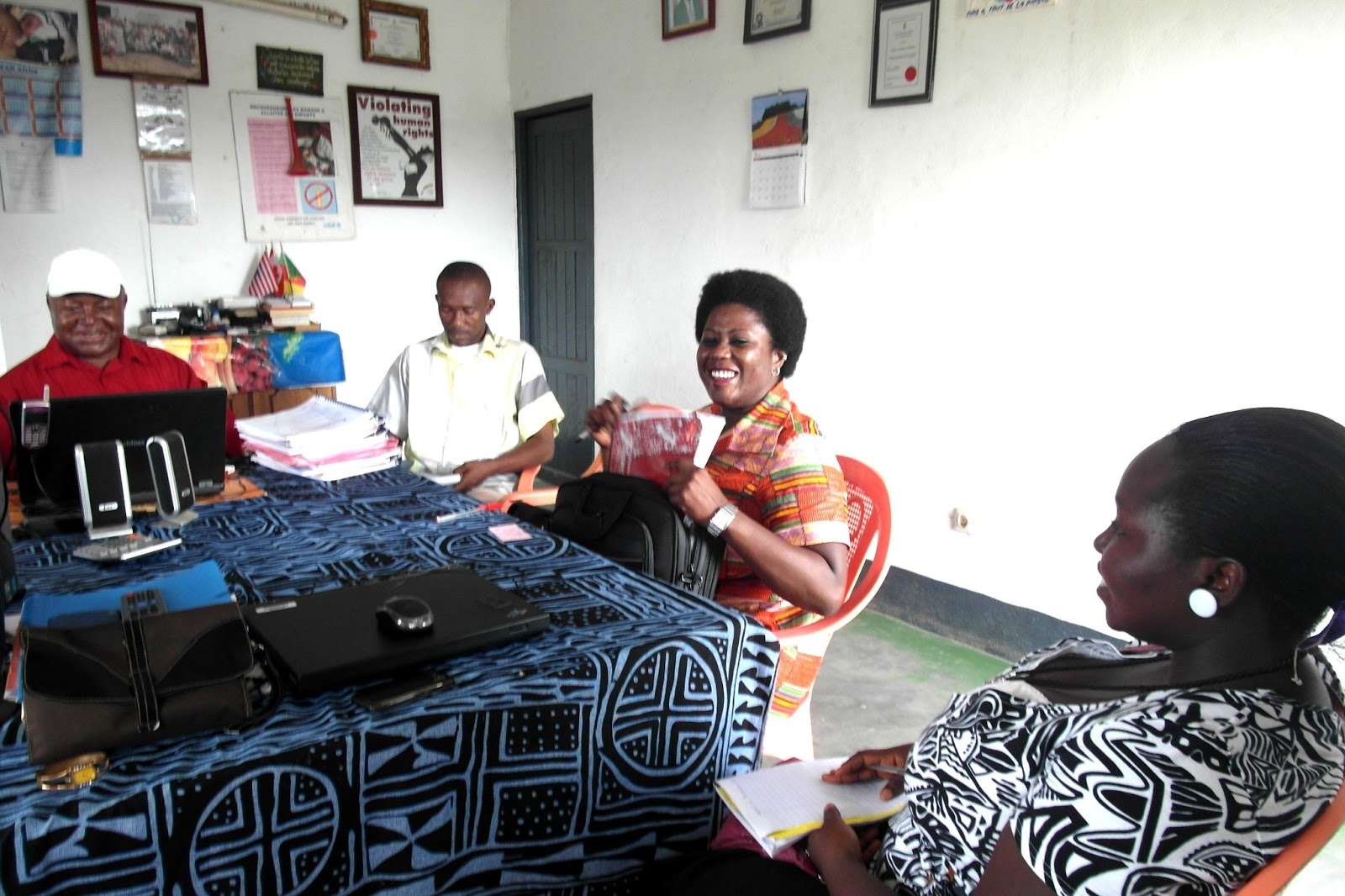 Before leaving Cameroon Link office in Bonaberi-Douala, Mrs. Kayem collected the list of validated CBOs in Bonassama and their contact numbers. This was to facilitate accessing them while on the field to cross-check the information collected at Cameroon Link office. In effect, her plan was to visit a few CBOs in each health area and some of the homes that had been visited by the CBOs.
From information received from the CBOs visited in Mambanda health area and Nkomba, the World Bank consultant was moved by some of the difficulties encountered by the CBOs during the LLIN usage assessment. From Bonassama, Mrs.Kayem had to undertake a similar exercise in Cite de Palmier. Bonassama and Cite de Palmier Health Districts were chosen for the evaluation exercise in the Littoral region of Cameroon.
Before leaving Cameroon Link office in Bonaberi-Douala, Mrs. Kayem collected the list of validated CBOs in Bonassama and their contact numbers. This was to facilitate accessing them while on the field to cross-check the information collected at Cameroon Link office. In effect, her plan was to visit a few CBOs in each health area and some of the homes that had been visited by the CBOs.
From information received from the CBOs visited in Mambanda health area and Nkomba, the World Bank consultant was moved by some of the difficulties encountered by the CBOs during the LLIN usage assessment. From Bonassama, Mrs.Kayem had to undertake a similar exercise in Cite de Palmier. Bonassama and Cite de Palmier Health Districts were chosen for the evaluation exercise in the Littoral region of Cameroon.
 A 3-days workshop ended at the Ocean City Radio Kumba in the south west region of Cameroon on 16th May 2013. The training was a platform for exchange between COL Cameroon link partnership initiative and the radio production staff on how to ameliorate the process of designing health programmes targeting pregnant women and breastfeeding mothers. Welcome the facilitators and trainees, the Station Manager, Richard Shengang, it was a great learning opportunity for the volunteer-broadcasters, most of who are holders of a first degree but never received any training in journalism.
He reminded the radio staff that the training had been announced in the CLP Cameroon plan during the training organized at the Women’s Empowerment Centre in Kumba last January 2013. Mr. James ACHANYI FONTEM, COL Cameroon link partnership liaison and key training resource person explained that the development of underprivileged communities and their wellbeing through healthy community initiative is the awaited outcome of open distance learning using community radio stations.
Four community radio stations in four health districts of two regions in Cameroon have benefited from the training on radio story design programming on mother and child health care with special focus on breastfeeding. The southwest and west regions were selected for the start of the scaling up phase of the project in Cameroon. Infant and young child feeding and especially breastfeeding was agreed upon as the issue of discussion and investigation by the broadcasters.
A 3-days workshop ended at the Ocean City Radio Kumba in the south west region of Cameroon on 16th May 2013. The training was a platform for exchange between COL Cameroon link partnership initiative and the radio production staff on how to ameliorate the process of designing health programmes targeting pregnant women and breastfeeding mothers. Welcome the facilitators and trainees, the Station Manager, Richard Shengang, it was a great learning opportunity for the volunteer-broadcasters, most of who are holders of a first degree but never received any training in journalism.
He reminded the radio staff that the training had been announced in the CLP Cameroon plan during the training organized at the Women’s Empowerment Centre in Kumba last January 2013. Mr. James ACHANYI FONTEM, COL Cameroon link partnership liaison and key training resource person explained that the development of underprivileged communities and their wellbeing through healthy community initiative is the awaited outcome of open distance learning using community radio stations.
Four community radio stations in four health districts of two regions in Cameroon have benefited from the training on radio story design programming on mother and child health care with special focus on breastfeeding. The southwest and west regions were selected for the start of the scaling up phase of the project in Cameroon. Infant and young child feeding and especially breastfeeding was agreed upon as the issue of discussion and investigation by the broadcasters. The resource person justified the choice with the fact saying, statistics have shown that only 20% of the Cameroonian women breastfeed their children exclusively for the first six months after delivery and there is a call for concern to improve on the rate through behavior change communication initiatives. Breastfeeding, he continued is a natural way that guarantees food security and safety of babies since it promotes attachment of baby to the mother and encourages normal growth.
The trainees received some tips on how to come up with good and attractive programmes through formative research, involvement of the listeners who are the beneficiaries and health experts. The broadcasters were trained on the techniques of conducting face to face interviews with mothers, pregnant women and experts on the subject. Men and youths were also interviewed in the process to talk about their roles and how they contribute in assisting mothers.
He added that throughout the process in Bonakanda, Medumba and Bare Bakem, programme coordinators were encouraged to exchange their productions with other community radios to increase variety of programmes on the issues treated. He observed that, this consequently leads to an increase in the radio audience.
At each station the trainees went to the field in groups of four to practice what they learnt during the training and how to research for materials to build programmes. In Kumba, Group one treated the issue of exclusive breastfeeding, while group two tackled the issue of breastfeeding in emergency situations. In Bangangte, the programme focused on preparation of the world breastfeeding week in medumba langauge. The programme from Bonakanda was in pidgin and in Bare Bakem the programme was produced in French.
The broadcasters talked to people in the hospitals, health centres, handicapped persons centre, food markets, administrative offices and the streets in the different localities. Kumba for example has a population of 600.000 inhabitants and 75% are farmers and over 60% are women involved in petit trading. Men interviewed approved of the fact that it is their duty to encourage their wives to breastfeed children and assist them at home, but very few accomplish their responsibilities.
When the broadcasters returned to their stations, they were given the opportunity to exchange on the material gathering process, the difficulties faced in accessing information and how they resolved them. After editing the voices collected, the team members put their heads together to construct the script production and mixing.
The resource person justified the choice with the fact saying, statistics have shown that only 20% of the Cameroonian women breastfeed their children exclusively for the first six months after delivery and there is a call for concern to improve on the rate through behavior change communication initiatives. Breastfeeding, he continued is a natural way that guarantees food security and safety of babies since it promotes attachment of baby to the mother and encourages normal growth.
The trainees received some tips on how to come up with good and attractive programmes through formative research, involvement of the listeners who are the beneficiaries and health experts. The broadcasters were trained on the techniques of conducting face to face interviews with mothers, pregnant women and experts on the subject. Men and youths were also interviewed in the process to talk about their roles and how they contribute in assisting mothers.
He added that throughout the process in Bonakanda, Medumba and Bare Bakem, programme coordinators were encouraged to exchange their productions with other community radios to increase variety of programmes on the issues treated. He observed that, this consequently leads to an increase in the radio audience.
At each station the trainees went to the field in groups of four to practice what they learnt during the training and how to research for materials to build programmes. In Kumba, Group one treated the issue of exclusive breastfeeding, while group two tackled the issue of breastfeeding in emergency situations. In Bangangte, the programme focused on preparation of the world breastfeeding week in medumba langauge. The programme from Bonakanda was in pidgin and in Bare Bakem the programme was produced in French.
The broadcasters talked to people in the hospitals, health centres, handicapped persons centre, food markets, administrative offices and the streets in the different localities. Kumba for example has a population of 600.000 inhabitants and 75% are farmers and over 60% are women involved in petit trading. Men interviewed approved of the fact that it is their duty to encourage their wives to breastfeed children and assist them at home, but very few accomplish their responsibilities.
When the broadcasters returned to their stations, they were given the opportunity to exchange on the material gathering process, the difficulties faced in accessing information and how they resolved them. After editing the voices collected, the team members put their heads together to construct the script production and mixing. Speaking about difficulties, it was observed that many people are shy to speak when the recorder is shown to them. Some fear to make mistakes but were advised to speak in the language they master. On the other hand, some women think breastfeeding is a matter of choice and not a child right. A woman said, a person can chose to breastfeed or choose not to do so depending on the circumstance..
During the workshop evaluation, broadcasters expressed their satisfaction. Many said, the training got them not only to increase their knowledge on how to inform the public rightly through CLP, but they as learners benefited a lot on how to come out with good and attractive programmes. The polite and friendly approach, they stated, is one of the tools for collecting interviews.
Speaking about difficulties, it was observed that many people are shy to speak when the recorder is shown to them. Some fear to make mistakes but were advised to speak in the language they master. On the other hand, some women think breastfeeding is a matter of choice and not a child right. A woman said, a person can chose to breastfeed or choose not to do so depending on the circumstance..
During the workshop evaluation, broadcasters expressed their satisfaction. Many said, the training got them not only to increase their knowledge on how to inform the public rightly through CLP, but they as learners benefited a lot on how to come out with good and attractive programmes. The polite and friendly approach, they stated, is one of the tools for collecting interviews. The trainees through the station managers, expressed their thanks and gratitude to the Commonwealth of Learning and Cameroon link for creating the great learning opportunity on how to develop health programmes on mother and child issues, A participant added that the knowledge gained will be useful throughout their lives. Certificates of participation were handed over to the trainees at the closing session on the third day of the workshop.
 The Responsibilities of Cooh Odette Behn, Media and Broadcasters Liaison Officer include to :
Gather stories, images and sounds from our work with broadcasters and farmers for use in our social media and communication materials
•Expand the number of radio practitioners that make regular use of FRI’s resources for broadcasters. This will involve identifying, contacting and sometimes meeting with hundreds of radio producers, hosts, reporters, presenters etc and encouraging them to join FRI’s Farm Radio Resource Packs program, Farm Radio Weekly and Barza.
•Support radio practitioners in making regular, productive use of resources for broadcasters by contacting them, orienting them to the resources, assisting them in adapting, using and sharing the resources, and contributing their own resources to the network
•Provide feedback to FRI team on how resources can be improved/enhanced so they better meet the day-to-day needs of rural broadcasters.
•Strengthening and Follow up relationships with partner Radio stations in the usage of Farm Radio Resource Packs, Barza training and E-learning courses.
•To measure impact and make a continuous assessment in Cameroon on Farm Radio Resource Packs (FRRPs).
The skills required for this job include:
•Strong media skills, including photography, video, interviewing and writing short stories about farming, rural families, and radio broadcasters that serve them
•Excellent networking and communication skills
•Regular, reliable, documentation of activities and communication with central office
•Able to manage time and meet deadlines
•Excellent coaching, mentoring and facilitation skills
•Knowledge of rural radio and experience in development communications
•Respect and appreciation of work of farming women and men.
FRI is a non-profit corporation and a registered Canadian Charity (registration number 11 888 4808 RR001). Its mission is to support broadcasters in developing countries to strengthen small-scale farming and rural communities. FRI develops radio scripts, information packages, a weekly electronic news service, and an on-line community called Barza, and share them with hundreds of African broadcasters. They, in turn, use these resources to research, produce and present relevant and engaging programs for their audience of millions of farmers. These resources are:
•aimed at increasing food supplies and improving nutrition and health;
•simple, safe, affordable and practical;
•ecologically sound and environmentally sustainable;
•suitable for communication by radio;
•proven useful and transferable within the developing world;
•appropriate to both female and male small-scale farmers.
FRI intermediary and focal point, Cameroon Link is a national umbrella NGO of professional dialogue groups of communication specialists, journalists, agriculture, health and social welfare workers. It was put in place following a crucial lack of good circulation of information on self-help development policies, social welfare, infant and young child nutrition and food self-sufficiency in Cameroon. Cameroon’s target audience through community radio is 20,000,000 listeners, 65% of who are peasant farmers and breeders with very low income sources. Cameroon Link was broadcasting partner with Developing Countries Farm Radio Network Canada for over 20 years before becoming a strategic partner of Farm Radio International.
The Responsibilities of Cooh Odette Behn, Media and Broadcasters Liaison Officer include to :
Gather stories, images and sounds from our work with broadcasters and farmers for use in our social media and communication materials
•Expand the number of radio practitioners that make regular use of FRI’s resources for broadcasters. This will involve identifying, contacting and sometimes meeting with hundreds of radio producers, hosts, reporters, presenters etc and encouraging them to join FRI’s Farm Radio Resource Packs program, Farm Radio Weekly and Barza.
•Support radio practitioners in making regular, productive use of resources for broadcasters by contacting them, orienting them to the resources, assisting them in adapting, using and sharing the resources, and contributing their own resources to the network
•Provide feedback to FRI team on how resources can be improved/enhanced so they better meet the day-to-day needs of rural broadcasters.
•Strengthening and Follow up relationships with partner Radio stations in the usage of Farm Radio Resource Packs, Barza training and E-learning courses.
•To measure impact and make a continuous assessment in Cameroon on Farm Radio Resource Packs (FRRPs).
The skills required for this job include:
•Strong media skills, including photography, video, interviewing and writing short stories about farming, rural families, and radio broadcasters that serve them
•Excellent networking and communication skills
•Regular, reliable, documentation of activities and communication with central office
•Able to manage time and meet deadlines
•Excellent coaching, mentoring and facilitation skills
•Knowledge of rural radio and experience in development communications
•Respect and appreciation of work of farming women and men.
FRI is a non-profit corporation and a registered Canadian Charity (registration number 11 888 4808 RR001). Its mission is to support broadcasters in developing countries to strengthen small-scale farming and rural communities. FRI develops radio scripts, information packages, a weekly electronic news service, and an on-line community called Barza, and share them with hundreds of African broadcasters. They, in turn, use these resources to research, produce and present relevant and engaging programs for their audience of millions of farmers. These resources are:
•aimed at increasing food supplies and improving nutrition and health;
•simple, safe, affordable and practical;
•ecologically sound and environmentally sustainable;
•suitable for communication by radio;
•proven useful and transferable within the developing world;
•appropriate to both female and male small-scale farmers.
FRI intermediary and focal point, Cameroon Link is a national umbrella NGO of professional dialogue groups of communication specialists, journalists, agriculture, health and social welfare workers. It was put in place following a crucial lack of good circulation of information on self-help development policies, social welfare, infant and young child nutrition and food self-sufficiency in Cameroon. Cameroon’s target audience through community radio is 20,000,000 listeners, 65% of who are peasant farmers and breeders with very low income sources. Cameroon Link was broadcasting partner with Developing Countries Farm Radio Network Canada for over 20 years before becoming a strategic partner of Farm Radio International.
 Commonwealth Day was an opportunity to promote understanding on global issues, international co-operation and the work of the Commonwealth of Learning partners in Cameroon.The open door workshop at Cameroon Link aimed at highlighting the impact of the community of learning programming with the involvement of community radio broadcasters and women's development groups to improve the lives of citizens.
Over the past years, the day has been an opportunity to learn and explore both the history of the Commonwealth association as well as current concerns that are common to all nations of the Commonwealth Family. COL Cameroon Link Partnership team joined the rest of the international community in celebrating the Commonwealth Day 2013 against a backdrop of what officials described as promoting the strides in women’s emancipation with the creation of labour opportunities. An open day was organised at Cameroon Link head office in Bonaberi-Douala, to show case the work realised with the community of learning partnersship since October 2010.
Colourful events took place in most of the English speaking communities of Cameroon after the launching ceremony in Yaoundé presided at by the Minister Delegate in the Ministry of External Relations in charge of relations with the Commonwealth, Joseph Dion Ngute, during which he highlighted the achievements in Cameroon since its admittance into the Commonwealth family. Cameroon Link focused its presentation during the reception of visitors at its office on “Women as agents of change”. Its on-going community of learning initiative, outreach meetings and workshops, emphasis is put on the preparation of the PCF7 in Abuja, Nigeria this year.
Commonwealth Day was an opportunity to promote understanding on global issues, international co-operation and the work of the Commonwealth of Learning partners in Cameroon.The open door workshop at Cameroon Link aimed at highlighting the impact of the community of learning programming with the involvement of community radio broadcasters and women's development groups to improve the lives of citizens.
Over the past years, the day has been an opportunity to learn and explore both the history of the Commonwealth association as well as current concerns that are common to all nations of the Commonwealth Family. COL Cameroon Link Partnership team joined the rest of the international community in celebrating the Commonwealth Day 2013 against a backdrop of what officials described as promoting the strides in women’s emancipation with the creation of labour opportunities. An open day was organised at Cameroon Link head office in Bonaberi-Douala, to show case the work realised with the community of learning partnersship since October 2010.
Colourful events took place in most of the English speaking communities of Cameroon after the launching ceremony in Yaoundé presided at by the Minister Delegate in the Ministry of External Relations in charge of relations with the Commonwealth, Joseph Dion Ngute, during which he highlighted the achievements in Cameroon since its admittance into the Commonwealth family. Cameroon Link focused its presentation during the reception of visitors at its office on “Women as agents of change”. Its on-going community of learning initiative, outreach meetings and workshops, emphasis is put on the preparation of the PCF7 in Abuja, Nigeria this year.  Talking to Canal 2 Tv International prime time news in English and French on Commonwealth Day, the COL Cameroon Link Partnership Liaison, James Achanyi-Fontem, highlighted was Cameroon has benefited and is benefiting by being a member of the Commonwealth family. The open door made it possible to review passed activities, successes and weaknesses, while planning for the future. The healthy communities’ activities including the involvement of community radio stations for informing and educating women on maternal and child health care issues is gaining ground as more mothers attend health facilities for medical check-ups. The issue on the agenda of story design training in Kumba, English speaking south west region and Melong, the French speaking territory of Cameroon was “Breastfeeding”. A good number of programmes have been conceived and in-house training within four selected community radio stations: Ocean City Radio Kumba, Radio Bonakanda in Buea, Radio Medumba in Bangangte and Radio Bare Bakem, has been planned to take place before the end of the project in June 2013. Cameroon Link received over 100 visitors on the Commonwealth Day and these were persons from media, women’s, youths’, and civil society development organisations. So far, 12 community radio stations have been engaged in the process of producing story design programmes on mother and child health on a weekly basis in the official English, French and national languages.
 Speaking to Commonwealth partners in Yaoundé, H.E. Dion Ngute, said Cameroon could not afford to be indifferent to the core values of the Commonwealth which among others include gender equality, development and good governance. He said although the number of women in positions of authority still remains low vis-à-vis their proportion in the country’s population, strides have been made and that with on-going reforms and programmes, there was hope in the horizon. Cameroon has a ministry in charge of Women’s Empowerment and the Family and women have been appointment to top positions increasing the number in decision-making bodies. Workshops are being organised regularly with the support of the Commonwealth of Learning to empower them on how to improve on their well-being.
The British High Commissioner to Cameroon, Bharat Joshie, highlighted the non-negligible contribution of women in development, promising Britain’s unwavering support to girl-child education. Selected female artists and actors, in song and dance, showcased the prowess of the popular folk which was variously described as indispensable for socio-economic development of a country. One of the high points of the celebration was the reading of Queen Elizabeth II’s speech on the occasion in which she lauded the great role played in making society better. “While some people use this day to acknowledge the love, admiration and respect for the Commonwealth, others use it to remember the great social and political strides made.
A gaint march past was organised in Yaounde Douala and Bamenda, to celebrate the Commonwealth Day. It was attended by several government ministers from External Relations, Youths and Civic Education, Basic Education, Culture, Secondary Education, and the Minister Delegate in Charge of the Commonwealth. High Commissioners and representatives from diplomatic missions of Commonwealth countries were also present at the event.
Speaking to Commonwealth partners in Yaoundé, H.E. Dion Ngute, said Cameroon could not afford to be indifferent to the core values of the Commonwealth which among others include gender equality, development and good governance. He said although the number of women in positions of authority still remains low vis-à-vis their proportion in the country’s population, strides have been made and that with on-going reforms and programmes, there was hope in the horizon. Cameroon has a ministry in charge of Women’s Empowerment and the Family and women have been appointment to top positions increasing the number in decision-making bodies. Workshops are being organised regularly with the support of the Commonwealth of Learning to empower them on how to improve on their well-being.
The British High Commissioner to Cameroon, Bharat Joshie, highlighted the non-negligible contribution of women in development, promising Britain’s unwavering support to girl-child education. Selected female artists and actors, in song and dance, showcased the prowess of the popular folk which was variously described as indispensable for socio-economic development of a country. One of the high points of the celebration was the reading of Queen Elizabeth II’s speech on the occasion in which she lauded the great role played in making society better. “While some people use this day to acknowledge the love, admiration and respect for the Commonwealth, others use it to remember the great social and political strides made.
A gaint march past was organised in Yaounde Douala and Bamenda, to celebrate the Commonwealth Day. It was attended by several government ministers from External Relations, Youths and Civic Education, Basic Education, Culture, Secondary Education, and the Minister Delegate in Charge of the Commonwealth. High Commissioners and representatives from diplomatic missions of Commonwealth countries were also present at the event.
 Cameroon Link added a CLP touch to the global march for A Life Free From Violence Against Women and Girls during the International Day of Women celebrated on March 8 in Bonaberi-Douala. This is the global day to celebrate the economic, political and social achievements of women past, present and future. Women's rights have improved a lot over the last decades, with more women accessing equitable opportunities, resources and life prospects but this is not enough as yet many women particularly in Cameroon are still not able to shape their own lives and contribute to the development of their families and communities as they would like.
 With the community of learning (CLP) initiative supported by the Commonwealth of Learning, a one-day workshop was organized in Bonaberi-Douala to highlight progress realized through advocacy, information, education and communication actions with community radio stations in Cameroon. During the presentations and exchange of views, participants agreed that there are still immense disparities that exist between males and females; hence the urgency to accelerate efforts to empower women and girls to fully participate in the economic and social development of their communities.
This year’s IWD theme “elimination of all forms of violence against women and the girl child” very appropriately seeked to raise awareness on the need to provide women with the opportunity to participate fully in society, on equal terms with their male counterparts. Cameroon Link’s mandate is to protect, promote and support optimal infant and young child nutrition within the clp partnership agreement with the Commonwealth of Learing.
The women’s march this year was a collective global effort to respond to the theme of the United Nations focused on the advances States have made in the elimination and prevention of all forms of violence against women and girls. To this end we advocated that Cameroon needs to respond, protect, and prevent violence against women and girls in all their diversity.
The women from all walks of life gathered in various regional headquarters of Cameroon as bearers of various affirmations on development, peace, political and gender equality, employment, education access and human rights as they passed along their capital cities.
With the community of learning (CLP) initiative supported by the Commonwealth of Learning, a one-day workshop was organized in Bonaberi-Douala to highlight progress realized through advocacy, information, education and communication actions with community radio stations in Cameroon. During the presentations and exchange of views, participants agreed that there are still immense disparities that exist between males and females; hence the urgency to accelerate efforts to empower women and girls to fully participate in the economic and social development of their communities.
This year’s IWD theme “elimination of all forms of violence against women and the girl child” very appropriately seeked to raise awareness on the need to provide women with the opportunity to participate fully in society, on equal terms with their male counterparts. Cameroon Link’s mandate is to protect, promote and support optimal infant and young child nutrition within the clp partnership agreement with the Commonwealth of Learing.
The women’s march this year was a collective global effort to respond to the theme of the United Nations focused on the advances States have made in the elimination and prevention of all forms of violence against women and girls. To this end we advocated that Cameroon needs to respond, protect, and prevent violence against women and girls in all their diversity.
The women from all walks of life gathered in various regional headquarters of Cameroon as bearers of various affirmations on development, peace, political and gender equality, employment, education access and human rights as they passed along their capital cities. One of the partnership initiative areas is on promoting Maternity Protection and this fits with this year’s IWD theme on gender equity and employment. This gives us an opportunity to bring to the fore the importance of putting into effect strong maternity protection in the workplace in order to safeguard women's employment and income security during and after maternity. Maternity protection is also essential for ensuring women's access to equality of opportunity and treatment in the workplace, and progress towards Millennium Development Goal 3: promoting gender equality and women's empowerment.
Furthermore, maternity protection is important in promoting the health of the mother and the child through breastfeeding; thus contributing to the achievement of Millennium Development Goals 4 and 5, which seek to the reduce child mortality and promote improvement to the health of mothers. Strengthening maternity protection and extending it to all women in all types of economic activity is an important goal, as well as ensuring it is implemented as extensively as possible. Maternity protection has two aims:
• to preserve the health of the mother and her newborn;
• to provide a measure of job and income security (protection from dismissal and discrimination, the right to resume work after leave, and maintenance of wages and incomes during maternity) The most recent standard available for the protection of working women is the Maternity Protection Convention No. 183 (2000) and Maternity Protection Recommendation No. 191 (2000).
Convention No. 183 broadens the scope of coverage to include all employed women, including those women employed in so‐called atypical forms of employment, which is, women who work on fixed term contracts; casual, contract, seasonal and part‐time workers, home workers, piece workers, temporary agency workers; unorganized and informal employment, who often receive no protection, as well as extending to them entitlement to 14 weeks of leave. This wider scope of Convention No. 183 is of critical importance in ensuring the health and well‐being of greater numbers of women workers and their children worldwide.
Cameroon Link made a call for the government to:
1. Take concrete steps to end impunity!
2. Fund Gender Equality and Human Rights initiatives!
3. And Protect Women Human Right Defenders!
More than 30 organizations, many of whom are partners of the Cameroon Link umbrella network, the Federation of Cameroon Breastfeeding Promotion Associations (FECABPA) and the Cameroon Association of Broadcasters (CAB) responded by demanding that the government should rise to the challenge. Women’s Development Group leaders who participated in the community of learning one day workshop on International Women’s Day concluded that, it was a day of challenges, often rolled into one. In realising how far we have come towards ensuring genuine equality of opportunity for women as for men, it becomes clear how far we still have to go.
Statistics reported in Cameroon show that it is one of the countries in which 10% percent of women experienced sexual violence – a figure which is too high. There are parts of the country where no less than 33% percent have been confronted and affronted with such crime. Participants observed that many children are out of primary school, living below the poverty line, suffering from HIV and the disenfranchised persons are women.
One of the partnership initiative areas is on promoting Maternity Protection and this fits with this year’s IWD theme on gender equity and employment. This gives us an opportunity to bring to the fore the importance of putting into effect strong maternity protection in the workplace in order to safeguard women's employment and income security during and after maternity. Maternity protection is also essential for ensuring women's access to equality of opportunity and treatment in the workplace, and progress towards Millennium Development Goal 3: promoting gender equality and women's empowerment.
Furthermore, maternity protection is important in promoting the health of the mother and the child through breastfeeding; thus contributing to the achievement of Millennium Development Goals 4 and 5, which seek to the reduce child mortality and promote improvement to the health of mothers. Strengthening maternity protection and extending it to all women in all types of economic activity is an important goal, as well as ensuring it is implemented as extensively as possible. Maternity protection has two aims:
• to preserve the health of the mother and her newborn;
• to provide a measure of job and income security (protection from dismissal and discrimination, the right to resume work after leave, and maintenance of wages and incomes during maternity) The most recent standard available for the protection of working women is the Maternity Protection Convention No. 183 (2000) and Maternity Protection Recommendation No. 191 (2000).
Convention No. 183 broadens the scope of coverage to include all employed women, including those women employed in so‐called atypical forms of employment, which is, women who work on fixed term contracts; casual, contract, seasonal and part‐time workers, home workers, piece workers, temporary agency workers; unorganized and informal employment, who often receive no protection, as well as extending to them entitlement to 14 weeks of leave. This wider scope of Convention No. 183 is of critical importance in ensuring the health and well‐being of greater numbers of women workers and their children worldwide.
Cameroon Link made a call for the government to:
1. Take concrete steps to end impunity!
2. Fund Gender Equality and Human Rights initiatives!
3. And Protect Women Human Right Defenders!
More than 30 organizations, many of whom are partners of the Cameroon Link umbrella network, the Federation of Cameroon Breastfeeding Promotion Associations (FECABPA) and the Cameroon Association of Broadcasters (CAB) responded by demanding that the government should rise to the challenge. Women’s Development Group leaders who participated in the community of learning one day workshop on International Women’s Day concluded that, it was a day of challenges, often rolled into one. In realising how far we have come towards ensuring genuine equality of opportunity for women as for men, it becomes clear how far we still have to go.
Statistics reported in Cameroon show that it is one of the countries in which 10% percent of women experienced sexual violence – a figure which is too high. There are parts of the country where no less than 33% percent have been confronted and affronted with such crime. Participants observed that many children are out of primary school, living below the poverty line, suffering from HIV and the disenfranchised persons are women. Cameroon’s current and unprecedented economic growth is strong, but it is flawed because the riches are not shared, and it is not environmentally sustainable. Real growth has to be for women as much as for men, for younger people as for older, for rural communities as much as urban. And we know that economic growth alone does not suffice
