.jpg)
Monday, September 8, 2014
Cameroon Infant and Young Child Feeding Strategy Validated (2014 - 2020)
By James Achanyi-Fontem, camlinknews
Email: camlink99@gmail.com .jpg) A workshop to launch the multi-sectored platform for validation of the road map for reduction of chronic malnutrition in Cameroon was organised from the 18th – 20th August 2014 in Douala. Supported financially by UNICEF, it brought together actors from the ministry of social affairs, public healh, trade, women and family promotion, animal breeding and fisheries, higher education, territorial administration, plan and regional development, HKI, OFSAD, Plan, ACMS, UNICEF, WFP, WHO, UNHCR. UNFPA and FAO.
The deliberations were coordinated by the Director for Health Promotion, Dr. Cheumaga Bernard who was assisted by Okala Georges, Sud Director for food and nutrition. Within four days, the participants in four groups discussed the national strategic plan for Infant and Young Child Feeding covering the period 2014 – 2020.
Issued treated were related to feeding of the young girl, pregnant woman and lactating mother, early initiation of breastfeeding from the first hour after birth for the first six months with the necessity to give colostrum to the baby and optimal breastfeeding up to 24 months and beyond. Complimentary feeding and the fortification of foods took greater space as a means to reduce malnutrition as well as breastfeeding In difficult and exceptional situations of emergency, poverty, malnutrition, HIV and child illnesses.
On communication, it was emphasized that there has to be a lot of advocacy for social change and social mobilisation of communities for behaviour change communication. The Innocenti Declaration and BABY Friendy Hospital Initiative associated to Community Baby Friendly Initiative were used as tools to illustrate operational objectives.
As far as the application of priority measures was concerned, it turned out that five reports had to be established covering protection of breastfeeding, encouragement, support to health systems and within the communities without forgetting one on infant and yound child feeding support in difficult and exceptional situations.
The different partners had to establish their contributions and obligations for the achievement of the planned goals with the involvement of government, interested parties, professional health associations, non-governmental organisations, enterprises, social partners and international organisations.
It was observed that infant mortality of children below 5 has not evolved in Cameroon since 1991. The studies carried out show that bad feeding practices of infants are at the origin of 29% of deaths of children below 5 years, while chronic malnutrition is very high. The number of malnourished children is on the increase during to babies born by seropositive mothers.
This reduces the intellectual output and productive performance of the population affected. For this reason, the formulation of a pertinent strategy for infant and young child feeding would necessary to reverse the situation in Cameroon, especially in a situation confronted by recurring diarrhoea diseases, yellow fever, malaria, respiratory channel infections covering 20 to 70 % of the cases notified and attributed to malnutrition. This worsens the already discouraging poverty margin of the population.
The current infant and young child feeding strategy has been put in place within the following guidelines;
• Identification of pertinent and realistic interventions which have worked well elsehere.
• Insistence on mother and family support to permit them play a crucial role in the good development of their children.
• It defines the obligations and responsibilities of the government, national and international organisations and other parties.
• Identification of priority axes at the different levels of intervention.
• Identification of key actors
• Definition of strategies to be put in place to achieve the objectives of infant anf young child feeding.
A workshop to launch the multi-sectored platform for validation of the road map for reduction of chronic malnutrition in Cameroon was organised from the 18th – 20th August 2014 in Douala. Supported financially by UNICEF, it brought together actors from the ministry of social affairs, public healh, trade, women and family promotion, animal breeding and fisheries, higher education, territorial administration, plan and regional development, HKI, OFSAD, Plan, ACMS, UNICEF, WFP, WHO, UNHCR. UNFPA and FAO.
The deliberations were coordinated by the Director for Health Promotion, Dr. Cheumaga Bernard who was assisted by Okala Georges, Sud Director for food and nutrition. Within four days, the participants in four groups discussed the national strategic plan for Infant and Young Child Feeding covering the period 2014 – 2020.
Issued treated were related to feeding of the young girl, pregnant woman and lactating mother, early initiation of breastfeeding from the first hour after birth for the first six months with the necessity to give colostrum to the baby and optimal breastfeeding up to 24 months and beyond. Complimentary feeding and the fortification of foods took greater space as a means to reduce malnutrition as well as breastfeeding In difficult and exceptional situations of emergency, poverty, malnutrition, HIV and child illnesses.
On communication, it was emphasized that there has to be a lot of advocacy for social change and social mobilisation of communities for behaviour change communication. The Innocenti Declaration and BABY Friendy Hospital Initiative associated to Community Baby Friendly Initiative were used as tools to illustrate operational objectives.
As far as the application of priority measures was concerned, it turned out that five reports had to be established covering protection of breastfeeding, encouragement, support to health systems and within the communities without forgetting one on infant and yound child feeding support in difficult and exceptional situations.
The different partners had to establish their contributions and obligations for the achievement of the planned goals with the involvement of government, interested parties, professional health associations, non-governmental organisations, enterprises, social partners and international organisations.
It was observed that infant mortality of children below 5 has not evolved in Cameroon since 1991. The studies carried out show that bad feeding practices of infants are at the origin of 29% of deaths of children below 5 years, while chronic malnutrition is very high. The number of malnourished children is on the increase during to babies born by seropositive mothers.
This reduces the intellectual output and productive performance of the population affected. For this reason, the formulation of a pertinent strategy for infant and young child feeding would necessary to reverse the situation in Cameroon, especially in a situation confronted by recurring diarrhoea diseases, yellow fever, malaria, respiratory channel infections covering 20 to 70 % of the cases notified and attributed to malnutrition. This worsens the already discouraging poverty margin of the population.
The current infant and young child feeding strategy has been put in place within the following guidelines;
• Identification of pertinent and realistic interventions which have worked well elsehere.
• Insistence on mother and family support to permit them play a crucial role in the good development of their children.
• It defines the obligations and responsibilities of the government, national and international organisations and other parties.
• Identification of priority axes at the different levels of intervention.
• Identification of key actors
• Definition of strategies to be put in place to achieve the objectives of infant anf young child feeding.

Fight Against Malnutrition Intensifies in East & Northern Cameroon
By James Achanyi-Fontem, camlinknews
Email: camlink99@gmail.com  The Cameroon government has recognised that malnutrition in the east and northern regions of the country is a public health issue. This is justified by the creation of an intermisiterial committee to fight malnutrition by the Prime Minister, Philemon Yang on the 20th August 2014. The order no. 076/CAM/PM acknowledges the adhesion of the government to the Scaling Up Nutrition (SUN) movement.
The interministerial committee is an organisation for consultation, coordination, and orientation of strategies for the fight against malnultrition in the north regions and the east. It will identify and conceive actions to be realised within the context of the programme.
It will guarantee the development of the multi-sectored programme for the fight against malnutrition by involving different actors from the state, local collectivities, private sector , United Nation Agencies and non governmental organisations.
The interministerial committee will mobilise resources internally nd externally in favour of reduction of malnutrition in the different sectors. The ministries involved are agriculture, animal breeding and fisheries, financs, economy, women’s promotion, water and energy, social affairs and trade.
The president of the committee can call and invite persons with special competence to assist in the execution of projects. The committee meets once every six months to evaluate its activities.
The Cameroon government has recognised that malnutrition in the east and northern regions of the country is a public health issue. This is justified by the creation of an intermisiterial committee to fight malnutrition by the Prime Minister, Philemon Yang on the 20th August 2014. The order no. 076/CAM/PM acknowledges the adhesion of the government to the Scaling Up Nutrition (SUN) movement.
The interministerial committee is an organisation for consultation, coordination, and orientation of strategies for the fight against malnultrition in the north regions and the east. It will identify and conceive actions to be realised within the context of the programme.
It will guarantee the development of the multi-sectored programme for the fight against malnutrition by involving different actors from the state, local collectivities, private sector , United Nation Agencies and non governmental organisations.
The interministerial committee will mobilise resources internally nd externally in favour of reduction of malnutrition in the different sectors. The ministries involved are agriculture, animal breeding and fisheries, financs, economy, women’s promotion, water and energy, social affairs and trade.
The president of the committee can call and invite persons with special competence to assist in the execution of projects. The committee meets once every six months to evaluate its activities.

Sunday, September 7, 2014
2nd SUFI Regional Coordination Meeting Holds in Douala
By James Achanyi-Fontem, camlinknews
Email:camlink99@gmail.com The Littoral Regional Delegate for Public Health in the Littoral, Dr. Yamba Martin Beyas, presided over the 2nd coordination meeting of SUFI District Civil Society Organisation, CSO, on September 4, 2014 in the presence of IRESCO Project Coordinator, Mrs. Ahouma Etamba Valerie, the Littoral Regional Field Supervisor, Tchana Eric and the head of the Malaria prevention unit, Dr. Nwali.
The deliberations of the principal actors in the execution of Scaling Up Malaria prevention for Impact as an opportunity to evaluate the level of progress made since the first meeting took place on the 10th April, 2014.
Difficulties encountered were exposed and recommendation made to close the gaps and outcome weaknesses. Presenting the objectives and awaited results, Mrs. Ahouma Etamba, emphasized on the contractual obligations of the SUFI civil society organisations, quality of supervision reports received, promptitude of the quarterly reports, quality of home visits and validation of work done by the community health workers.
The head of malaria prevention unit in the regional delegation, Dr. Nwali explained the activities carried out by the principal recipient no.1 including the recent training of community health workers on the use of malaria kits and prescription of treatment for simple malaria within their communities.
Discussing recommendations, the Field Supervisor, Tchana Eric, presented the 8th semester action plan for the littoral and coached the CSOs on how to build their respective terms of reference s. He also addressed issues related to difficulties encountered on the field, challenges and solutions.
Financial management problems were treated by Mrs. Ebenye Nathalie, the project account assistant, who spoke about the incoherence in reporting and the quality of financial data presented for justification of SUFI expenditure.
The regional delegate for health, Dr. Yamba Beyas acknowledged that the presence of all the District CSOs at the meeting was proof of the determination and engagement to support activities public health in general and malaria in particular.
He added that the daily activities of CSOs contribute to the development of the different communities in general and to the promotion of public health in particular. With this, Dr. Yamba prescribed franl collaboration at all levels for the smooth progress of activities. Partnership of activities at the level s of the community, district and region remain a powerful engagement that accelerates progress.
There are 227 community health workers engaged in the SUFI project in the Littoral and south west regions. 4354 community health workers are covering all the regions. 130 CSOs are engaged throughout Cameroon for the second phase of SUFI ending in December 2015.
The Littoral Regional Delegate for Public Health in the Littoral, Dr. Yamba Martin Beyas, presided over the 2nd coordination meeting of SUFI District Civil Society Organisation, CSO, on September 4, 2014 in the presence of IRESCO Project Coordinator, Mrs. Ahouma Etamba Valerie, the Littoral Regional Field Supervisor, Tchana Eric and the head of the Malaria prevention unit, Dr. Nwali.
The deliberations of the principal actors in the execution of Scaling Up Malaria prevention for Impact as an opportunity to evaluate the level of progress made since the first meeting took place on the 10th April, 2014.
Difficulties encountered were exposed and recommendation made to close the gaps and outcome weaknesses. Presenting the objectives and awaited results, Mrs. Ahouma Etamba, emphasized on the contractual obligations of the SUFI civil society organisations, quality of supervision reports received, promptitude of the quarterly reports, quality of home visits and validation of work done by the community health workers.
The head of malaria prevention unit in the regional delegation, Dr. Nwali explained the activities carried out by the principal recipient no.1 including the recent training of community health workers on the use of malaria kits and prescription of treatment for simple malaria within their communities.
Discussing recommendations, the Field Supervisor, Tchana Eric, presented the 8th semester action plan for the littoral and coached the CSOs on how to build their respective terms of reference s. He also addressed issues related to difficulties encountered on the field, challenges and solutions.
Financial management problems were treated by Mrs. Ebenye Nathalie, the project account assistant, who spoke about the incoherence in reporting and the quality of financial data presented for justification of SUFI expenditure.
The regional delegate for health, Dr. Yamba Beyas acknowledged that the presence of all the District CSOs at the meeting was proof of the determination and engagement to support activities public health in general and malaria in particular.
He added that the daily activities of CSOs contribute to the development of the different communities in general and to the promotion of public health in particular. With this, Dr. Yamba prescribed franl collaboration at all levels for the smooth progress of activities. Partnership of activities at the level s of the community, district and region remain a powerful engagement that accelerates progress.
There are 227 community health workers engaged in the SUFI project in the Littoral and south west regions. 4354 community health workers are covering all the regions. 130 CSOs are engaged throughout Cameroon for the second phase of SUFI ending in December 2015.

Wednesday, July 23, 2014
Rev. Father Michael Achanyi offers Thanks Giving Mass in Mamfe Cathedral Parish
by camlinknews, Email: camlink99@gmail.com  Rev. Father Michael Achanyi ordained as Catholic Priest on Saturday, May 24, 2014 at St. Patrick’s Cathedral in New York, USA by His Eminence Timothy Michael CARDINAL Dolan, the Arch Bishop of New York has offered a Thanks Giving Mass in Mamfe Town, in the south west region of Cameroon, where he was born. The Thanks Giving mass was offered in the Catholic Cathedral Parish on the 20th July, 2014 in presence of Bishop Francis Lysinge and several reverend priests of the diocese. St. John Paul II was quoted as saying Priesthood is forever. “We do not return the gift once given. It cannot be that who gave the impulse to say “Yes” would say later “No”.
  The Achanyi-Fontem Family through the head expressed thanks and gratitude to the Catholic Church Hierarchy for having chosen their son to join in the mission that Jesus Christ started more than 2000 years ago. He described the choice of Michael Achanyi as a blessing to Lebialem, Manyu and Cameroon as a whole. James Achanyi-Fontem said where there is life, there is God and where there is God, and there is Hope, when calling on the thousands who turned out for the thanks giving mass to put Rev. Father Michael Achanyi in their prayers, so that he may be inspired and granted the Holy Spirit to carry out his mission successfully.
The Chair person of the Cathedral Parish Pastoral Council, Eyong Peter, rendered immense thanks and praise to God for the great gift of a priest in their midst, adding that once again God has smiled on them and made it possible that on the 24 May 2014, their brother, son, friend, and relation, Micheal Achanyi Ache was raised to the dignity of the sacred priesthood in the Holy Roman Catholic Church at the St. Patrick Catholic Cathedral for the Arch Diocese of New York, USA.
The Achanyi-Fontem Family through the head expressed thanks and gratitude to the Catholic Church Hierarchy for having chosen their son to join in the mission that Jesus Christ started more than 2000 years ago. He described the choice of Michael Achanyi as a blessing to Lebialem, Manyu and Cameroon as a whole. James Achanyi-Fontem said where there is life, there is God and where there is God, and there is Hope, when calling on the thousands who turned out for the thanks giving mass to put Rev. Father Michael Achanyi in their prayers, so that he may be inspired and granted the Holy Spirit to carry out his mission successfully.
The Chair person of the Cathedral Parish Pastoral Council, Eyong Peter, rendered immense thanks and praise to God for the great gift of a priest in their midst, adding that once again God has smiled on them and made it possible that on the 24 May 2014, their brother, son, friend, and relation, Micheal Achanyi Ache was raised to the dignity of the sacred priesthood in the Holy Roman Catholic Church at the St. Patrick Catholic Cathedral for the Arch Diocese of New York, USA. The event, Eyong Peter went on, is so very historic because finally something good has come out of Bessongabang given that Rev.Fr. Micheal Achanyi is the first catholic priest from Bessongabang, Manyu Division. Rev. Micheal Achanyi Ache hails from two strong christain families, the Takor's of Besongabang and the Achanyi's in the Lebang Fondom of Lebialem Division. It is worth nothing that the Takor's are notoriously Presbyterian and the Achany's are diehard and avowed Catholics. What was experienced with Michael Achanyi’s ordination was an expression of the Ecumenical Dimension of the Christian Faith, the fervent prayer of Jesus, that they may all be one.
Rev. Father Michael Achanyi is serving as a priest in the USA, which is not his country. He has lived in New York for four years and is well aware of the challenges ahead of him. The chairperson advised him to Keep alive the values which he imbibed from his upbringing, by always listening attentively to the prompting of the Holy Spirit in the daily discharge of his priestly ministry.
The event, Eyong Peter went on, is so very historic because finally something good has come out of Bessongabang given that Rev.Fr. Micheal Achanyi is the first catholic priest from Bessongabang, Manyu Division. Rev. Micheal Achanyi Ache hails from two strong christain families, the Takor's of Besongabang and the Achanyi's in the Lebang Fondom of Lebialem Division. It is worth nothing that the Takor's are notoriously Presbyterian and the Achany's are diehard and avowed Catholics. What was experienced with Michael Achanyi’s ordination was an expression of the Ecumenical Dimension of the Christian Faith, the fervent prayer of Jesus, that they may all be one.
Rev. Father Michael Achanyi is serving as a priest in the USA, which is not his country. He has lived in New York for four years and is well aware of the challenges ahead of him. The chairperson advised him to Keep alive the values which he imbibed from his upbringing, by always listening attentively to the prompting of the Holy Spirit in the daily discharge of his priestly ministry.
 BIOGRAPHY OF REV. FR. MICHAEL ACHANYI ACHE
Michael Achanyi Folefac was born in Mamfe and attended St. Joseph's Catholic Primary School, Mamfe Town. Upon completion of his primary education, he was among the first batch of students to be admitted into Government Bilingual Secondary School at the time. After spending two years there, Michael moved to St. Paul's Technical and Commercial College in Bonjongo and later was moved to National Comprehensive High School in Limbe for high school studies.
At the request of the then Bishop of the Diocese of Mamfe. in 2001/2002, Michael began a year of pastoral experience as a prospective candidate for the diocese of Mamte at Okoyong village. Upon completion of that year, he proceeded to St. John Mary Vianney Spiritual Formation Centre Bafut prior to his entrance into St. Thomas Aquinas Major Seminar Bambui to begin Philosophy. Michael began studies in philosophy from 2003-2006. Under the guidance and great direction of Fr. Kisito Thompson, O.C.S.O., now of blessed memory, Michael applied and accepted to study in the archdiocese of New York in October 2008 and in March of 2009, he would travel to the United States to continue formation for the priesthood. Once in the U.S.A, Michael spent a year at St. John Neumann house of formation while taking some courses in St. John's University. Queens, NY. In 2010, Michael was admitted into St. Joseph's seminary, Yonkers, New York where he began his studies in theology. He was ordained a deacon on the 2nd September 2013 and was ordained a priest on Saturday the 24th May 2014 at St. Patrick's Cathedral. New York.
The Achanyi-Fontem family is thankful to all individuals and organisations that contributed to the success of the historic event in in Mamfe ; July 20, 2014. He was accompanied by his priesthood friend from the Arch Diocese of New York, Rev. Father Lorenzo. He blessed the marriage of a couple that travelled from New York, USA to Mamfe,Cameroon to receive the blessing of Rev. Father Michael Achanyi. Donations for the event came from all over including the chairperson of Fine Forest Foundation, HRE/Dr. Asaah Nkohkwo (Fuaseh Fontem)based in London, UK.
BIOGRAPHY OF REV. FR. MICHAEL ACHANYI ACHE
Michael Achanyi Folefac was born in Mamfe and attended St. Joseph's Catholic Primary School, Mamfe Town. Upon completion of his primary education, he was among the first batch of students to be admitted into Government Bilingual Secondary School at the time. After spending two years there, Michael moved to St. Paul's Technical and Commercial College in Bonjongo and later was moved to National Comprehensive High School in Limbe for high school studies.
At the request of the then Bishop of the Diocese of Mamfe. in 2001/2002, Michael began a year of pastoral experience as a prospective candidate for the diocese of Mamte at Okoyong village. Upon completion of that year, he proceeded to St. John Mary Vianney Spiritual Formation Centre Bafut prior to his entrance into St. Thomas Aquinas Major Seminar Bambui to begin Philosophy. Michael began studies in philosophy from 2003-2006. Under the guidance and great direction of Fr. Kisito Thompson, O.C.S.O., now of blessed memory, Michael applied and accepted to study in the archdiocese of New York in October 2008 and in March of 2009, he would travel to the United States to continue formation for the priesthood. Once in the U.S.A, Michael spent a year at St. John Neumann house of formation while taking some courses in St. John's University. Queens, NY. In 2010, Michael was admitted into St. Joseph's seminary, Yonkers, New York where he began his studies in theology. He was ordained a deacon on the 2nd September 2013 and was ordained a priest on Saturday the 24th May 2014 at St. Patrick's Cathedral. New York.
The Achanyi-Fontem family is thankful to all individuals and organisations that contributed to the success of the historic event in in Mamfe ; July 20, 2014. He was accompanied by his priesthood friend from the Arch Diocese of New York, Rev. Father Lorenzo. He blessed the marriage of a couple that travelled from New York, USA to Mamfe,Cameroon to receive the blessing of Rev. Father Michael Achanyi. Donations for the event came from all over including the chairperson of Fine Forest Foundation, HRE/Dr. Asaah Nkohkwo (Fuaseh Fontem)based in London, UK.


Sunday, April 20, 2014
HKI Organises Breastfeeding Scale Up Workshop
By James Achanyi-Fontem,camlinknews Helen Kelley International sponsored a one-week workshop at Framotel Hotel in Kriibi from the 7th – 12 April, 2014 to scale up breastfeeding and evaluate the cost of nutritional interventions in Cameroon. Participants came from the ministry of public health, ministry of agriculture and rural development, UNICEF, HKI and Cameroon Link.
Key presentations covered the promotion of infant and young child feeding, shortages in micronutrients and interventions in Cameroon, Vitamin A supplementation in Cameroon and food fortification in Cameroon. The experts from the ministry of agriculture presented the state of Bio fortification in Cameroon before participants were split into groups for a budgeting exercise of activities which took several days.
Key speakers at the workshop were Martin Nankap of Helen Kelley International, Okala Georges of Health Promotion at the ministry of public health, UNICEF Cameroon and Anatole Ebete of MINADER. The moderator of budget elements and work group orientations was the director for health promotion.
Cameroon Link participated in the behavior change communication group and the issues were related to the promotion on initiation of breastfeeding, infant feeding and complimentary feeding with the promotion of consumption of foods rich in micronutrients. The objective is to attain a 50% rate of infant and young child feeding by the year 2025 including vitamin A.
To examine the scale up budget, participants discussed the list of foods rich in micronutrients region by region in Cameroon with the seasons and conservation possibilities. Data on production, consumption and the different forms were given consideration. The BCC group focused its attention on developing strategies to encourage the promotion of breastmilk consumption and other foods rich in micronutrients in the 10 regions of Cameroon and particularly in Yaoundé and Douala. Costs estimates of activities at central and region levels were examined.
Helen Kelley International sponsored a one-week workshop at Framotel Hotel in Kriibi from the 7th – 12 April, 2014 to scale up breastfeeding and evaluate the cost of nutritional interventions in Cameroon. Participants came from the ministry of public health, ministry of agriculture and rural development, UNICEF, HKI and Cameroon Link.
Key presentations covered the promotion of infant and young child feeding, shortages in micronutrients and interventions in Cameroon, Vitamin A supplementation in Cameroon and food fortification in Cameroon. The experts from the ministry of agriculture presented the state of Bio fortification in Cameroon before participants were split into groups for a budgeting exercise of activities which took several days.
Key speakers at the workshop were Martin Nankap of Helen Kelley International, Okala Georges of Health Promotion at the ministry of public health, UNICEF Cameroon and Anatole Ebete of MINADER. The moderator of budget elements and work group orientations was the director for health promotion.
Cameroon Link participated in the behavior change communication group and the issues were related to the promotion on initiation of breastfeeding, infant feeding and complimentary feeding with the promotion of consumption of foods rich in micronutrients. The objective is to attain a 50% rate of infant and young child feeding by the year 2025 including vitamin A.
To examine the scale up budget, participants discussed the list of foods rich in micronutrients region by region in Cameroon with the seasons and conservation possibilities. Data on production, consumption and the different forms were given consideration. The BCC group focused its attention on developing strategies to encourage the promotion of breastmilk consumption and other foods rich in micronutrients in the 10 regions of Cameroon and particularly in Yaoundé and Douala. Costs estimates of activities at central and region levels were examined. Members of the group developed formative research strategies, communication action plan which includes advocacy, social mobilization and CCC. For greater outreach, it was agreed that communication tools have to be developed and stakeholders’ capacities reinforced.
In the strategic training plan, it was agreed that modules had to be developed and made coherent with communication tools. The training will be planned and organized at various levels starting with the trainer of trainers at the central, region, district and community levels.
Considering that human survival depends on food, health and information, participants suggested the training of development agents, community actors including grandmothers, aunties, men and community relay agents as integral stakeholders of the activities.
Special training would be planned for communicators, especially as breastfeeding promotion would adopt the strategy of hospital, community, radio, television approaches as friends of babies. The work in four groups were restituted and discussed on April 11 before looking at the way forward.
Members of the group developed formative research strategies, communication action plan which includes advocacy, social mobilization and CCC. For greater outreach, it was agreed that communication tools have to be developed and stakeholders’ capacities reinforced.
In the strategic training plan, it was agreed that modules had to be developed and made coherent with communication tools. The training will be planned and organized at various levels starting with the trainer of trainers at the central, region, district and community levels.
Considering that human survival depends on food, health and information, participants suggested the training of development agents, community actors including grandmothers, aunties, men and community relay agents as integral stakeholders of the activities.
Special training would be planned for communicators, especially as breastfeeding promotion would adopt the strategy of hospital, community, radio, television approaches as friends of babies. The work in four groups were restituted and discussed on April 11 before looking at the way forward.
 THE PROBLEM
In Cameroon, almost 40% of the population of children under five years old is at risk of vitamin A deficiency (VAD), with rates exceeding 62% in the Northern region. It is estimated that 50,000 children die due to various forms of malnutrition every year in Cameroon.
The national prevalence of anemia among children under five years old is almost 57%, with rates as high as 67% in certain regions. Anemia is also a major contributor to maternal mortality, and anemia rates among pregnant women exceed 52%; 360 pregnant women die each year because they are severely anemic. Onchocerciasis, lymphatic filiariasis, schistosomiasis and intestinal helminthiasis are endemic diseases.
THE PROBLEM
In Cameroon, almost 40% of the population of children under five years old is at risk of vitamin A deficiency (VAD), with rates exceeding 62% in the Northern region. It is estimated that 50,000 children die due to various forms of malnutrition every year in Cameroon.
The national prevalence of anemia among children under five years old is almost 57%, with rates as high as 67% in certain regions. Anemia is also a major contributor to maternal mortality, and anemia rates among pregnant women exceed 52%; 360 pregnant women die each year because they are severely anemic. Onchocerciasis, lymphatic filiariasis, schistosomiasis and intestinal helminthiasis are endemic diseases.
.jpg) WHAT HKI IS DOING
Helen Keller International has been operating in Cameroon since 1992 and works in all regions of the country with activities concentrated in the Center, the Far-North and the East Regions. Current programs include: Vitamin A Supplementation, Child Survival, Food Fortification, Essential Nutrition Actions, Onchocerciasis Control and Soil-Transmitted Helminth Control
HKI’s work with Vitamin A supplementation (VAS) began in Cameroon in 1998. Between 2003 and 2007, HKI worked to integrate capsule distribution into other interventions, such as CDTI, local immunization days, and routine immunization activities.
Since 2008, national Maternal and Child Health and Nutrition Action Weeks (MCHNAW) have been organized twice yearly to provide high-impact interventions that address child survival and maternal mortality. In June 2009, the MCHNAW included vitamin A supplementation for children 6 to 59 months and women of reproductive age. Other interventions offered included de-worming for preschoolers 12 to 59 months, measles immunization for children 9 to 59 months, polio vaccines for all children under 5, and treatments for pregnant women.
WHAT HKI IS DOING
Helen Keller International has been operating in Cameroon since 1992 and works in all regions of the country with activities concentrated in the Center, the Far-North and the East Regions. Current programs include: Vitamin A Supplementation, Child Survival, Food Fortification, Essential Nutrition Actions, Onchocerciasis Control and Soil-Transmitted Helminth Control
HKI’s work with Vitamin A supplementation (VAS) began in Cameroon in 1998. Between 2003 and 2007, HKI worked to integrate capsule distribution into other interventions, such as CDTI, local immunization days, and routine immunization activities.
Since 2008, national Maternal and Child Health and Nutrition Action Weeks (MCHNAW) have been organized twice yearly to provide high-impact interventions that address child survival and maternal mortality. In June 2009, the MCHNAW included vitamin A supplementation for children 6 to 59 months and women of reproductive age. Other interventions offered included de-worming for preschoolers 12 to 59 months, measles immunization for children 9 to 59 months, polio vaccines for all children under 5, and treatments for pregnant women.
 Who is Helen Kelley ?
Helen Kelley, a nationally recognized quiltmaker and writer on quilting, died of a heart attack on Sept. 1 at her home in northeast Minneapolis at the age of 81. Her work was often inspired by family life and her travels, was inducted into the Quilting Hall of Fame.
She grew up in New Haven, Conn., and was skilled at sewing since childhood. She earned a bachelor's degree in theatre from Northwestern University in 1947. She married Bill Kelley and they raised a family, moving to Minnesota in 1962.
Her work has earned several awards. Her quilt modeled after a Norwegian tapestry is owned by the Minnesota Historical Society and was dubbed by quilt experts as one of 100 best of the 20th century. Kelley was the founder and first president of Minnesota Quilters and was part of a group at North Como Presbyterian Church in Roseville that makes quilts for the needy.
Who is Helen Kelley ?
Helen Kelley, a nationally recognized quiltmaker and writer on quilting, died of a heart attack on Sept. 1 at her home in northeast Minneapolis at the age of 81. Her work was often inspired by family life and her travels, was inducted into the Quilting Hall of Fame.
She grew up in New Haven, Conn., and was skilled at sewing since childhood. She earned a bachelor's degree in theatre from Northwestern University in 1947. She married Bill Kelley and they raised a family, moving to Minnesota in 1962.
Her work has earned several awards. Her quilt modeled after a Norwegian tapestry is owned by the Minnesota Historical Society and was dubbed by quilt experts as one of 100 best of the 20th century. Kelley was the founder and first president of Minnesota Quilters and was part of a group at North Como Presbyterian Church in Roseville that makes quilts for the needy.


.jpg)

Friday, April 18, 2014
Regional Coordination Meeting of SUFI Holds in Douala
By James Achanyi-Fontem, camlinknews The Regional Delegate for Public Health in the Littoral, Dr. Martin Yemba, presided over the first coordination meeting of SUFI in Douala to evaluate the activities of civil society organisations, CSO, engaged in the prevention of malaria on the 10th April, 2014. The meeting took place in the presence of the Littoral Regional Coordinator of malaria prevention, Dr. Nwalls, National Coordinator of IRESCO, Mrs. Valérie Etamba Ahouama, Regional Filed Supervisor, Tchana Eric, and the 12 District SUFI CSO Coordinators engaged in the phase 2 project.
The Regional Field Supervisor, Tchana Eric, took the opportunity to present the required conditions for paying the owed dues of CSO and CBO during the phase 1 of the malaria prevention project. The facilitate understanding, the global amounts owed were presented district after district with the strategy for payment.
Each Civil society organization prepared and presented a calendar of payment schedule which was discussed and approved in plenary. The schedule consisted of sensitization of the owed community based organisations, payment and reporting to the IRESCO, the organization currently piloting activities in the littoral region.
The Regional Delegate for Public Health in the Littoral, Dr. Martin Yemba, presided over the first coordination meeting of SUFI in Douala to evaluate the activities of civil society organisations, CSO, engaged in the prevention of malaria on the 10th April, 2014. The meeting took place in the presence of the Littoral Regional Coordinator of malaria prevention, Dr. Nwalls, National Coordinator of IRESCO, Mrs. Valérie Etamba Ahouama, Regional Filed Supervisor, Tchana Eric, and the 12 District SUFI CSO Coordinators engaged in the phase 2 project.
The Regional Field Supervisor, Tchana Eric, took the opportunity to present the required conditions for paying the owed dues of CSO and CBO during the phase 1 of the malaria prevention project. The facilitate understanding, the global amounts owed were presented district after district with the strategy for payment.
Each Civil society organization prepared and presented a calendar of payment schedule which was discussed and approved in plenary. The schedule consisted of sensitization of the owed community based organisations, payment and reporting to the IRESCO, the organization currently piloting activities in the littoral region.
 After break, each SUFI District CSO presented activities undertaken with the Q13 action plan which consisted of organizing house hold count of the target groups, mainly pregnant women and child between the ages of 0 – 5 years. This led to the presentation of Q14 action plan from April to June 2014.
National Coordinator of IRESCO, Mrs. Valérie Ahouama, closed the day by handing 12 contracts of Yahama bikes for SUFI community outreach to the district coordinators, which signed and the transport tools were handed to them.
Mrs. Ahouama presented the global situation of malaria prevention included the weaknesses registered during the first phase of SUFI in Cameroon. It would be noted that phase I was undertaken by community based organisations, CBO, and there was reticence in most areas because of the slow process in compensation for work done. This phase consisted of distribution of long lasting impregnated mosquito nets.
Phase II of SUFI modified the target, which are pregnant mothers and children from zero to five years. The current phase will focus on home visits and education of the house hold occupants on the importance of LLIN usage and why malaria should be treated immediately the symptoms have been identified. Community health workers are trained on the exploitation of malaria test kits and prescription of treatment for simple cases. All serious malaria cases are handled at the level of a health facility.
The regional delegate for public health in the littoral, Dr. Martin Yemba, cautioned the SUFI CSO coordinators to handle the different situations in their areas of jurisdictions diligently and report progress timely, so lapses can find solutions early enough.
IRESCO PROFILE
After break, each SUFI District CSO presented activities undertaken with the Q13 action plan which consisted of organizing house hold count of the target groups, mainly pregnant women and child between the ages of 0 – 5 years. This led to the presentation of Q14 action plan from April to June 2014.
National Coordinator of IRESCO, Mrs. Valérie Ahouama, closed the day by handing 12 contracts of Yahama bikes for SUFI community outreach to the district coordinators, which signed and the transport tools were handed to them.
Mrs. Ahouama presented the global situation of malaria prevention included the weaknesses registered during the first phase of SUFI in Cameroon. It would be noted that phase I was undertaken by community based organisations, CBO, and there was reticence in most areas because of the slow process in compensation for work done. This phase consisted of distribution of long lasting impregnated mosquito nets.
Phase II of SUFI modified the target, which are pregnant mothers and children from zero to five years. The current phase will focus on home visits and education of the house hold occupants on the importance of LLIN usage and why malaria should be treated immediately the symptoms have been identified. Community health workers are trained on the exploitation of malaria test kits and prescription of treatment for simple cases. All serious malaria cases are handled at the level of a health facility.
The regional delegate for public health in the littoral, Dr. Martin Yemba, cautioned the SUFI CSO coordinators to handle the different situations in their areas of jurisdictions diligently and report progress timely, so lapses can find solutions early enough.
IRESCO PROFILE IRESCO est une organisation non gouvernementale, créée en 1993 par un groupe de chercheurs multidisciplinaires qui partagent un intérêt commun pour la contribution au développement au Cameroun et au-delà. L'organisation a reçu la reconaissance officielle de son statut d'ONG par le gouvernement du Cameroun en 1995. La mission d'IRESCO est la recherche et l'étude dans les secteurs de sciences sociales et du changement comportemental pour favoriser les efforts de développement au Cameroun et dans l'ensemble de l'Afrique. IRESCO recherche à améliorer les efforts de développement en apportant une information et une perspicacité empiriques de sorte que les interventions de développement puissent avoir un impact plus significatif sur la population africaine.
La mission d’IRESCO est d'entreprendre la recherche dans les secteurs des sciences sociales et comportementales pour favoriser les efforts de développement au Cameroun et dans l'ensemble de l'Afrique. IRESCO recherche à améliorer les efforts de développement en apportant une information et une perspicacité empiriques de sorte que les interventions de développement puissent être conçus et mis en application d'une façon plus pertinente et plus efficace pour avoir un impact significatif sur la population africaine.
IRESCO est principalement impliqué dans la recherche pour concevoir et planifier les interventions de santé appropriées pour le Cameroun. Les secteurs stratégiques des interventions d'Iresco tournent autour de la recherche et du IEC bien que la recherche domine la proportion globale de projets. Les activités de recherches incluent l'évaluation de programme et de projet (planification, surveillance, et évaluation), les études quantitatives et qualitatives (études de KAP, enquêtes d'opinion, et études socio-anthropologiques) et la recherche de marché (indicateurs socio-économiques, habitudes de consommation, et l'efficacité des réseaux de distribution).
IRESCO est une organisation non gouvernementale, créée en 1993 par un groupe de chercheurs multidisciplinaires qui partagent un intérêt commun pour la contribution au développement au Cameroun et au-delà. L'organisation a reçu la reconaissance officielle de son statut d'ONG par le gouvernement du Cameroun en 1995. La mission d'IRESCO est la recherche et l'étude dans les secteurs de sciences sociales et du changement comportemental pour favoriser les efforts de développement au Cameroun et dans l'ensemble de l'Afrique. IRESCO recherche à améliorer les efforts de développement en apportant une information et une perspicacité empiriques de sorte que les interventions de développement puissent avoir un impact plus significatif sur la population africaine.
La mission d’IRESCO est d'entreprendre la recherche dans les secteurs des sciences sociales et comportementales pour favoriser les efforts de développement au Cameroun et dans l'ensemble de l'Afrique. IRESCO recherche à améliorer les efforts de développement en apportant une information et une perspicacité empiriques de sorte que les interventions de développement puissent être conçus et mis en application d'une façon plus pertinente et plus efficace pour avoir un impact significatif sur la population africaine.
IRESCO est principalement impliqué dans la recherche pour concevoir et planifier les interventions de santé appropriées pour le Cameroun. Les secteurs stratégiques des interventions d'Iresco tournent autour de la recherche et du IEC bien que la recherche domine la proportion globale de projets. Les activités de recherches incluent l'évaluation de programme et de projet (planification, surveillance, et évaluation), les études quantitatives et qualitatives (études de KAP, enquêtes d'opinion, et études socio-anthropologiques) et la recherche de marché (indicateurs socio-économiques, habitudes de consommation, et l'efficacité des réseaux de distribution). Les activités du IEC incluent le développement, la production, et la diffusion des matériaux éducatifs et de l'utilisation de la communication en tant que moyen pour favoriser le changement comportemental. Bien que IRESCO fournisse actuellement une assistance à la phase initiale de la formation et la conception du projet, tous les membres du personnel de la direction ont mentionné dans leur interview le désir d'étendre la portée d'IRESCO pour inclure la gestion et la mise en oeuvre de projet basée sur les résultats de leur recherche, c'est à dire, en utilisant leur recherche pour améliorer la conception, la mise en oeuvre, et l'évaluation des projets de développement actuels d'IRESCO sur la terrain.
Le projet de SFPS par la composante de recherche opérationnelle (SFPS/OR) et la composante du IEC (SFPS/IEC) projette de supporter IRESCO dans ses efforts de recherches et initiatives du IEC. La collaboration de l'année passé a contribué à former deux membres du personnel d'IRESCO sur les méthodologies de recherche opérationnelle et à entreprendre deux études.
Les activités du IEC incluent le développement, la production, et la diffusion des matériaux éducatifs et de l'utilisation de la communication en tant que moyen pour favoriser le changement comportemental. Bien que IRESCO fournisse actuellement une assistance à la phase initiale de la formation et la conception du projet, tous les membres du personnel de la direction ont mentionné dans leur interview le désir d'étendre la portée d'IRESCO pour inclure la gestion et la mise en oeuvre de projet basée sur les résultats de leur recherche, c'est à dire, en utilisant leur recherche pour améliorer la conception, la mise en oeuvre, et l'évaluation des projets de développement actuels d'IRESCO sur la terrain.
Le projet de SFPS par la composante de recherche opérationnelle (SFPS/OR) et la composante du IEC (SFPS/IEC) projette de supporter IRESCO dans ses efforts de recherches et initiatives du IEC. La collaboration de l'année passé a contribué à former deux membres du personnel d'IRESCO sur les méthodologies de recherche opérationnelle et à entreprendre deux études. À l'avenir, SFPS/OR en collaboration avec d'autres associés donateurs pourra assister IRESCO dans le développement d'un plan stratégique de recherche à long terme, le renforcement de la connectivité Internet, et l'évolution du matériel informatique. La composante du IEC de SFPS recherchera à élargir le dossier de recherches d'IRESCO comprenant le développement spécifique de protocole de recherches multi-sites sur l'exposition des médias, l'utilisation de service de santé, la source de référence aux services, et les techniques de mobilisation de la communauté. Ces activités sont une majeure partie de travail continu d'IRESCO et comme telles auront un impact important sur la croissance et le développement de l'organisation.


Wednesday, December 25, 2013
Organisation of SUFI Phase 2 Home Visit in Cameroon
By Helen Ayamba, Email: camlink99@gmail.com
2,089,647 home visits will be covered by 4354 Community Health Workers (CHWs) throughout Cameroon during the second phase of SUFI. With SUFI Phase 2 strategy the target coverage is estimated to be about 80% of the households and all CSOs would have done at least two visits per year before December 2015. The number of Community Health Workers per district depends on the demographic weight. An evaluation of Phase 1 led to re-arrangement of the strategy for Phase 2. Pregnant women and children between 0 to 5 years constitute 52 % of the target population to be reached. The community health workers will identify home with malaria cases to be handled with the support of the district health service. While Plan will send reports to the Global Fund, it will also assure the conception, definition and elaboration of the norms for execution of the programme.At the regional level, the CSO of the district sign and manage collaboration contracts at grassroots and funds for paying CSOs and CHWs will come from Plan International Cameroon. The role of the CSO is to carry out advocacy within the administrative locality and assure payment of the community health workers. The care delivery of identified persons during home visits is approved by the district CSO. A health community worker is expected to spend at least one hour for a home visit and has to accomplish at least two (2) homes a day. The community health workers selected were trained during the SUFI Phase 1 execution and these persons are well identified, of good morality, reside within the community and exercise subsistence activities. The community health worker will receive 350 CFA for every home visited.
 M. Bahel Alain of the Malaria Unit at the regional delegation for public health in the Littoral made a presentation of what malaria is. Malaria is a major problem in Cameroon and many children die from its infection. This affects the economy of Cameroon and the use of MILDA and TPI is encouraged. He remarked that 66% of homes in Cameroon received LLIN, but only 39% make use the nets. This means that LLIN usage did not give positive results during 2012-2013 period. Participants were told that a mosquito can displace itself for a distance of two kilometers from where its eggs were laid and hatched.
Within the context of behaviour change communication, at least 80% of pregnant mothers would be convinced to go to health facilities to receive their TPI, while CSOs supervise the activities of the community health workers. It is recommended that communication must be adapted to the context of the environment and in the local languages appropriate. One of the channels to be used is educative talks and the next technique is counseling, which helps a person to take a well informed decision on matters concerning health.
A good community health worker considered as a person with an appreciable attitude, is welcoming, respectable, polite, attentive to the reactions of the population, available at all moments, well organized, dynamic and courteous.
A health worker should have a good base of communication and master the health issue in question, use simple language, get people to participate in the community health actions. He or she should assure the family head to make sure that the pregnant woman and children sleep under a LLIN, because it is valid for at least three years. Once a pregnant woman is discovered, she should be advised to visit a health facility for consultation and protection of herself from malaria after rapid diagnostic test. When a child’s temperature goes high, the child should be taken to the community health worker or the nearest health facility.
To carry out a home visit, the community health worker makes an action plan of homes to be visited and get the plan validated by the SUFI CSO. On introduction into a home, he or she should greet the persons met and thank them for being available as a means to establish confidence and create a friendly environment for counseling.
M. Bahel Alain of the Malaria Unit at the regional delegation for public health in the Littoral made a presentation of what malaria is. Malaria is a major problem in Cameroon and many children die from its infection. This affects the economy of Cameroon and the use of MILDA and TPI is encouraged. He remarked that 66% of homes in Cameroon received LLIN, but only 39% make use the nets. This means that LLIN usage did not give positive results during 2012-2013 period. Participants were told that a mosquito can displace itself for a distance of two kilometers from where its eggs were laid and hatched.
Within the context of behaviour change communication, at least 80% of pregnant mothers would be convinced to go to health facilities to receive their TPI, while CSOs supervise the activities of the community health workers. It is recommended that communication must be adapted to the context of the environment and in the local languages appropriate. One of the channels to be used is educative talks and the next technique is counseling, which helps a person to take a well informed decision on matters concerning health.
A good community health worker considered as a person with an appreciable attitude, is welcoming, respectable, polite, attentive to the reactions of the population, available at all moments, well organized, dynamic and courteous.
A health worker should have a good base of communication and master the health issue in question, use simple language, get people to participate in the community health actions. He or she should assure the family head to make sure that the pregnant woman and children sleep under a LLIN, because it is valid for at least three years. Once a pregnant woman is discovered, she should be advised to visit a health facility for consultation and protection of herself from malaria after rapid diagnostic test. When a child’s temperature goes high, the child should be taken to the community health worker or the nearest health facility.
To carry out a home visit, the community health worker makes an action plan of homes to be visited and get the plan validated by the SUFI CSO. On introduction into a home, he or she should greet the persons met and thank them for being available as a means to establish confidence and create a friendly environment for counseling. Before leaving, the community health worker should ask questions to verify if the SUFI message was well understood and take an appointment for a next contact. CHW are reminded that In the case of counseling, such a meeting is with one or two persons, while a counseling session is at least 30 minutes. The CHW is paid based on the number of visits done by the end of a month. The CSO will have to verify the content of the message left in the home visited and that the message is positive. CSO has to identify the infringements and find ways of correcting situations found on the field. He has to guarantee that the message is given to the right persons or target. Make appointments and precise fix time for the appointment which permits good exchange. CSO are also charged to undertake advocacy campaigns with the support of the local authorities and community leaders. The two axes for advocacy include lobbying and negotiations. Lobbying will involve the SDOs, DOs, Mayors, religious leaders and the traditional leaders. During contacts, the CSO precise the type of support needed from the authority. He will always write a message of thanks to the persons who assisted y during the field work.
The CSO should be able to identify the community health workers of the district, their names, place of residence, and date of birth. The CSO will accompany the community health worker to the area of territorial coverage zone to avoid double tasks in the same zone. CSO support CHW in the making up of their action plans. Every community health leader has to limit his work within the attributed zone. The community health leader has a report and action plan to submit each month.
Organisation of SUFI Home Visit
Tchana Eric after giving room for comments and exchanges, presented a paper on the house count., focusing on the objective for the home visits and head count, target homes, the usage of the house count cartography. The CSO have to master the strategy of house count. The home visits have to target the pregnant women and children below 5 years.
The house count aims at determining the geographic area of the targets of the homes having pregnant women and children below 5 years. The specific objective is to collect information about the persons in the homes counted. The exact number of persons living in the home has to be recorded. The community health worker will be paid on the number of homes visited. A home is any place where people live under the same roof with a family head. In a polygamous home, each mother and her children constitute a target group. A home can be headed by a man or a woman depending on the marital status.
The home visits permit better supervision of the territory and facilitates control of the work of community health agents, especially as it would be opportunity to sensitize the target groups within the homes.
Traget house count is expected to last 10 days. The exercise will cost CFA 30,000 per community health worker. 50% of the amount is paid at the beginning and the rest at the end of the exercise on reception and verification of the reports. An identification number has to be attributed to homes visited in a way readable and visible manner like this example: SUFI/MN001/Initiales ASC/VAD 01/ 2014.
Follow up and evaluation
At the end of the SUFI CSO training, the participants were able to explain what monitoring, follow up and evaluation and data is. The have a mastery of the tools for collecting data and the frequency of reporting the data collected from the field. It was explained that a follow up is a routine collect system of data of a programme or project which permit verification of the progress of activities. Community health workers have the role to collect data from the field during home visits.
Data is measurable like numbers, distances, age, while qualitative data concerns sex and colour. The SUFI report should be able to show how activities were carried out. Indicators are variable quantitative and qualitative data used for measuring the manner of the objectives and results. The performance framework determines the indicators to be realized.
An indicator could be the percentage of visits undertaken in a home with the number of children below 5 years and pregnant women IEC and BCC were carried out. The percentage of community health workers supervised for a example is also an indicator. The percentage of reports produced by the CSO is also an indicator of performance. Reports should be promptly transferred to the field supervisor before the 5th of each month.The CHW activities realized must be conform to the action plan validated by CSO regularly and these community health workers must respect their zone attributed to avoid duplication of the same activities in the same health areas and zones. The two key documents for follow up and evaluation are the identification forms of the homes and the data collection sheets on BCC. The community health worker may cover more than one bloc and the precise information of health areas covered should be mention in the data collection sheet to make the output visible.
Before leaving, the community health worker should ask questions to verify if the SUFI message was well understood and take an appointment for a next contact. CHW are reminded that In the case of counseling, such a meeting is with one or two persons, while a counseling session is at least 30 minutes. The CHW is paid based on the number of visits done by the end of a month. The CSO will have to verify the content of the message left in the home visited and that the message is positive. CSO has to identify the infringements and find ways of correcting situations found on the field. He has to guarantee that the message is given to the right persons or target. Make appointments and precise fix time for the appointment which permits good exchange. CSO are also charged to undertake advocacy campaigns with the support of the local authorities and community leaders. The two axes for advocacy include lobbying and negotiations. Lobbying will involve the SDOs, DOs, Mayors, religious leaders and the traditional leaders. During contacts, the CSO precise the type of support needed from the authority. He will always write a message of thanks to the persons who assisted y during the field work.
The CSO should be able to identify the community health workers of the district, their names, place of residence, and date of birth. The CSO will accompany the community health worker to the area of territorial coverage zone to avoid double tasks in the same zone. CSO support CHW in the making up of their action plans. Every community health leader has to limit his work within the attributed zone. The community health leader has a report and action plan to submit each month.
Organisation of SUFI Home Visit
Tchana Eric after giving room for comments and exchanges, presented a paper on the house count., focusing on the objective for the home visits and head count, target homes, the usage of the house count cartography. The CSO have to master the strategy of house count. The home visits have to target the pregnant women and children below 5 years.
The house count aims at determining the geographic area of the targets of the homes having pregnant women and children below 5 years. The specific objective is to collect information about the persons in the homes counted. The exact number of persons living in the home has to be recorded. The community health worker will be paid on the number of homes visited. A home is any place where people live under the same roof with a family head. In a polygamous home, each mother and her children constitute a target group. A home can be headed by a man or a woman depending on the marital status.
The home visits permit better supervision of the territory and facilitates control of the work of community health agents, especially as it would be opportunity to sensitize the target groups within the homes.
Traget house count is expected to last 10 days. The exercise will cost CFA 30,000 per community health worker. 50% of the amount is paid at the beginning and the rest at the end of the exercise on reception and verification of the reports. An identification number has to be attributed to homes visited in a way readable and visible manner like this example: SUFI/MN001/Initiales ASC/VAD 01/ 2014.
Follow up and evaluation
At the end of the SUFI CSO training, the participants were able to explain what monitoring, follow up and evaluation and data is. The have a mastery of the tools for collecting data and the frequency of reporting the data collected from the field. It was explained that a follow up is a routine collect system of data of a programme or project which permit verification of the progress of activities. Community health workers have the role to collect data from the field during home visits.
Data is measurable like numbers, distances, age, while qualitative data concerns sex and colour. The SUFI report should be able to show how activities were carried out. Indicators are variable quantitative and qualitative data used for measuring the manner of the objectives and results. The performance framework determines the indicators to be realized.
An indicator could be the percentage of visits undertaken in a home with the number of children below 5 years and pregnant women IEC and BCC were carried out. The percentage of community health workers supervised for a example is also an indicator. The percentage of reports produced by the CSO is also an indicator of performance. Reports should be promptly transferred to the field supervisor before the 5th of each month.The CHW activities realized must be conform to the action plan validated by CSO regularly and these community health workers must respect their zone attributed to avoid duplication of the same activities in the same health areas and zones. The two key documents for follow up and evaluation are the identification forms of the homes and the data collection sheets on BCC. The community health worker may cover more than one bloc and the precise information of health areas covered should be mention in the data collection sheet to make the output visible.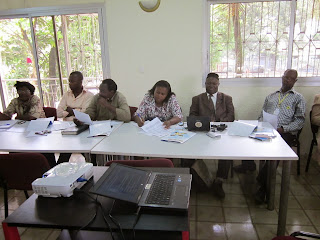 The target home code does not changes throughout the project and collected data at during home visits is registered on the data collection sheets as follows: SUFI/MN001/TE/VAD1/2014 and SUFI/MN001/TE/ASC/VAD1/2014. Community Health Workers are not authorized to treat pregnant women during home visits. His or her role is to counsel pregnant women and refer them to the nearest health facility to receive the TPI after checkup. During the home visit, the community health worker register information on the subjects discussed, which include MILDA (1), TPI (2) and PECADOM (3). He should say when the discussion started and when the discussion ended to permit evaluation of the duration which must be up to 30 minutes at each home.
The report from the CSO is a compilation of the reports from the community health workers in a health district including a financial report and a supervision report. Community health worker must transmit his or her report to the CSO by the 30th of each month and the report must be transmitted to the regional field supervisor by the 5th of each month.
The regional field supervisor sends his report to the central desk at Plan by the 10th of each month. CSO has to validate the report of the community health worker before payment. The number of homes must correspond to the number mentioned in the action plan submitted by the CHW from the beginning.
How the community health worker is supervised
Supervision is a technical assistance from a top level authority to a person working in an organization. There are three types of supervision:
•Facilitating approach (coaching and joint resolution of problems and communication in both ways).
•Training supervision (Follow up of community health worker on the field and correcting errors noted in delivery during execution on the field.
•Integrated supervision: supervision with participation of other stakeholders of different programmes.
•The techniques of supervision consist of direct observation and exchanges during contacts. There is also the analysis of documents presented by the community health worker.
•Organisation of auto-evaluation and to make constructive criticism on the work realized by the community health worker. This is done in a team and constitutes an internal evaluation.
•Role of supervisor is to oversee the work of the community health worker. The supervisor helps the community health worker to improve on his performance on the field.
•The supervisor has to promote team work, should be available, flexible and has humility, be ready to help others to develop, should be honest, credible and impartial, have the aptitude of good communicator, be attentive and give efficient feedback, should be a good manager of identified problems and have an aptitude of planning activities and carrying out a supervision.
•In order to prepare a supervision, the term of reference document should be elaborated, which defines the objective, establish a calendar of supervision with dates, hours and venues to be visited. Elaborate a budget for the supervision.
•The community health worker has to establish a cartography of the health area covered.
•Prepare a mission order and get it signed by the supervisor.
The target home code does not changes throughout the project and collected data at during home visits is registered on the data collection sheets as follows: SUFI/MN001/TE/VAD1/2014 and SUFI/MN001/TE/ASC/VAD1/2014. Community Health Workers are not authorized to treat pregnant women during home visits. His or her role is to counsel pregnant women and refer them to the nearest health facility to receive the TPI after checkup. During the home visit, the community health worker register information on the subjects discussed, which include MILDA (1), TPI (2) and PECADOM (3). He should say when the discussion started and when the discussion ended to permit evaluation of the duration which must be up to 30 minutes at each home.
The report from the CSO is a compilation of the reports from the community health workers in a health district including a financial report and a supervision report. Community health worker must transmit his or her report to the CSO by the 30th of each month and the report must be transmitted to the regional field supervisor by the 5th of each month.
The regional field supervisor sends his report to the central desk at Plan by the 10th of each month. CSO has to validate the report of the community health worker before payment. The number of homes must correspond to the number mentioned in the action plan submitted by the CHW from the beginning.
How the community health worker is supervised
Supervision is a technical assistance from a top level authority to a person working in an organization. There are three types of supervision:
•Facilitating approach (coaching and joint resolution of problems and communication in both ways).
•Training supervision (Follow up of community health worker on the field and correcting errors noted in delivery during execution on the field.
•Integrated supervision: supervision with participation of other stakeholders of different programmes.
•The techniques of supervision consist of direct observation and exchanges during contacts. There is also the analysis of documents presented by the community health worker.
•Organisation of auto-evaluation and to make constructive criticism on the work realized by the community health worker. This is done in a team and constitutes an internal evaluation.
•Role of supervisor is to oversee the work of the community health worker. The supervisor helps the community health worker to improve on his performance on the field.
•The supervisor has to promote team work, should be available, flexible and has humility, be ready to help others to develop, should be honest, credible and impartial, have the aptitude of good communicator, be attentive and give efficient feedback, should be a good manager of identified problems and have an aptitude of planning activities and carrying out a supervision.
•In order to prepare a supervision, the term of reference document should be elaborated, which defines the objective, establish a calendar of supervision with dates, hours and venues to be visited. Elaborate a budget for the supervision.
•The community health worker has to establish a cartography of the health area covered.
•Prepare a mission order and get it signed by the supervisor.


Subscribe to:
Posts (Atom)
