Thursday, February 24, 2011

COL Cameroon Link Child-to-Child Health Clubs


By Celine Asonganyi, Cameroon Link
Email: camlink99@gmail.com
This project was initiated by the Commonwealth of Learning, COL, Cameroon Link Programme, and aims to raise awareness about the importance of proper sanitation and hygiene among school children, teachers, and parents in the outlying areas of Lebialem, in the south west region of Cameroon. The chil-to-child club activities was used as the entry channel for the involvement of young persons in primary schools during the ongoing “Mother and Child Health Care Project” covering three sub divisions of Lebialem.
COL Cameroon Link uses peer education and the formation of sanitation clubs to complement the building of infrastructure, such as latrines and hand-washing facilities.
Communication Strategies
The child-to-child sanitation clubs during the youth week from the 4th – 11th February, use a peer education model in which older youth between the ages of 17 and 24 are trained as facilitators to spread messages about the importance of sanitation and hygiene to school children through various interactive strategies.
These peer educators encourage the formation of child-to-child sanitation clubs and, to date, clubs are operating in over 10 schools, involving about 12,000 students. These clubs are involved in advocating for healthy schools and good hygiene practices, and warning about the dangers of unhygienic environments through participatory methods like song, dance, theatre, and games. For example, children advocated for central refuse collection spots so that they no longer had to share their play spaces with garbage. They also raised awareness on how proper disposal of syringes and other medical material could help prevent the spread of HIV/AIDS.
In addition to raising awareness around sanitation, the clubs aim to provide students with safe after-school activities, as well as leadership skills, and an opportunity to engage in arts and creative media. The project also includes a child-to-child radio programme on Lebialem Community Radio that uses child presenters and supports the objectives of the sanitation clubs.
COL Cameroon Link Partnership Liaison organizing the youth health development activity within child care advocacy, has observed that the sanitation clubs are having an impact on adults in the community as well; this outcome emerges from efforts to establish linkages between Parent-Teacher Associations and communities to ensure that hygiene education skills acquired in school can influence behaviour change at the community level. Children take home the messages of good sanitation and begin to practice these habits at home.
As a result, parents and adults have begun putting pressure on the local authorities to provide better sanitation and hygiene education and services in all schools. According to COL Cameroon Link Partnership Liaison person, James Achanyi-Fontem, the success of the project has prompted inter-school discussions through radio drama competitions among students and teachers about the issues. This COL Cameroon Link initiative has inspired other municipalities to begin fundraising to start the project in their schools.
Development Issues
Health, Children, Youth, Sanitation
Key Points
In 2010, a Cameroon Link study found that 75% of all primary schools in Lebialem had no toilets for boys or girls and no hand-washing facilities. Few schools promoted hygiene, and those that did focused on lectures by teachers with no student participation. The authorities of the ministries of basic education and public health state that an unexpected benefit of the project is that it is allowing girls to stay in school longer and there has been no cholera outbreak in Lebialem as in other parts of Cameroon recently. Previously, many girls would leave school because of the lack of toilet facilities. For the girls existing toilets left them without any privacy. According to the COL Cameroon Link Liaison person, now that child-friendly, separate sanitation facilities for girls and boys have been installed, girls are staying on to complete their basic primary education.
The COL Cameroon Link programme is executed closely with the Ministry of Public Health, Ministry of Education and Lebialem Community Radio as an Open Distance Learning process to see how the sanitation clubs can be replicated in other communities. As part of its national curriculum reform, The government schools of Cameroon have committed 15% of the school term to reflect on local issues. Cameroon Link is pressing for hygiene promotion activities to be part of that 15%.
In 2010, COL Cameroon Link Partnership Liaison introduced Community-Led Total Sanitation (CLTS) in the Commonwealth of Learning (COL) pilot programme in Lebialem as an effort to accelerate the construction of new facilities with support from parent-teacher associations and schools themselves and adequate use of the facilities already available in the schools. This process involves training of 50 people from 10 health districts in May 2011. Cameroon Link has been invited to attend the National Meeting of the Ministry of Public Health annually to present new approaches to more than 50 health education officers and community health organization leaders already in partnership with the health promotion department. This meeting is chaired by the Minister of Public Health, Andre Mama Fouda, who appreciates the new approach and reports to the prime minister who requests other sectors, education colleagues and women’s empowerment , social welfare and youth ministry collaborators to support this approach to accelerate sanitation and stop open defecation in schools and surrounding communities. The CLTS implementation strategy will be presented in a joint COL Cameroon Link planning exercise between district health officials, civil society and non-governmental organisations (NGOs) at a Commonwealth of Learning and Open Distance Learning exchange meeting to be held in Douala in July 2011. Participants will also be briefed on the on-going COL project in Cameroon and the outcome of the last Pan Commonwealth of Learning Forum at Kochi, India of which Cameroon Link was honoured as delegate for the linking media to health and community development training.
Partners
Commonwealth of learning, COL
IBFAN Africa
IBFAN GIFA
Ministry of Public Health
Ministry of Basic Education
Lebialem Community Radio
FECABPA

Wednesday, February 9, 2011

Bill & Melinda Gates Foundation Extends A Hand To FRI


By James Achanyi-Fontem, Cameroon
Email: camlink99@gmail.com
The Executive Director of Farm Radio International, Kervin Perkins, has informed its African Partner Organizations that Bill & Melinda Gates Foundation will continue to give support to FRI work in 2011. This information was made known in the FRI Weekly Bulletin of February 2011
To break the news, Kervin Perkins said, 2011 is off to a great start, at a time FRI completed the 42-month African Farm Radio Research Initiative (AFRRI) and was already pulling together reports and spreading the news about what it learned because of the research.
FRI director acknowledged that FRI gathered compelling evidence, for the first time, that participatory radio works and works well! This means that when radio programs feature farmers' voices and perspectives and features practical, sustainable farming practices they are very widely listened to and have a measurable significant impact on farmers' knowledge and most importantly, their practices.
On the strength of these findings and the outstanding work of Farm Radio International's staff in Africa and Ottawa, the Bill & Melinda Gates Foundation has offered a second grant to allow us FRI extend effective farm radio services to more farmers in more countries! The 92nd script package released in late December 2010, focuses on the very important issue of water integrity in Africa.
Farm Radio Weekly, is FRI electronic bulletin of news and information about small scale-farming for African radio broadcasters, and it passed the 1000 African subscriber mark in 2010. To strengthen its ability to serve these rural broadcasters even better, FRI have opened two small news bureaus in Africa - one in Malawi, and one in Burkina Faso. These bureaus are already generating original stories about farming issues for Farm Radio Weekly. Another exciting piece of news is that the 2010 winner of the George Atkins Communication Award, Grace Amito, will visit Canada in March 2011.
Grace is the producer and host of farm radio programs at Mega FM in Northern Uganda. During her travel to Canada, she will meet with and give presentations to friends of Farm Radio International in Ottawa, Toronto, Guelph and Montreal. Friends and donors to Farm Radio International will get hard facts about Africa and the work of FRI during the rounds. Brenda Jackson at brenda@farmradio.org is booking appointments on this eventful trip by our African colleague. If you have any comments, questions or suggestions on how to expand FRI work in Africa, please email Kervin Perkins through kperkins@farmradio.org. For more on Farm radio International work, click on its web site - www.farmradio.org

Monday, January 24, 2011

African Writers Support Thebes International Cultural Festival In Luxor


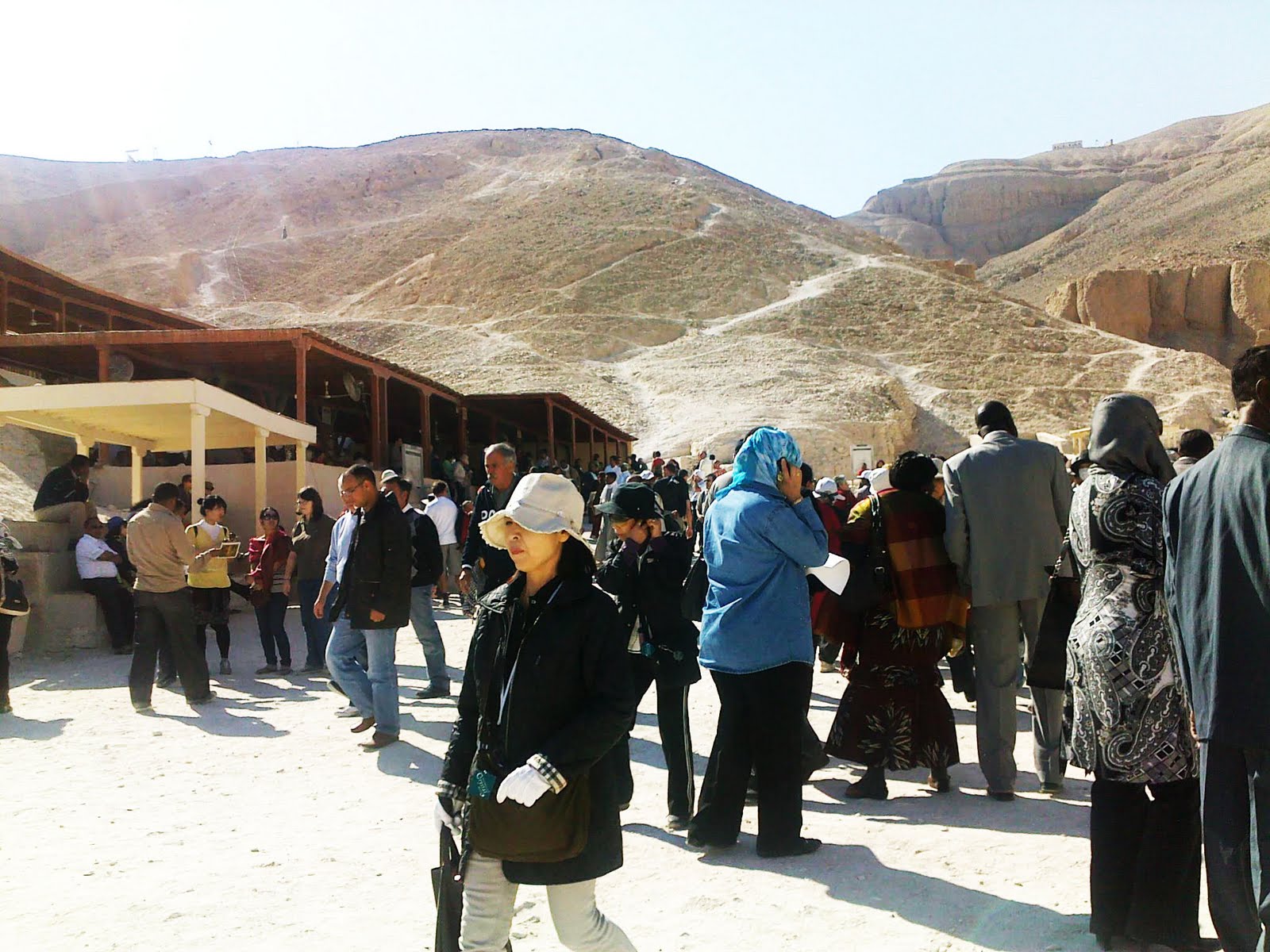
James Achanyi-Fontem, President of Cameroon Writers Association, addressed over 150 writers at the inaugural ceremony of The Thebes International Cultural Festival in Luxor, Egypt on the 16th January 2011.Read the full content of the address below.


The Honourable Governor of Luxor, Dr. Samir Farag,
The President of the Writers Union of Egypt, Mohamed Salmawy,
Special Guests, Ladies and Gentlemen,

It is with great pleasure that I take this opportunity to talk on behalf of Africa on the occasion of the inaugural of the Great Annual Event of The International Cultural Festival in Luxor, Egypt on the theme “The Nile in African Culture”.
Let me start by expressing the special thanks and gratitude of all of us invited to be here for this great historic event sponsored by the Egyptian Ministry of Foreign Affairs and the Ministry of Culture.
Special congratulations to the President of the Writers Union of Egypt, Dr. Mohamed Salmawy and his team for the dexterity in preparing the Thebes International Cultural Festival with the involvement of writers from around the world.
This occasion creates room for the reinforcement of cooperation ties and the beginning of joint partnerships and ventures between countries and groups of interest.
The Nile is history and everything that surrounds it is history. The Nile River Valley has played a unique role in Human history because of its special ecology, featuring the annual overflow of rich soil from the Great Lakes regions of Central Africa.
The banks of the Nile has been able to support intensive agricultural development for Food surpluses and the concentration of populations migrating from parts of Africa and Asia that laid the foundation of Nile Valley Civilization.
The special combination of African peoples, the Sun, the fertile land and the Nile River are blended together to produce the greatest civilization of the Ancient World of the Nile we admire today. The enormous impact of the High Culture of the Nile Valley on Africa, Asia, and Europe has not been fully appreciated and that is why we have all come to Luxor on the occasion of the Thebes International Cultural Festival to support our brothers and sisters of Egypt to valorize the successes achieved so far. The latest scientific discoveries have helped to reveal the significance of the value systems, the traditions and institutions that were produced in the Nile Valley and spread to various parts of Africa and the world.
Recent discoveries have established Africa as the site of the earliest domestication of grains and cattle, several thousand years before similar domestication took place in Western Asia around Mesopotamia
The new evidence along with older findings and the existing monuments, temples, tombs and pyramids have firmly established Egypt-Nubia-Ethiopia in the Nile Valley as the Cradle of Civilization.
These developments of African peoples of the Nile Valley became the foundation for the cultural progress of various groups in Africa and provide the basis for the culture unity of Africa through its traditions and institutions. These developments can be seen through the existence of a Communal, Cooperative and Collective value system throughout the continent.
African social structure has functioned through the extended family system with a unique preservation of the spirit of the ancestors. It is this African value system that became the basis of Nile Valley Civilization and explains the monumental building of temples, tombs, and pyramids and the need to produce sacred writing and literature, medicine, and mathematics, art and architecture.
All of these developments have left a Golden Legacy for the Ancient World which not only nurtured Africa, but inspired the early Hebrews and Greeks who sojourned in the Nile Valley.
The Niger River system flows more than two thousand miles through West Africa from the highlands of the Republic of Guinea to Mali, Niger, Benin and finally empties into the Atlantic Ocean along the Nigerian Coast.
The river actually splits the Republic of Nigeria, one of Africa's most important nations, into two halves and is the source of its name. During the Medieval Period from 1,000 A.D. to 1,600 A.D., the Niger River Valley was the center of African Islamic Civilization that produced the great Empires of Ghana, Mali and Songhay which were famous for their gold trade across the Sahara with the Mediterranean world.
This Sudanic Civilization with its mixture of traditional African cultural systems and Islam was based on agricultural development combined with extensive commercial activity in several city-states, such as Kumbi-Kumbi, Gao, Mopti, and others.
Several Arab scholars visited these empires and wrote about their prosperity, the peace and safety throughout the land and the fairness of their systems of justice and administration. The Congo River system is one of the World's greatest watersheds and rivals the Amazon River Valley. It is the center of the great rain forest or so-called jungle that is located in Central Africa region.
The Zambezi River Valley is located in Southern Africa and has played a crucial role in colonial and contemporary developments. The Zambezi River Valley and the Southern Africa region are so rich in vital mineral deposits that are absolutely necessary for the continued development of high technology in the Western World and Japan.
This presents in brief the Nile River Valley and other African River Systems we valorize during the Thebes International Cultural Festival in Luxor,Egypt. Lets open our minds, eyes and ears to learn more from this year’s festival, so that other festivals would be greater because of the inspirations of today.
Let us all join in celebrating the Nile Valley and its 4,100 miles of civilization.

James Achanyi-Fontem
President, Cameroon Writers Association,
P.O. Box 1460 Douala,
Littoral region,
Cameroon
Tel: (00237)77758840
Email: camlink99@gmail.com
Web site: http://cameroonlink.info
http://camlinknews.blogspot.com
http://www.youtube.com/camlink99/

Friday, January 21, 2011

Cameroon Writers and Egypt Writers Sign Cooperation agreement


By Cameroon Link,
Email: camlink99@gmail.com The Cameroon Writers Association and the Egyptian Writers Union have signed a cooperation agreement to pursue informed and more comprehensive knowledge of literature and culture of the peoples of Cameroon and Egypt. James Achanyi-Fontem of Cameroon Link/Writers Association signed for Cameroon and Mohamed Salmawy of the Union of Egyptian Writers signed for his country in the presence of the Governor of Luxor, Dr. Farag and over 150 writers from Africa and Arab regions.
The occasion was organized within the celebration of the 2011 Thebes International Cultural Festival held in Luxor, Egypt annually. Within the frame work of the agreement, both parties will regularly exchange the latest developments in the field of literature and literary works and make proposals for translation of special works of common interest.
The cooperation agreement will also lead to the organization of joint travel study visits for four writers from each country for a period not longer than one week annually, and participate in the exposure of literary works during seminars or festivals and conference at international level. 150 delegates from over 25 countries from the Africa and Arab regions took part in the Thebes International Cultural Festival held in Luxor, Egypt from the 16th – 19th January 2011. The theme of the festival was ‘’The Nile in African Cultures’’ The festival is organized annually by the Writers’ Union of Egypt and the governorate of Luxor and sponsored by the Egyptian Ministry of Foreign Affairs and the Ministry of Culture.
During the inaugural ceremony of the festival, the representative of the African Group of Writers, James Achanyi-Fontem, told the audience that the Nile River has a long history and everything that surrounds it is history. According to the Executive Director of Cameroon, who doubled as the President of the Cameroon Writers Association, the Nile River Valley has played a unique role in Human history because of its special ecology, featuring the annual overflow of rich soil from the Great Lakes regions of Central Africa.
The banks of the Nile has been able to support intensive agricultural development for Food surpluses and the concentration of populations migrating from parts of Africa and Asia that laid the foundation of Nile Valley Civilization.
The special combination of African peoples, the Sun, the fertile land and the Nile River are blended together to produce the greatest civilization of the Ancient World of the Nile we admire today. The enormous impact of the High Culture of the Nile Valley on Africa, Asia, and Europe has not been fully appreciated and that is why we have all come to Luxor on the occasion of the Thebes International Cultural Festival to support our brothers and sisters of Egypt to valorize the successes achieved so far. The latest scientific discoveries have helped to reveal the significance of the value systems, the traditions and institutions that were produced in the Nile Valley and spread to various parts of Africa and the world.
Recent discoveries have established Africa as the site of the earliest domestication of grains and cattle, several thousand years before similar domestication took place in Western Asia around Mesopotamia The new evidence along with older findings and the existing monuments, temples, tombs and pyramids have firmly established Egypt-Nubia-Ethiopia in the Nile Valley as the Cradle of Civilization.
These developments of African peoples of the Nile Valley became the foundation for the cultural progress of various groups in Africa and provide the basis for the cultural unity of Africa through its traditions and institutions. These developments can be seen through the existence of a Communal, Cooperative and Collective value system throughout the continent.
African social structure has functioned through the extended family system with a unique preservation of the spirit of the ancestors. It is this African value system that became the basis of Nile Valley Civilization and explains the monumental building of temples, tombs, and pyramids and the need to produce sacred writing and literature, medicine, and mathematics, art and architecture.
All of these developments have left a Golden Legacy for the Ancient World which not only nurtured Africa, but inspired the early Hebrews and Greeks who sojourned in the Nile Valley.
The Niger River system flows more than two thousand miles through West Africa from the highlands of the Republic of Guinea to Mali, Niger, Benin and finally empties into the Atlantic Ocean along the Nigerian Coast.
The river actually splits the Republic of Nigeria, one of Africa's most important nations, into two halves and is the source of its name. During the Medieval Period from 1,000 A.D. to 1,600 A.D., the Niger River Valley was the center of African Islamic Civilization that produced the great Empires of Ghana, Mali and Songhay which were famous for their gold trade across the Sahara with the Mediterranean world.
This Sudanic Civilization with its mixture of traditional African cultural systems and Islam was based on agricultural development combined with extensive commercial activity in several city-states, such as Kumbi-Kumbi, Gao, Mopti, and others.
Several Arab scholars visited these empires and wrote about their prosperity, the peace and safety throughout the land and the fairness of their systems of justice and administration. The Congo River system is one of the World's greatest watersheds and rivals the Amazon River Valley. It is the center of the great rain forest or so-called jungle that is located in Central Africa region.
The Zambezi River Valley is located in Southern Africa and has played a crucial role in colonial and contemporary developments. The Zambezi River Valley and the Southern Africa region are so rich in vital mineral deposits that are absolutely necessary for the continued development of high technology in the Western World and Japan.

Thursday, December 23, 2010

La Création et l’évaluation des Scripts et Programmes Radiophoniques


Par Jeanne Tchakoute, Cameroun
Email: jeannetchakoute@yahoo.fr
Un atelier de formation sur la création et l’évaluation des scripts et programmes radiophoniques à l’attention des responsables des radios rurales de l’Afrique Francophone de l’Ouest, du Centre et des grands lac, a eu lieu du 29 Novembre au 03 Décembre 2010 à Ouagadougou au Burkina Faso.
Au total 21 participants en service dans les radios se sont retrouvés à Ouagadougou du 29 Novembre au 03 Décembre 2010 au Burkina Faso, dans le cadre de cet atelier, organisé par JADE Production, grâce au soutien du CTA et de Farm Radio International (FRI).
La cérémonie d’ouverture qui précédait les travaux était présidée par Mme la Représentante du Ministre de la communication, du Tourisme et de la Culture. Cela s’est déroulé en présence du Directeur de JADE Production, M. SOULEYMANE, de la Représentante de Farm Radio, Nelly BASSILLY, de Samuel EBITENDA, chargé des programmes média CTA (Centre Technique de Coopération Agricole) et des 21 participants.
Après la cérémonie d’ouverture a suivi la présentation des participants, qui a permis aux uns et aux autres de coller les noms sur les visages, point de départ de sympathie et de solidarité. Chaque participant a ensuite présenté les 03 sujets choisis, et l’approche qui a guidé le choix.
Sylvain DEGARRDINS, journaliste à radio canal et aux radios rurales Internationales, a présenté un exposé sur le concept de l’idée centrale, et c’est l’idée centrale qui était la base des travaux. Les techniques d’entrevue, les simulations d’interviews et les techniques d’enregistrement de sons pour la radio ont été faites, avec la participation de tous.
La descente dans la communauté MOUTI village située à m’Est du Ouagadougou, a permis aux participants de réaliser en groupe de 03 des reportages sur 07 sujets différents. Le sujet traité par le groupe n°6 dont je faisais partie portait sur le SOSOAGA, travail champêtre en groupes d’agriculteurs, de la culture à la récolte, un héritage qui doit être sauvegardé, malgré l’exode rural qui vide les campagnes et réduit le nombre d’agriculteurs, et en même temps une pratique passionnante qui facilite les travaux champêtres et renforce la solidarité, non sans améliorer les conditions de vie des populations.
L’équipe n°6 constituée de YOUSSOUF NIAKATE PACOME TOMETISSI et Jeanne TCHAKOUTE a fait des interviews aux agriculteurs à ce sujet, et a réalisé un magazine de minutes, avec les sons enrobés. Comme les autres sujets, le reportage sur le SOSOAGA a été suivi en séance après l’enregistrement du magazine et le montage.
L’écoute des reportages de toutes les équipes a permis de critiquer, proposer, améliorer, échanger et de beaucoup apprendre. Au delà d’un exercice, la sortie du MOUTI a été une grande découverte pour moi, qui découvrait la savane. Je ne voyais ce paysage qu’à la télévision ou sur photos, avec des charrues tirés par des ânes.
Chaque soir, l’évaluation de la journée devait servir à améliorer le lendemain.
La remise des certificats aux participants, l’évaluation de l’atelier et la lecture et signature du contrat ont précédé la fête de clôture le vendredi 03 Décembre 2010.
Heureuse initiative de Farm radio, cet atelier est une émulation et un grand apport pour l’épanouissement des hommes de médias, chargés de faire parvenir les messages aux acteurs du monde rural. Je suis très sure que, comme moi, tous les participants sont ravis des travaux et se sont séparés, forts d’avoir beaucoup appris.
Les connaissances sont transmises dès le retour dans nos rédactions et appliquées sur le terrain. C’est l’occasion de remercier Farm Radio International, CTA et JADE Production pour l’initiative de regrouper les personnes de pays Francophone d’Afrique. Mon vœu est que cette expérience récidive.

Monday, December 6, 2010

E-Learning Course For Africa Broadcasters


Blythe McKay is Manager of Programmes & Partnerships of Farm Radio International, FRI, in Canada. She highlighted e-learning courses organized to support African broadcasters through the development of radio scripts on small holder farmer innovations during the Pan Commonwealth of Learning Forum in Kochi, India late in November 2010. Introducing the e-learning issue, Blythe described a script as a written version of a short radio programme. The FRI script writing competitions started in 2005 with 26 entries from 16 countries on the MDGs, In 2007, the competition focused on Climate Change Adaptation with 51 entries from 20 countries.
In 2009, the radio script competition was on smallholder farmers and this accumulated 82 scripts from 20 countries. The last competition is in the course of evaluation and this got 128 entries with over 500 subscribers. Four competitions have been organized since 2005.
She explained that the purpose of the competition is to strengthen the capacity of African broadcasters affiliated to the Farm Radio International network. Different topics have been treated, as far as the needs of communicators and smallholder farmers is concerned.
In 2009, Farm Radio International partnered with Community of Learning, COL, to offer an e-learning component and to provide training for participants in the competition. Since these activities started, the number of participants has continued to increased, reflecting the value and impact of the exercise. FRI covers over 250 radio stations on the Africa continent.
The process includes course development, marketing and sign up, online training and the use of CD-Rom, script submission, judging by international panel, revision of winning script, evaluation and distribution.
This process is organized in such a way that broadcasters are reached on time. Persons who do not have regular access to internet, receive the their packets of scripts by post. It takes a couple of months for some to receive materials from Farm radio international.
The FRI online training has a duration of 10 weeks or more. When the process is completed, the scripts are reviewed by an international panel of judges. 10 to 15 winners are selected and they receive a certificate and a mini recorder for producing more interactive programmes in their stations as a incentive. They are often advised to revise their scripts based on the feedback received from the judges, to make sure the content is balanced.
When it is packed and posted to the broadcasters, the scripts are adapted and used during local language broadcasts targeting the farmer and animal breeder. Between 300 and 500 packets are sent to sub Saharan Africa. As an organization, FRI learns by doing and this helps for the planning and organization of future competitions.
The web site of Farm radio International, FRI, can be consulted at, www.farmradio.org Over 1.000 scripts are have been lodged on the web site and people can download and use them free of any charge. Farm Radio International(www.farmradio.org) is a Canadian registered charity that is at the forefront of using radio combined with other ICTs to serve smallholder farmers. It sends information on low-cost ways to improve food security to 360 radio stations across 39 countries. The packages, in English and French, cover topics from improving soil fertility to coping with climate change. In the past 30 years, local broadcasters have valued the materials and translated them into over one hundred local African languages.Over 950 subscriptions receive electronic news service on weekly basis. Farm Radio International also privodes training to broadcasters to improve their skills in serving smallholders, more of them in rural communities.

Innovative Tool for Distance Learning
Jothi, Santhy & Valluvaparidasan are all of the directorate of the Open Distance Learning in Tamil Nadu Agricultural University of India. They presented a joint paper on the innovative tool for community development through distance education.
The government is requesting the agricultural sector to come up with innovations that can help farmers improve on their yields, especially in the dry regions of the country. E-Learning is used by the International Crop Research Institute for the semi arid tropics and Tamil Nadu Agriculture University. In these institutions, instead for building course from the top down, the opposite is down building courses from the bottom upwards. This helps to locate the learning objects.
The two points on content with the consumers are the missing part of e-learning as a social network, who is reading the RLO and the automatic formation of the list, not forgetting the Meta Data with at least three taxonomies. Google relates documents to documents and it is the same system that is applied in the innovation to e-learning by the directorate.
User profiles have been conceive to facilitate interested persons to sign up for the course they want.

Innovations In ODL In Agriculture

Venkataraman Bataji, B.S. Hansra, Surya Gunjai, Valiuva Paridasan and Praveen S. Jain are of the ICRISAT in Patancheru, the School of Agriculture of IGNOU, School of Agriculture of YCMOU, the ODL Directorate and the school of agriculture, IGNOU. They made a joint presentation on innovations using the practices in re-usable Learning objects and semantic web technologies. In the picture above, Blythe is standing with James, focal point for FRI Cameroon. For more, visit the following web site at http://cameroonlink.info

Open Learning Resources and Community Development

Open Learning Resources and Community Development
By Cameroon Link
Email: camlink99@gmail.com

Presenjit Das works with the Institute of Distance and Open Learning of the University of Guahati in India. He explored new pathways of knowledge in the field of high education in Assam. There are over 40 open distance learning opportunities in India. The idea is about 15 years old. India is learning from all over the world and new initiatives are coming up throughout the country. Assam is a North East Indian state. Presenjit Das said, that as open distance learning is discussed, the word openness should be given consideration as a path way. Oral learning India is certainly different from oral learning in other parts of the world.
He said, in the last five years, there has been a remarkable development in the accessibility through the resources of open education. UNESCO chaired a vivid discussion on the use of OER through its International Institute of Educational Planning, IIEP, which affirms that Open Educational Resources,OER, can bring a remarkable change in community development.
According to Presenjit Das, learning in ODL must refer to cultural factors over and above psychological theories of learning. The design of materials must contain implicit references to institutional infrastructure like information channels which are important aspects of the learning process.
Open Distance Learning has to be contextualized. In Assam, in the north east of India, there are 5 major universities out of three offering higher education through open distance learning. The design of curriculum ordinarily refers to the tried and tested pedagogic methods of classroom teaching. Practice reveals that this consistently relegates ODL curriculum to the lower slot in the repertory of courses. The 11th five year development plan of the Indian government suggests an allocation of 600 million rupees for the integration of specifically ICT in school education.
As the government increases investment in ICT for education, continuous effeorts must be made to ensure that investments in technology positively impact on all aspects of education.such community development.
The Institute of Open and Distance Learning in Guahati university has taken a number of visionary initiativesby launching the first e-portal of the North East, notably www.bodhiroom.Idolgu.org on the 13th November 2009.
By providing more effective and efficient access to information, it improves collaboration and communication, integration of information and application, increased document flow and workflow, smarter decision making, increased productivity and integrated knowledge environment.
The e-portal offers an independent discussion forum and news forum for every programme, online interaction facility with fellow students, faculty members and even officials which include the administrative officer of G.U.
A Campus community radio station was launched at G.U. on the 20th November 2010 as another mew development. Addressing challenging issues, Presenjit Das said, the responsibility towards social needs of community development stands as a distinct markerof the ODL system, thus calling on practitioners to maintain practices reinforcing ideas of openness with reference to teacher-student relationship.