By Cooh Odette Behn, Cameron Link
The prevention and control of non-communicable diseases was at the centre of a one day Community of Learning Issues workshop in Yaoundé on the 30th May, 2012 how these diseases affect lactating mothers, the family and relatives. The workshop was presided by the Sub-Director for disease prevention at the ministry of public health, Dr SEPDE OUMAROU, who emphasized that the problem has become a public health issue in Cameroon. Cameroon Link led by James Achanyi-Fontem chaired the session to adopt the statute and internal regulation of a consortium of associations and put in place an administrative board to work out strategies to prevent and control non-communicable diseases in Cameroon.
These common diseases which are avoidable have socio-economic and ecological impact that limits access to treatment. Early screening can act as primary preventive measures that modify common risk factors in health promotion.
Non-communicable diseases are classified in four groups which include hypertension, diabetes, la chronic renal infections and cardiovascular infections in the first group. Cancer, Asthma and other respiratory problems fall in the second group. Dental, visual and ear problems are classified third, while epilepsy, neurological infections, sickle cell disorder, rheumatism and mental disorders considered to be genetic infections are in the fourth class.

WHO Statistics in 2010 showed that the prevalence of hypertension in men is 39.6%, while 34.2 % of women are affected in Cameroon. In 2008, mortality rate in men is put at 39.7 and 46.1 % in women. This is even worse for aged persons before 70 years as statistics are put at 63.1% for men and 62.6% for women. The situation is worsen by the limited financial resources to take care of patients.
Focusing attention on cancer, it was revealed that there are 12.000 new cases of cancer registered each year, 25.000 persons are said to be currently living with cancer. This figure may double by the year 2020 experts say. The most frequent cancers of cancers affected the breasts, uterus, prostate gland and liver. More than 80% of persons affected do the first screening test only the infection is at an advanced stage and these persons die within the 12 months that follow diagnosis.
Asthma et chronic respiratory affections are on the increase and morbidity is visible in Cameroon, because of the low age of the population, the rapid demographic increase, the decrease in infectious diseases, increase in urbanisation and industrialisation and progress changes in life style. Chronic respiratory infections occupy an important place in the epidemiologic profile.
No real statistics exist on the number of deaf persons in Cameroon and a study undertaken in two primary schools in Yaounde in 2002 showed a 15.5% rate. The psychologic impact leads to stigmatisation, exclusion and poor academic performance. This is also leading to an increase on spending in family health, weak socio-professional performance and academic failures.

1% of the population of Cameroon has eye problems. The national prevalence of the blind is 3%. The main causes of blindness are cataract, glaucoma, trachoma, refractive opacity of the corn and diabetic retinopathy. The fight against blindness in Cameroon is witnessing an important development due to the training of local specialists and an increase in the technical know-how.
There are 50 million cases of epilepsies around the world and 30 million of the cases are located in Asia, while 10 million are in Africa. In Cameroon, we find cases of epilepsies in all regions.
The areas with high prevalence are Mbam (6%) , lékié (5,9%), DS . Mbengwi, DS. Batibo, Nkam Division, and in the north, Garoua has the highest number. These rates are highest in sub Saharan Africa, especially among persons aged between 10 and 29 years of affected populations. The lack of knowledge of the origin of epilepsy, economic difficulties and limited access to treatment available contribute to the expansion of the problem.
Sickle Cell Disorder is a genetic disease, which wide spread around the world and 80% of children affected die before the age of 5 years. The population is advised to do a blood cells diagnosis before engaging marriage. On the other hand, rheumatism prevalence in Cameroon is put at 9.4% with women constituting 62.31% of persons affected.
225 out 1.000 inhabitants of Cameroon are said to have mental problems according to WHO statistics in 2008. The health professionals trained in this field is very low and the rate is put at 0.33 for 100.000 inhabitants, making only 1.79 for every 1.000.
The risk factors of non-communicable diseases are tobacco consumption in all its forms. The statistics available show that 10.5% of men smoke tobacco, while 1.1% of women smoke. 8% of men smoke cigarettes, while 0.6 % women smoke cigarettes in Cameroon. This leads to overweight in 30.2 % in men and 40.5% in women. The obesity rate is 6.4% for men and 14.1% for women. The lack of participation in physical exercises and excessive intake of alcohol are also considered to have negative impact on the body.

To find a solution these problems, an inter-sectorial Synergy has been put in place in Cameroon within the context of the health sector strategy 2001 – 2015 as recommended by the World Health Organisation. Civli society organisations and the community need to be strongly involved for the promotion information, education and communication action for behaviour change.
According to WHO records, diabetes, hypertension of high blood pressure, heart attack, cancer, and chronic respiratory problems represent 31% of the causes of deaths in Cameroon and women are the most vulnerable group, though it affects without discrimination all other groups in the society. This comes to increase the health problems already caused by persistent transmissible infections. Within the framework of the community of learning initiative, it was agreed that a very serious action plan should be designed to tackles the difficult incidences that make the rural populations poorer as they spend their little resources for health consultations and treatment. Participants agreed that the situation constitutes an infringement to the socio-economic development of the population and a menace to the emergence of Cameroon.
The determinants of most of the diseases are the social, cultural, environmental, attitudes, economic and health policies by the government. The development of health offers do not correspond to the increasing popular demands. The achieve positive results, a multi-sectored action plan is needed.
The health strategic orientations need to reflect appropriate policy in the execution and delivery of services. This resides on consideration of the determining elements of the sectorial problems already registered.
The actors must translate policies for the amelioration of transparency, competence, sharing of national resources and responsibilities in the management of public affairs. Health system decentralisation must be reinforced and partnership between the different actors should be developed.

The community which is considered the beneficiary of the policies must be involved during planning and decision making process including organisation and management. The information system needs reinforcement in the management of resources, coordination and regulation of the control of activities.
New approaches to health policy need to be defined which include the integration of economic opportunities and new technologies through promotion of partnerships to compliment public services.
Three commissions were put in place as follows:
Media, Public Relations and Sponsorship Commission in charge press coverage and the elaboration of media strategies and the road map for the expansion of activities. It is composed of :
1.Norbert ELOUNDOU ENGAMA
2.Mr. Anselme Ndopata (Yaoundé)
3.Mr Roger Mamoun (Yaoundé)
4.Mr Bebe Roger (Douala)
5.Mr Parfait SIKI
6.Mr Donchieu Fabien (Douala)
7.Mme Bikai Emilie Hortense (Douala)
8.Mr ALemju Funtu (Kumba)
9.Mr James Achanyi Fontem (Douala)
The logistic commission is in charge of putting in place the functional modalities of the consortium and the organisation of materials and protocol services. This commission was constituted of:
1.MATANGA Philippe (Yaoundé)
2.M.MABEE Jean Marie (Douala)
3.M.DINGONG Francis
4.Mme BANDA NOMBOL Judith
5.Mme Mballa Pancrace Ep Songo (Douala)
6. Nlend Paul (Douala)
7. Mme Ngo Bindoo Hanna Ep Billè (Douala)
8.Mr. Irené Gaping Tchongo (Yaoundé)
9.Mlle Ndolo Bep Christine (Yaoundé)
The third commission is in charge of planning, follow up, monitoring and evaluation. It is expected to set the base of the working groups and their priority interventions, which will be integrated in the road map of activities of the consortium.
The member are:
1.Dr DISSONGO Jean II
2.Dr NNOMZO’O ETIENNE (YAOUNDE)
3.M. NDAYA ANDRE DEMAISON (YAOUNDE)
4.M. ZOMBOUDEM ZOMBOUDEM
5.M. KUEDA Zacharie.
6.M. MBONJO Martin Martial
7.M. SIME EWONDE
Coordinating the discussions of reports by the commissions, James Achanyi-Fontem, the chairman, emphasized that participants should always consider the fact the consortium aims at federating energies for the mobilisation of human and financial resources. Advocacy action should tackle the actors of the public and private sectors. Women, youths, professionals, traditiona and religious authorities should be involved for action.


.jpg)


 The prevention and control of non-communicable diseases was at the centre of a one day Community of Learning Issues workshop in Yaoundé on the 30th May, 2012 how these diseases affect lactating mothers, the family and relatives. The workshop was presided by the Sub-Director for disease prevention at the ministry of public health, Dr SEPDE OUMAROU, who emphasized that the problem has become a public health issue in Cameroon. Cameroon Link led by James Achanyi-Fontem chaired the session to adopt the statute and internal regulation of a consortium of associations and put in place an administrative board to work out strategies to prevent and control non-communicable diseases in Cameroon.
These common diseases which are avoidable have socio-economic and ecological impact that limits access to treatment. Early screening can act as primary preventive measures that modify common risk factors in health promotion.
Non-communicable diseases are classified in four groups which include hypertension, diabetes, la chronic renal infections and cardiovascular infections in the first group. Cancer, Asthma and other respiratory problems fall in the second group. Dental, visual and ear problems are classified third, while epilepsy, neurological infections, sickle cell disorder, rheumatism and mental disorders considered to be genetic infections are in the fourth class.
The prevention and control of non-communicable diseases was at the centre of a one day Community of Learning Issues workshop in Yaoundé on the 30th May, 2012 how these diseases affect lactating mothers, the family and relatives. The workshop was presided by the Sub-Director for disease prevention at the ministry of public health, Dr SEPDE OUMAROU, who emphasized that the problem has become a public health issue in Cameroon. Cameroon Link led by James Achanyi-Fontem chaired the session to adopt the statute and internal regulation of a consortium of associations and put in place an administrative board to work out strategies to prevent and control non-communicable diseases in Cameroon.
These common diseases which are avoidable have socio-economic and ecological impact that limits access to treatment. Early screening can act as primary preventive measures that modify common risk factors in health promotion.
Non-communicable diseases are classified in four groups which include hypertension, diabetes, la chronic renal infections and cardiovascular infections in the first group. Cancer, Asthma and other respiratory problems fall in the second group. Dental, visual and ear problems are classified third, while epilepsy, neurological infections, sickle cell disorder, rheumatism and mental disorders considered to be genetic infections are in the fourth class. WHO Statistics in 2010 showed that the prevalence of hypertension in men is 39.6%, while 34.2 % of women are affected in Cameroon. In 2008, mortality rate in men is put at 39.7 and 46.1 % in women. This is even worse for aged persons before 70 years as statistics are put at 63.1% for men and 62.6% for women. The situation is worsen by the limited financial resources to take care of patients.
Focusing attention on cancer, it was revealed that there are 12.000 new cases of cancer registered each year, 25.000 persons are said to be currently living with cancer. This figure may double by the year 2020 experts say. The most frequent cancers of cancers affected the breasts, uterus, prostate gland and liver. More than 80% of persons affected do the first screening test only the infection is at an advanced stage and these persons die within the 12 months that follow diagnosis.
Asthma et chronic respiratory affections are on the increase and morbidity is visible in Cameroon, because of the low age of the population, the rapid demographic increase, the decrease in infectious diseases, increase in urbanisation and industrialisation and progress changes in life style. Chronic respiratory infections occupy an important place in the epidemiologic profile.
No real statistics exist on the number of deaf persons in Cameroon and a study undertaken in two primary schools in Yaounde in 2002 showed a 15.5% rate. The psychologic impact leads to stigmatisation, exclusion and poor academic performance. This is also leading to an increase on spending in family health, weak socio-professional performance and academic failures.
WHO Statistics in 2010 showed that the prevalence of hypertension in men is 39.6%, while 34.2 % of women are affected in Cameroon. In 2008, mortality rate in men is put at 39.7 and 46.1 % in women. This is even worse for aged persons before 70 years as statistics are put at 63.1% for men and 62.6% for women. The situation is worsen by the limited financial resources to take care of patients.
Focusing attention on cancer, it was revealed that there are 12.000 new cases of cancer registered each year, 25.000 persons are said to be currently living with cancer. This figure may double by the year 2020 experts say. The most frequent cancers of cancers affected the breasts, uterus, prostate gland and liver. More than 80% of persons affected do the first screening test only the infection is at an advanced stage and these persons die within the 12 months that follow diagnosis.
Asthma et chronic respiratory affections are on the increase and morbidity is visible in Cameroon, because of the low age of the population, the rapid demographic increase, the decrease in infectious diseases, increase in urbanisation and industrialisation and progress changes in life style. Chronic respiratory infections occupy an important place in the epidemiologic profile.
No real statistics exist on the number of deaf persons in Cameroon and a study undertaken in two primary schools in Yaounde in 2002 showed a 15.5% rate. The psychologic impact leads to stigmatisation, exclusion and poor academic performance. This is also leading to an increase on spending in family health, weak socio-professional performance and academic failures. 1% of the population of Cameroon has eye problems. The national prevalence of the blind is 3%. The main causes of blindness are cataract, glaucoma, trachoma, refractive opacity of the corn and diabetic retinopathy. The fight against blindness in Cameroon is witnessing an important development due to the training of local specialists and an increase in the technical know-how.
There are 50 million cases of epilepsies around the world and 30 million of the cases are located in Asia, while 10 million are in Africa. In Cameroon, we find cases of epilepsies in all regions.
The areas with high prevalence are Mbam (6%) , lékié (5,9%), DS . Mbengwi, DS. Batibo, Nkam Division, and in the north, Garoua has the highest number. These rates are highest in sub Saharan Africa, especially among persons aged between 10 and 29 years of affected populations. The lack of knowledge of the origin of epilepsy, economic difficulties and limited access to treatment available contribute to the expansion of the problem.
Sickle Cell Disorder is a genetic disease, which wide spread around the world and 80% of children affected die before the age of 5 years. The population is advised to do a blood cells diagnosis before engaging marriage. On the other hand, rheumatism prevalence in Cameroon is put at 9.4% with women constituting 62.31% of persons affected.
225 out 1.000 inhabitants of Cameroon are said to have mental problems according to WHO statistics in 2008. The health professionals trained in this field is very low and the rate is put at 0.33 for 100.000 inhabitants, making only 1.79 for every 1.000.
The risk factors of non-communicable diseases are tobacco consumption in all its forms. The statistics available show that 10.5% of men smoke tobacco, while 1.1% of women smoke. 8% of men smoke cigarettes, while 0.6 % women smoke cigarettes in Cameroon. This leads to overweight in 30.2 % in men and 40.5% in women. The obesity rate is 6.4% for men and 14.1% for women. The lack of participation in physical exercises and excessive intake of alcohol are also considered to have negative impact on the body.
1% of the population of Cameroon has eye problems. The national prevalence of the blind is 3%. The main causes of blindness are cataract, glaucoma, trachoma, refractive opacity of the corn and diabetic retinopathy. The fight against blindness in Cameroon is witnessing an important development due to the training of local specialists and an increase in the technical know-how.
There are 50 million cases of epilepsies around the world and 30 million of the cases are located in Asia, while 10 million are in Africa. In Cameroon, we find cases of epilepsies in all regions.
The areas with high prevalence are Mbam (6%) , lékié (5,9%), DS . Mbengwi, DS. Batibo, Nkam Division, and in the north, Garoua has the highest number. These rates are highest in sub Saharan Africa, especially among persons aged between 10 and 29 years of affected populations. The lack of knowledge of the origin of epilepsy, economic difficulties and limited access to treatment available contribute to the expansion of the problem.
Sickle Cell Disorder is a genetic disease, which wide spread around the world and 80% of children affected die before the age of 5 years. The population is advised to do a blood cells diagnosis before engaging marriage. On the other hand, rheumatism prevalence in Cameroon is put at 9.4% with women constituting 62.31% of persons affected.
225 out 1.000 inhabitants of Cameroon are said to have mental problems according to WHO statistics in 2008. The health professionals trained in this field is very low and the rate is put at 0.33 for 100.000 inhabitants, making only 1.79 for every 1.000.
The risk factors of non-communicable diseases are tobacco consumption in all its forms. The statistics available show that 10.5% of men smoke tobacco, while 1.1% of women smoke. 8% of men smoke cigarettes, while 0.6 % women smoke cigarettes in Cameroon. This leads to overweight in 30.2 % in men and 40.5% in women. The obesity rate is 6.4% for men and 14.1% for women. The lack of participation in physical exercises and excessive intake of alcohol are also considered to have negative impact on the body. To find a solution these problems, an inter-sectorial Synergy has been put in place in Cameroon within the context of the health sector strategy 2001 – 2015 as recommended by the World Health Organisation. Civli society organisations and the community need to be strongly involved for the promotion information, education and communication action for behaviour change.
According to WHO records, diabetes, hypertension of high blood pressure, heart attack, cancer, and chronic respiratory problems represent 31% of the causes of deaths in Cameroon and women are the most vulnerable group, though it affects without discrimination all other groups in the society. This comes to increase the health problems already caused by persistent transmissible infections. Within the framework of the community of learning initiative, it was agreed that a very serious action plan should be designed to tackles the difficult incidences that make the rural populations poorer as they spend their little resources for health consultations and treatment. Participants agreed that the situation constitutes an infringement to the socio-economic development of the population and a menace to the emergence of Cameroon.
The determinants of most of the diseases are the social, cultural, environmental, attitudes, economic and health policies by the government. The development of health offers do not correspond to the increasing popular demands. The achieve positive results, a multi-sectored action plan is needed.
The health strategic orientations need to reflect appropriate policy in the execution and delivery of services. This resides on consideration of the determining elements of the sectorial problems already registered.
The actors must translate policies for the amelioration of transparency, competence, sharing of national resources and responsibilities in the management of public affairs. Health system decentralisation must be reinforced and partnership between the different actors should be developed.
To find a solution these problems, an inter-sectorial Synergy has been put in place in Cameroon within the context of the health sector strategy 2001 – 2015 as recommended by the World Health Organisation. Civli society organisations and the community need to be strongly involved for the promotion information, education and communication action for behaviour change.
According to WHO records, diabetes, hypertension of high blood pressure, heart attack, cancer, and chronic respiratory problems represent 31% of the causes of deaths in Cameroon and women are the most vulnerable group, though it affects without discrimination all other groups in the society. This comes to increase the health problems already caused by persistent transmissible infections. Within the framework of the community of learning initiative, it was agreed that a very serious action plan should be designed to tackles the difficult incidences that make the rural populations poorer as they spend their little resources for health consultations and treatment. Participants agreed that the situation constitutes an infringement to the socio-economic development of the population and a menace to the emergence of Cameroon.
The determinants of most of the diseases are the social, cultural, environmental, attitudes, economic and health policies by the government. The development of health offers do not correspond to the increasing popular demands. The achieve positive results, a multi-sectored action plan is needed.
The health strategic orientations need to reflect appropriate policy in the execution and delivery of services. This resides on consideration of the determining elements of the sectorial problems already registered.
The actors must translate policies for the amelioration of transparency, competence, sharing of national resources and responsibilities in the management of public affairs. Health system decentralisation must be reinforced and partnership between the different actors should be developed. The community which is considered the beneficiary of the policies must be involved during planning and decision making process including organisation and management. The information system needs reinforcement in the management of resources, coordination and regulation of the control of activities.
New approaches to health policy need to be defined which include the integration of economic opportunities and new technologies through promotion of partnerships to compliment public services.
Three commissions were put in place as follows:
Media, Public Relations and Sponsorship Commission in charge press coverage and the elaboration of media strategies and the road map for the expansion of activities. It is composed of :
1.Norbert ELOUNDOU ENGAMA
2.Mr. Anselme Ndopata (Yaoundé)
3.Mr Roger Mamoun (Yaoundé)
4.Mr Bebe Roger (Douala)
5.Mr Parfait SIKI
6.Mr Donchieu Fabien (Douala)
7.Mme Bikai Emilie Hortense (Douala)
8.Mr ALemju Funtu (Kumba)
9.Mr James Achanyi Fontem (Douala)
The logistic commission is in charge of putting in place the functional modalities of the consortium and the organisation of materials and protocol services. This commission was constituted of:
1.MATANGA Philippe (Yaoundé)
2.M.MABEE Jean Marie (Douala)
3.M.DINGONG Francis
4.Mme BANDA NOMBOL Judith
5.Mme Mballa Pancrace Ep Songo (Douala)
6. Nlend Paul (Douala)
7. Mme Ngo Bindoo Hanna Ep Billè (Douala)
8.Mr. Irené Gaping Tchongo (Yaoundé)
9.Mlle Ndolo Bep Christine (Yaoundé)
The third commission is in charge of planning, follow up, monitoring and evaluation. It is expected to set the base of the working groups and their priority interventions, which will be integrated in the road map of activities of the consortium.
The member are:
1.Dr DISSONGO Jean II
2.Dr NNOMZO’O ETIENNE (YAOUNDE)
3.M. NDAYA ANDRE DEMAISON (YAOUNDE)
4.M. ZOMBOUDEM ZOMBOUDEM
5.M. KUEDA Zacharie.
6.M. MBONJO Martin Martial
7.M. SIME EWONDE
Coordinating the discussions of reports by the commissions, James Achanyi-Fontem, the chairman, emphasized that participants should always consider the fact the consortium aims at federating energies for the mobilisation of human and financial resources. Advocacy action should tackle the actors of the public and private sectors. Women, youths, professionals, traditiona and religious authorities should be involved for action.
The community which is considered the beneficiary of the policies must be involved during planning and decision making process including organisation and management. The information system needs reinforcement in the management of resources, coordination and regulation of the control of activities.
New approaches to health policy need to be defined which include the integration of economic opportunities and new technologies through promotion of partnerships to compliment public services.
Three commissions were put in place as follows:
Media, Public Relations and Sponsorship Commission in charge press coverage and the elaboration of media strategies and the road map for the expansion of activities. It is composed of :
1.Norbert ELOUNDOU ENGAMA
2.Mr. Anselme Ndopata (Yaoundé)
3.Mr Roger Mamoun (Yaoundé)
4.Mr Bebe Roger (Douala)
5.Mr Parfait SIKI
6.Mr Donchieu Fabien (Douala)
7.Mme Bikai Emilie Hortense (Douala)
8.Mr ALemju Funtu (Kumba)
9.Mr James Achanyi Fontem (Douala)
The logistic commission is in charge of putting in place the functional modalities of the consortium and the organisation of materials and protocol services. This commission was constituted of:
1.MATANGA Philippe (Yaoundé)
2.M.MABEE Jean Marie (Douala)
3.M.DINGONG Francis
4.Mme BANDA NOMBOL Judith
5.Mme Mballa Pancrace Ep Songo (Douala)
6. Nlend Paul (Douala)
7. Mme Ngo Bindoo Hanna Ep Billè (Douala)
8.Mr. Irené Gaping Tchongo (Yaoundé)
9.Mlle Ndolo Bep Christine (Yaoundé)
The third commission is in charge of planning, follow up, monitoring and evaluation. It is expected to set the base of the working groups and their priority interventions, which will be integrated in the road map of activities of the consortium.
The member are:
1.Dr DISSONGO Jean II
2.Dr NNOMZO’O ETIENNE (YAOUNDE)
3.M. NDAYA ANDRE DEMAISON (YAOUNDE)
4.M. ZOMBOUDEM ZOMBOUDEM
5.M. KUEDA Zacharie.
6.M. MBONJO Martin Martial
7.M. SIME EWONDE
Coordinating the discussions of reports by the commissions, James Achanyi-Fontem, the chairman, emphasized that participants should always consider the fact the consortium aims at federating energies for the mobilisation of human and financial resources. Advocacy action should tackle the actors of the public and private sectors. Women, youths, professionals, traditiona and religious authorities should be involved for action.
 The LFA-Local Fund Agent for the Global Fund, Mrs. Madeline Kayem, visited Cameroon Link on June 3, 2013. She told the Executive Director of Cameroon Link, that she had come to discuss how the Scaling Up Malaria for Impact Project went on in the Health District of Bonassama. It should be recalled that Cameroon Link was designated as the Civil Society Organisation coordinating the SUFI Project in Bonassama District. The first phase of the consultation ended in December 2012 and the LFA-Local Fund Agent for the Global Fund is evaluating the impact of the activities and outcomes in the different health areas covered by the civil society organisations in Cameroon.
Also in attendance were Mr. Francis Dingong of the Regional SUFI Coordination office in the Littoral. He sat in during the discussion on behalf of Plan International Cameroon. Helen Ayamba, the CAMLINK SUFI Project Administrative Assistant and Cooh Odette Behn, Media Liaison Officer were
Mrs. Kayem discussed the over all process of the 110 Community Based Organizations (CBOs) that were recruited to undertake home visits to verify the use of long lasting impregnated mosquito nets in the district. CAMLINK SUFI Project coordinator explained that out of the 110, only 78 showed up to participate, only 72 CBOs worked for six months and 62 CBOs were validated for payment by the end of the month of December 2012.
On the role of the CBOs, he explained that the CBOs moved from house to house, verified whether LLIN were installed and where it had not been installed, the gather information on the reasons before educating them on the importance of the nets for preventing malaria, and the reason for the head count in each household to know whether the right number of mosquito nets were received.
The LFA-Local Fund Agent for the Global Fund wanted to know how often the CBOS brought feedback from the field to Cameroon Link SUFI office. The answer given was “monthly”. How was the information collected? The CBOs were given monthly reporting forms for data collection and planning of their activities in the health with the help of the health area technical supervisor covered by the PR1 part of the Global Fund Project. She was shown one of the reporting forms and explained the type of information that was collected for evaluation purposes.
The information from all the health areas were assembled into one monthly report that was shared with the Regional SUFI coordinating office and Plan Cameroon office in Yaoundé. She received information on the problems some of the CBOs encountered during their work as they moved from home to home. Some of the problems included lack of trust in the exercise, health taboos, stigmatization and so on. Some people refused the CBO SUFI investigators access to their houses because of no trust. Some areas were not accessible because of their marshy nature.
On how often the Cameroon Link CSO went on the field, the response was monthly and that three supervision missions were programmed by Plan to make sure the project was executed smoothly. The feedback was verified and confirmed by regular national and regional coordination missions planned by the national project director, Dr. Kwake. Cameroon Link staff went on the field once every month to verify the feedback received from the CBOs.
On the criteria of validating the reports from the CBOs, Mr. Achanyi-Fontem said, Plan set the criteria and marks were given over 14. Any CBO that got 7 or more marks out of 14 points was validated. These criteria were set based on the activities the CBOs had to carried out within the month, which included holding advocacy meetings, educative talks, home visits, planning for the next month and so on.
The LFA-Local Fund Agent for the Global Fund, Mrs. Madeline Kayem, visited Cameroon Link on June 3, 2013. She told the Executive Director of Cameroon Link, that she had come to discuss how the Scaling Up Malaria for Impact Project went on in the Health District of Bonassama. It should be recalled that Cameroon Link was designated as the Civil Society Organisation coordinating the SUFI Project in Bonassama District. The first phase of the consultation ended in December 2012 and the LFA-Local Fund Agent for the Global Fund is evaluating the impact of the activities and outcomes in the different health areas covered by the civil society organisations in Cameroon.
Also in attendance were Mr. Francis Dingong of the Regional SUFI Coordination office in the Littoral. He sat in during the discussion on behalf of Plan International Cameroon. Helen Ayamba, the CAMLINK SUFI Project Administrative Assistant and Cooh Odette Behn, Media Liaison Officer were
Mrs. Kayem discussed the over all process of the 110 Community Based Organizations (CBOs) that were recruited to undertake home visits to verify the use of long lasting impregnated mosquito nets in the district. CAMLINK SUFI Project coordinator explained that out of the 110, only 78 showed up to participate, only 72 CBOs worked for six months and 62 CBOs were validated for payment by the end of the month of December 2012.
On the role of the CBOs, he explained that the CBOs moved from house to house, verified whether LLIN were installed and where it had not been installed, the gather information on the reasons before educating them on the importance of the nets for preventing malaria, and the reason for the head count in each household to know whether the right number of mosquito nets were received.
The LFA-Local Fund Agent for the Global Fund wanted to know how often the CBOS brought feedback from the field to Cameroon Link SUFI office. The answer given was “monthly”. How was the information collected? The CBOs were given monthly reporting forms for data collection and planning of their activities in the health with the help of the health area technical supervisor covered by the PR1 part of the Global Fund Project. She was shown one of the reporting forms and explained the type of information that was collected for evaluation purposes.
The information from all the health areas were assembled into one monthly report that was shared with the Regional SUFI coordinating office and Plan Cameroon office in Yaoundé. She received information on the problems some of the CBOs encountered during their work as they moved from home to home. Some of the problems included lack of trust in the exercise, health taboos, stigmatization and so on. Some people refused the CBO SUFI investigators access to their houses because of no trust. Some areas were not accessible because of their marshy nature.
On how often the Cameroon Link CSO went on the field, the response was monthly and that three supervision missions were programmed by Plan to make sure the project was executed smoothly. The feedback was verified and confirmed by regular national and regional coordination missions planned by the national project director, Dr. Kwake. Cameroon Link staff went on the field once every month to verify the feedback received from the CBOs.
On the criteria of validating the reports from the CBOs, Mr. Achanyi-Fontem said, Plan set the criteria and marks were given over 14. Any CBO that got 7 or more marks out of 14 points was validated. These criteria were set based on the activities the CBOs had to carried out within the month, which included holding advocacy meetings, educative talks, home visits, planning for the next month and so on.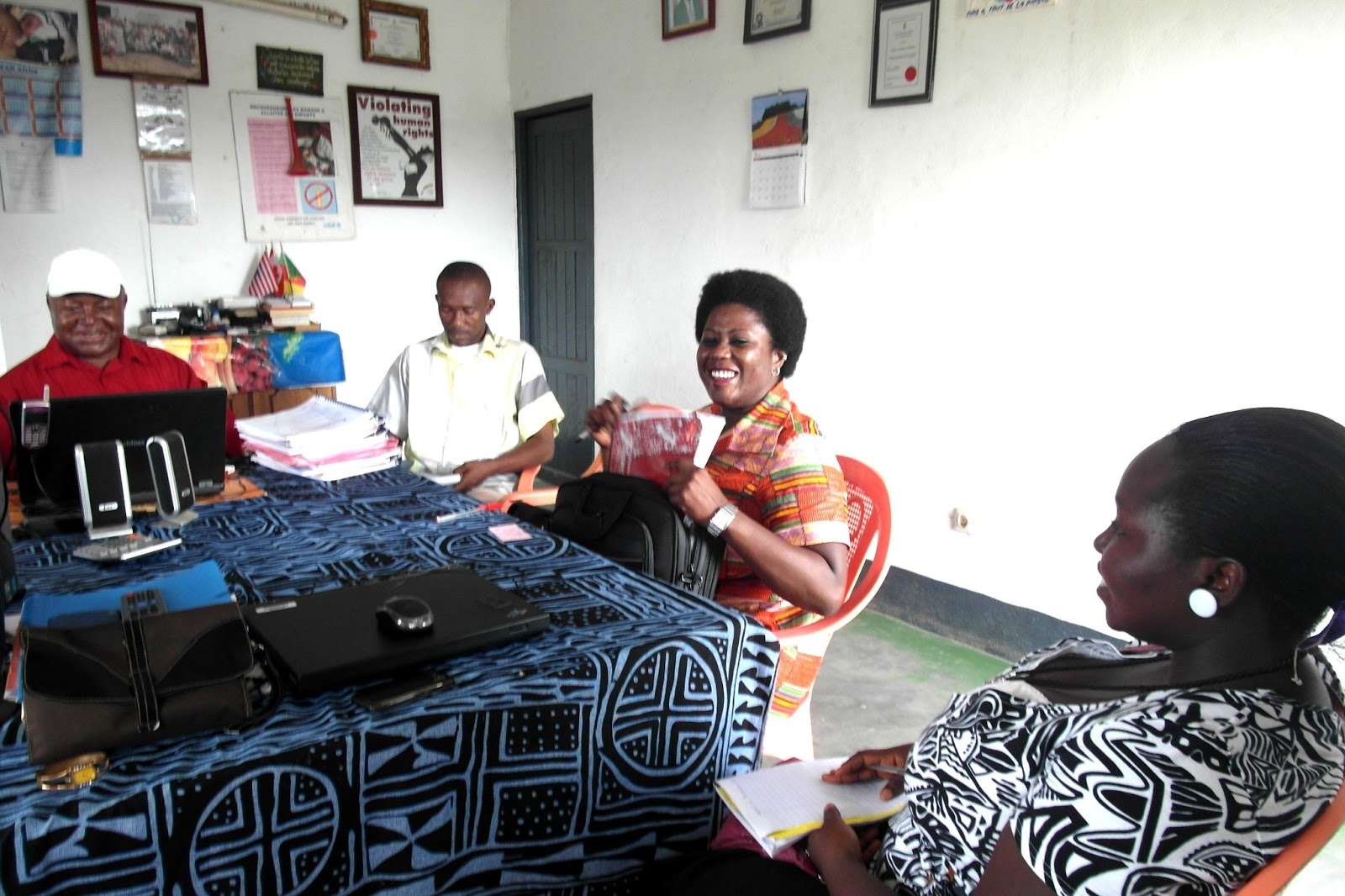 Before leaving Cameroon Link office in Bonaberi-Douala, Mrs. Kayem collected the list of validated CBOs in Bonassama and their contact numbers. This was to facilitate accessing them while on the field to cross-check the information collected at Cameroon Link office. In effect, her plan was to visit a few CBOs in each health area and some of the homes that had been visited by the CBOs.
From information received from the CBOs visited in Mambanda health area and Nkomba, the World Bank consultant was moved by some of the difficulties encountered by the CBOs during the LLIN usage assessment. From Bonassama, Mrs.Kayem had to undertake a similar exercise in Cite de Palmier. Bonassama and Cite de Palmier Health Districts were chosen for the evaluation exercise in the Littoral region of Cameroon.
Before leaving Cameroon Link office in Bonaberi-Douala, Mrs. Kayem collected the list of validated CBOs in Bonassama and their contact numbers. This was to facilitate accessing them while on the field to cross-check the information collected at Cameroon Link office. In effect, her plan was to visit a few CBOs in each health area and some of the homes that had been visited by the CBOs.
From information received from the CBOs visited in Mambanda health area and Nkomba, the World Bank consultant was moved by some of the difficulties encountered by the CBOs during the LLIN usage assessment. From Bonassama, Mrs.Kayem had to undertake a similar exercise in Cite de Palmier. Bonassama and Cite de Palmier Health Districts were chosen for the evaluation exercise in the Littoral region of Cameroon.

