Tuesday, October 1, 2019

Dr. Mambou Maka Albert Gets the Wheels of ABO Health District Turning

By James Achanyi Fontem, camlinknews
The wheels of ABO Health District started turning in Souza on the 30th September 2019 as Dr. Mambou Maka Albert presided over the first working session for having contact with heads of the five active public health and community sectors. In an opening address, Dr. Mambou presented himself as a cordial and open, but very strict person ready to work with all staff in his jurisdiction within the context of good governance and straight-forwardness. He emphasized that he is against people who gossip about others. After presenting his biography, participants at the meeting listened to guide lines on how the health district which has remained stagnant since its creation could move forward on a more positive path with the contribution of all heads of the health sector and communities put together in the interest of the entire population of ABO district. In frank talk, he said the health sector challenges will be solved with the contribution of all and not him alone or particular individuals. Before drawing the road map of the health district, he gave all the heads of the health areas and community representatives or delegates to present themselves with brief highlights of their respective activities. This included how they were elected within the different health communities He learnt about the distances linking them to the health district office at Souza and the difficulties encountered by them so far. He investigated on the activities of the health area community committees (COSA) before announcing the circular letter from the hierarchy requesting that health dialogue committees should be revamped in the month of October 2019 which end the current mandate. ABO district has six health areas, but only five have health centres catering for the well being of the populations. The activities in the Nono health area are almost non-existent due to the nature of topography. During the meeting, Dr. Mamboulearnt that the population of Non health area are very mobile and most of its traditional leaders live in Douala instead of in the health are because of flood during the rainy season. Most of the territory is off shore with many small islands. According to information gathered during the meeting, only infant immunization campaigns have been effective in Nono health area but Impregnated mosquito net distribution campaigns failed in Nono due to inaccessibility to the population that was targeted as beneficiariies.
In almost all health areas of ABO District, community health committees (COSA) exist, but are non-functional because meetings do not hold regularly. It is hoped that the diagnosis made by Dr Mambou will pave a way forward for constructing a viable road map to ameliorate and re-activate activities with better communication between the public health sector , the community health committees and the beneficiary populations of ABO Health District. In a concluding remark, Dr. Mambou expressed his thanks and gratitude by the way he was welcome during the recent handing over ceremony at Grand Souza Health Centre. He appreciated the heavy turn out during the ceremony by all stake holders in his area of jurisdiction.

Tuesday, September 24, 2019

Dr. MAMBOU Takes Over from Dr. Georges Jacques Otti in ABO Health District

By James Achanyi Fobtem, camlinknews
The Divisional Officer for ABO Sub Division presided over the handing over ceremony in ABO Health District between in-coming Chief of District, Dr. MAMBOU and out-gone Chief of District, Dr. Georges Jacques Otti. The ceremony took place at the CSI Grand Souza, where the office of the Chief of Health District is located in the presence of public administrative and traditional authorities of the jurisdiction. In the welcome address by Dr. Otti, he narrated the history of challenges and changes that took place in the health district during his period of administration while highlighting the difficulties encountered within the context of the tasks that were attributed to him in Bonalea su division. The difficulties include the lack of permanent infra-structure for housing the health district, bad roads and lack of staff. ABO Health District covers some 800 .000 sq kilometers surrounded by rivers with difficult road infra-structure linking the health areas of Bessoungkang, Mangamba, Miang, Mbonjo, Souza and Nono which is off shore. Dr. Otti said, he managed the health district with the experience gathered during his service in an equivalent situations in the Far North of Cameroon. He thanked the public administration and health area chiefs with local authorities who assisted him during the delivery of services in ABO adding that the staff on site is very dynamic, hard working and collaborative. Dr. Otti will now focus his attention on the management of immunization activities of children and adults as the provincial chief in charge of vaccination campaigns at the regional delegation of public health for the Littoral. He ended his address by inviting the local authorities and staff to render the same support to Dr. Mambou who took over from him as the new District health officer for ABO Sub Division.. Dr. Mambou also thanked him for facilitating the organization of the handing over ceremony at Grand Souza. Looking at the profile of Dr. Mambou who served in various capacities at the Ministry of public health, Ndom and New Bell Douala before his appointment in ABO Health District, it was visibile that he is also an experienced medical officer who has gone through very difficult jurisidictions and ABO should not be a big problem, since he has gathered a lot of experiences working in areas with similar characteristics like the one he finds himself today. He extended his gratitude to the Divisional Officer for accepting to personally preside over the handing over ceremony at Grand Souza. He promised to be attentive to the staff and the sick in his new area of jurisdiction, so that problems can be handled judiciously for the progress and interest of the entire district and its local populations. Mrs. Sylvie Azoh, a state nurse, who spoke on behalf of the staff described Dr. Otti as a dynamic boss who successfully motivated staff through peace, unity and harmonious strategies during his term of administration in ABO Health District. She observed that the staff in the health district signed a contract to engage in activities of financing through performance. PBF, but unfortunately have received no compensation from the hierarchy since activities started in the health district. This situation has reduced the enthusiasm of a good number of health agents involved in the perforrmance activities, while others resigned. She invited the new boss to look into the problems of infra-structure and staff amelioration in the health district in order to take activities one step ahead from where they are today. More staff needs to be recruited and permanent structures need to be constructed for improvement of service delivery possibilities in the health district of ABO. The health district does not have an UPEC for dispensation of ARV for example. Patients either travel to Douala or neighbouring Mbanga Health District for treatment.

Wednesday, September 18, 2019

Transformation of health communication in Bonassamaand Manjo

By James Achanyi Fontem, camlinknews
The Health District Chief of Manjo, MrsNzemeNzoga, presidedovr a one-day workshop on the transformation of communication in the Health District of Bonassama on Monday, 16th September, 2019. The workshop aimed at exchange views on the best strategies to ameliorate circulation of information within healthc areas of Bonassama in order to improve on service delivery to respective target populations. Yhe workshop was facilitated by Mr. MboloBekouti and Adongcho Priscilla. Mr. MboloBekouti presented highlights on the necessity to transform communication strategies in the pilot health districts of Bonassama and Manjo through the stragy of Communication for Development which has replaced the old strategy of community for behavior change. Mrs. Adongcho emphasized on the use of both official langauges in usd for outreach adthe health districts adding that it would be important for staff to master the languages used in the health areas for proper exchanges with the different populations. Pidgin English and local national languages were encouraged for exchanges in health communication on media out-lets like community radio stations for better understanding of government policies and planned activities. Participants drawn from the public health services, the civil society organization (CSO) and community based organisations (CBO0 were give the opportunities to present highlights on some problems faced by local populations while suggesting the way forward for better service delivery. In the recommendations, it was suggested that the media should be used for out-reach advovacy, information, education and communication purposes, while the municipal councils, business institutions and elite should be contacted to support the health projects in the health districts. Before closing the workshop, another appointment was taken for the 16th October 2019 when participants will work in thematic groups to design feasible projects for realization in different health areas and sectors ofBanassama and Manjo. Another meeting will be held on the 1st December 2019 to discuss on advovacy strategies to be adopted in the health districts for facilitating the execution of various health activities within the guidelines put in place by the ministry of public health.

L’ATELIER SUR LATRANSFORMATION DE LA COMMUNICATION DANS LES DTSTRICTS DE BONASSAMA ET MANJO

Par MBOLO BEKOUTI Alphonse Cyrille
Le 16 Septembre 2019 s’est tenu l’atelier sur la transformation de la communication dans les Arrondissements de Bonassama et Manjo. Etaient présent (voir liste de présence en annexe). Cet atelier s’est déroulé en plusieurs phases. L’atelier a ainsi débuté à 10h 52 minutes par l’enregistrement des participants, ensuite l’allocution du chef de District de santé de Manjo, l’introduction des participants, la désignation du modérateur, du time keeper et des rapporteurs et enfin un consensus a été établi sur les normes et modalités pratiques. Après la présentation de l’objectif général de l’atelier, à savoir la génération d’idées par les participants pour une meilleure communication permettant de réduirede 90% le taux de morbidité/mortalité du à une communication sur la santé limitée dans ces 02 Arrondissements d’ici 2025, les intervenants ont présenté le projet visant la transformation de la communication, car d’après eux bien qu’il existe des maladies inévitables telles que des maladies génétiques par exemple, l’on constate toutefois que les maladies qui sévissent le plus au Cameroun en général et dans les Arrondissements de Bonassama et Manjo à l’instar du paludisme, sont des maladies évitables et où une meilleure communication peut jouer un rôle décisif afin qu’à défaut de les éradiquer, au moins de réduire de manière considérable les taux de morbidité et de mortalité de ces maladies évitables. En outre les principaux thèmes de l’atelier ont été developpé à savoir : la communication pour le développement (C4D) ; la promotion du bilinguisme ; la participation de tous les acteurs aux réunions de coordination des Districts de Santé pilotes ; le plaidoyer/renforcement de capacités ; le thème sur les mass media ; les recommandations et enfin un modèle de plan d’action. S’agissant de l’intervention sur la communication pour le développement (C4D), des idées ont été proposées et discutées par les participants, notamment : identifier les ménages réticents aux activités de santé afin d’établir des stratégies pour les intégrer ; identifier les personnes défavorisées du système de santé afin de les recruter (Communauté toupouri, déplacés de la crise anglophone, orphelins, tenanciers de couloirs, etc…) ; lecture de communiqués sur la santé chaque semaine dans les lieux de culte ; encadrer les communications de rue sur la santé ; organiser des ateliers et séminaires sur la lutte pour le bon médicament ; organiser des évènements pour la lutte contre le paludisme ; etc…Afin d’atteindre ces différent objectifs, il a été suggéré d’adjoindre les chefs de quartier aux réunions de coordination des Aires de Santé, et aussi de prendre attache avec le 3e Adjoint au Maire de la commune de Douala Ive pour bénéficier de l’appui de la Mairie qui est le principal bénéficiaire de ce projet. Il a également été proposé au cours de cet échange, de mieux encadrer l’activité des tradipraticiens, et aussi d’élargir la réflexion à l’hygiène et assainissement. Enfin il a été arrêté que des groupes de travail seront mis sur pied au cours du prochain atelier en vue d’arrêter le plan d’action définitif du projet. A suivi l’intervention sur la promotion du bilinguisme, au cours de laquelle les participants ont proposé par exemple la saisie des correspondances dans les Districts de Santé de Bonassama et Manjo en anglais et en français ; la traduction systématique des allocutions pendant les réunions, ou encore la pratique du français et de l’anglais dans les formations sanitaires, les Districts de Santé et la communauté de ces District de Santé. L’intervention relative à la participation de tous les acteurs aux réunions de coordination des Districts pilotes de Bonassamaet Manjoa génerédes idées telles que : la présentation d’un thème par une formation sanitaire tirée au sort lors des réunions de coordination, afin de rendre ces évènements plus participatifs, ou encore une intervention de la communauté sur les activités communautaires. S’agissant du plaidoyer/renforcement de capacités les participants ont proposé de saisir l’opportunité de la célébration de journées mondiales pour organiser des évènements autour de la santé ; d’attirer l’attention des décideurs politiques, privés et communautaires sur l’urgence d’une meilleure communication sur la santé ; etc… Relativement aux mass medias, les participants pensent que l’amélioration de la santé passe également par une communication de masse à travers la télévision, la radio, internet, le bouche à oreille, etc…diffusée en français, en anglais et dans les langues locales. A l’issu de cet atelier les recommandations suivantes ont été adoptées : - Etablir une stratégie de communication par programme et acteur : programme paludisme, programme PEV, programme PTME, programme Gestion et Approvisionnement de Stocks, programme santé de la reproduction, etc… - Etablir un plan d’action pour l’implémentation des activités ; - Chaque participant doit élaborer un plan d’action en suivant le format projeté au cours de la présentation. Ces différents plans d’actions feront l’objet d’examen et d’adoption au cours de l’Atelier de mi-octobre 2019.
Enfin, le chronogramme suivant a été adopté : I- CHRONOGRAMME N° ACTIVITE OBJET DATE 1 Atelier sur la transformation de la communication dans les Arrondissements de Doula IV et Manjo Présentation du projet/Prise de contact avec certains Partenaires Techniques et Financiers 16/09/2019 2 Atelier sur le plan d’action en vue de la transformation de la communication dans les Arrondissements de Doula IV et Manjo Elaboration et adoption du plan d’actionen vue de la transformation de la communication dans les Arrondissements de Doula IV et Manjo 17/10/2019 3 Atelier sur les ressources/besoins en vue de la transformation de la communication dans les Arrondissements de Doula IV et Manjo Evaluation des ressources/besoins en vue de la transformationde la communication dans les Arrondissements de Doula IV et Manjo 17/11/2019 4 Séminaire sur la lutte pour le bon médicament Sensibiliser/former/récycler toutes les parties prenantes sur la dangerosité du médicament de la rue, les avantages économiques et sur la santé du bon médicament 01/12/2019 L’ordre du jour étant épuisé, le Chef du District de Santé de Manjo a levé la séance à 14h 58 minutes.

BLACK WOMEN ROUND TABLE (BWR) USA EXTEND SOLIDARITY HAND TO CAMEROON QUEEN MOTHERS AND PRINCESSES

By James Achanyi Fontem, camlinknews
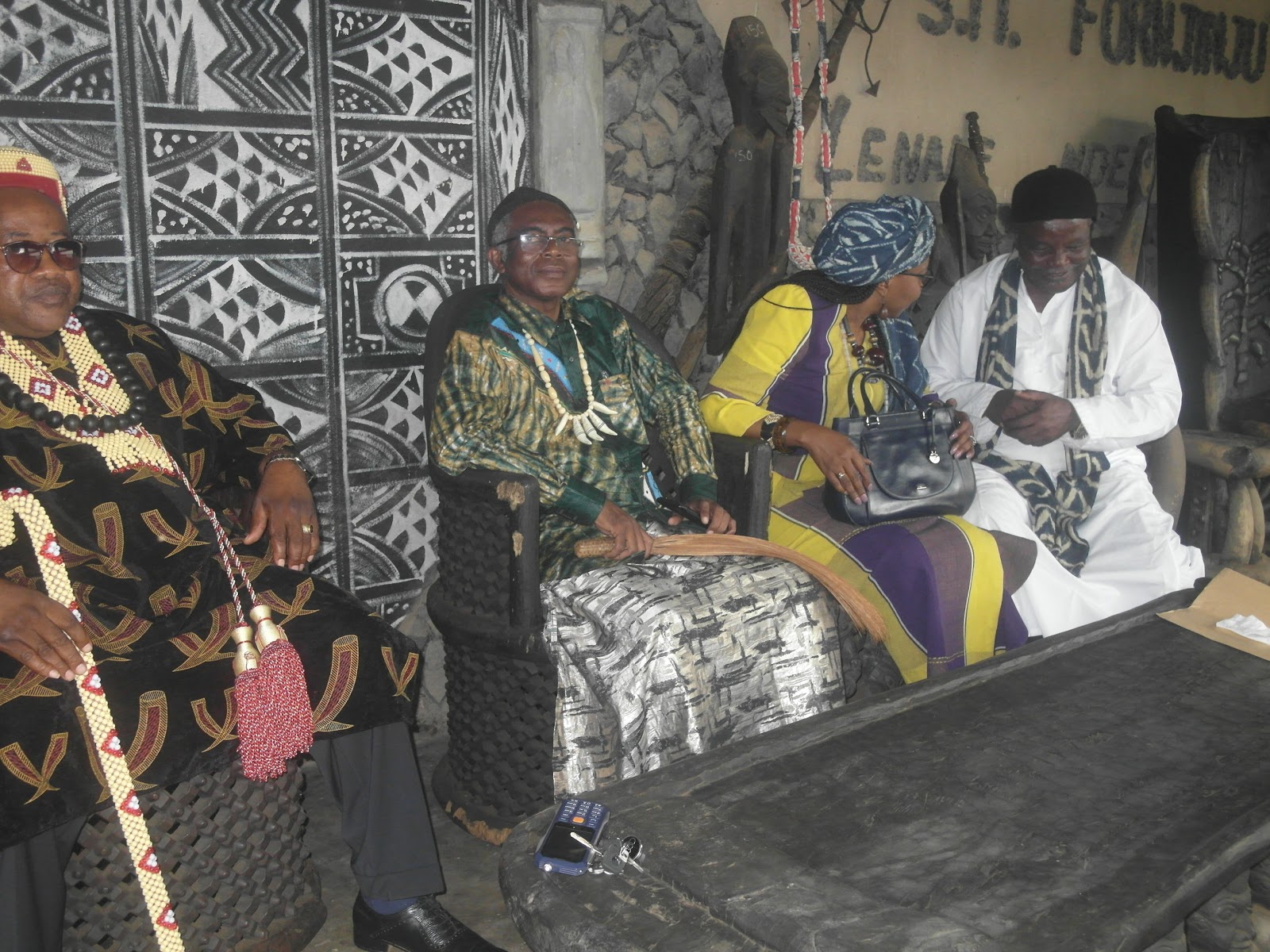
WOCOTOMADI Cameroon extends sincere thanks and express their gratitutitude to the members of BLACK WOMEN ROUND TABLE (BWR) USAwhoo were at the origin of donations for queen mothers, queens and princesses in Cameroon for initiating the multi-purpose community development project at LenaleNdem Palace in Melong of the littoral region. The BWR USA donors are the national president based in Washington DC, Melanie L. CAMPBELL, Salandra in Benton, the regional president 0f BWR, Rev. Pastor Deanna Smith,, Dr. Eugenia AGARD, Ambassador of wocotomadi and member of BWR. They allopen-heartedly extended their hands to assist queen mothers, queens and princesses in Cameroon during the official bisit of the community development project for empowering women and the girl-children of Cameroon. HRM Ndoumbe Emmanuel of Bonendale Community in Douala-Bonaberi, lauded the initiative of constructing and equipping the Women’s Multi-functional Centre of WOCOTOMADI at LenaleNdem Palace in Melong, Moungo Division and made a call for the action to be amplified at the level of the Monarch as an example of social-economic projects to be copied and realized in other regions for alleviation of poverty and promotion of gender equity amongst Cameroonians. The visit and working session took place on the 18th August 2019 under the patronage of the Divisional Officer for Melong in the presence of Traditional leaders from the palaces in the Centre, Littoral, West, North West and South West regions, This multi-functional Centre for the training of women and daughters of Fondoms and traditional communities has a 1.000 seat capacity hall, a library, cookery room, a secretariat and toilets. The space in front of the centre for out-doors ceremonies and festivities has environmental protection entities like flowers and trees. Though yet to be completed, the works realized have been estimated at over CFA 20.000.000. It would be recalled thatfrom the 28th to 30th July 2019, traditional leaders of Cameroon and WOCOYOMADI Cameroon NGO organised activities within the frame work of celebrationgthe first edition of the International Day of Kings and Traditional Leaders of Africa at Douala-Bonendale Kingdom under the chairmanship of the national president, HRM Ndoumbe Emmanuel.
It is during the celebration that mothers and daughters of Cameroon Kingdoms and traditional communities decided to adhere to the socio-cultural and traditional programme of Cameroon, which will permit them to develop skills for autonomy and less dependence on men within traditional communities of Cameroon. Within the programme of gender empowerment, the mothers and daughtersin traditional communities will have a day each year for organizing educative talks and exhibiting their know-how in various trades as a means of reducing poverty and fighting against unemployment. The day will be celebrated under a chosen theme each year with the support of WOCOTOMADI national and international networks and conferences will be organized and fundsraised to support on-going initiatives and joint projects like the one visited at LenaleNdem Palace in Melong. Conferences were organized this year with the support of BWR USA and Queen mothers from traditional palaces in Cameroon. The participants were guided on the strategies of mounting projects and realizing them in their various communities. The projects aim at projecting the vision of WOCOTOMADI, which is coming together to make a difference within world communities. The creation and construction of the multi-functional socio-economic and cultural centre at the LenaleNdem Palace in Melong falls within this vision of WOCOTOMADI for the promotion of gender equity within communities around the world. HRM TatabongFonjinju offered this space as an example that should be copied all over the world as a founding member of WOCOTOMADI Cameroon. The ceremony presided over by the Divisional officer inMelong,Moungo Division of Littoral region was attended by women from various traditional kingdoms, traditional communities, kings, queen-mothers, princesses and members of WOCOTOMADI Cameroon. The representative of the national queen mothers network, Mrs. Célestine KETCHA COURTES, and the divisional delegate for women’s empowerment and the family addressed the participants during the occasion at the LenaleNdem Palace in Melong. The Kings, Traditional leaders and queen-mothers present pledged to put the community hall into good use and prove their worth and capacities in the development of their various communities. At the end of the ceremony, queen-mothers, princesses, mothers and daughters present held a working session with the divisioanl delegate to prepare an action plan for animation of the space donated to them at LenaleNdem Palace. The participants visited the zones created for hair dressing, seam stressing, computer ITC training and organisation of educative group talks,secretariats hip and library for documentation their realized activities. In the address by HRM FonjinjuTatabong, he thanked all for accepting to his invitation to attend the official visit of the multi-purpose women’s empowerment centre constructed in his palace. He said, women in general and queen mothers in particular play a very important role in the functioning and development of palaces and traditional communities in Cameroon. This explains why he was motivated to initiate the project to empower them for better out-comes within the frame work of the policy of the World Coming Together To Make a Diffirence (WOCOTOMADI). This was an honour and humbling opportunity for him to ddresstraditional leaders, queen mothers and members of WOCOTOMADI on the occasion of the national celebration in Bonendale-Douala..He thanked all very much for giving him the wonderful opportunity.
He added that when leaders meet, it is opportunity for them to take stock of their successes and plan for the way forward to enhance peace and unity in the different communities by living together in Cameroon and the world as a whole. In his words, “we should be able to Spotlight new initiatives through exhibitions and arts programs within our communities and celebrate with a roof garden cocktail”. Many participants at the occasion saw LenaleNdem Palace which started in a Forest with many Trees as a miracle of development. He noted that UNESCO Cameroon officials have visited the palace in the past and caught up with artists and university professors of Arts and culture. He invited all to celebrate WOCOTOMADI with Arts and culture connected with our Communities, putting men and women together for self-development, peace and unity. This is because each community is named after specific works and activities relating to the Hidden Forests or characteristics in Cameroon. HRM Fonjinju pleads that 100% of funds raised by WOCOTOMADI during meeting sessions should be directed towards development goals, national Arts and Cultural heritage. It is during arts and cultural festivals that the vast majority of exhibitions and events bring women and men together, freely and open gates to the entire public to join for development without boundaries. Cameroon has more than 250 ethnic communities with different languages and harbour more than 5000 Artists and Fine Arts for everyone which are lodged in LenaleNdem UNESCO Museum in Melong. By meeting regularly, WOCOTOMADI members agree to help support the development of each other, arts and culture which remains the base of all identities. According to him, we shall remain ever inspired by our late great grandmothers’ grinding stones for grinding maize, groundnuts and other grains.He emphasized, he was Inspired by the late great grandmothers’ grinding stones for grinding maize, ground nuts, corn and other grains,and forged all members of WOCOTOMADI to preserve the heritage left behind in royal kingdoms all over the world. HRM Fonjinju strongly believes that ARTS & CULTURE engagement Programs will remain a cross collaborative activity of a variety of organizations within different communities, all dedicated to building a better community through know-how that protects and is also used for solving problems and empowering women in societies around the world. With these simple words, he wished all persons present at the event a delightful and rich meeting session in LenaleNdemMelong. See videoes: https://youtu.be/y991CX4mlhg https://youtu.be/EjTr1brdjgM https://youtu.be/btt8oRhs-gc https://youtu.be/zbd1IUuv5Ok https://youtu.be/ckHelQr5kzM https://youtu.be/TrGf2I9ktzo https://youtu.be/ScahqIDU6Xo https://youtu.be/Uu_3X1VSYTE https://youtu.be/ESOnE2QgaVE https://youtu.be/wqsz7mjPrI8 https://youtu.be/leWWiNHJl80

Tuesday, August 27, 2019

Visit of the multi-functional Centre of WOCOTOMADI Cameroon in Lenale Ndem Palace in Melong

By James Achanyi Fontem, camlinknews
HRM Ndoumbe Emmanuel of Bonendale Community in Douala-Bonaberi, Cameroon has lauded the initiative of constructing and equipping the Women’s Multi-functional Centre of WOCOTOMADI at Lenale Ndem Palace in Melong, Moungo Division. He has made a call for the action to be amplified at the level of the Monarch as an example ot social-economic projects to be realized to alleviate poverty and promote gender equity amongst Cameroonians. The visit and working session took place on the 18th August 2019 under the patronage of the Divisional Officer for Melong in the presence of Traditional leaders from the palaces in the Centre, Littoral, West, North West and South West regions, This multi-functional Centre for the training of women and daughters of Fondoms and traditional communities has a .000 seat capacity hall, a library, cookery room, a secretariat and toilets. The space in front of the centre for out-doors open ceremonies and festivities. Though yet to be completed, the works realized have been estimated at over CFA 20.000.000. T would be recalled that from the 28th to 30th July 2019, traditional leaders of Cameroon and WOCOYOMADI Cameroon NGO organised activities within the frame work of celebrationgthe first edition of the International Day of Kings and Traditional Leaders of Africa at Douala-Bonendale Kingdom under the chairmanship of the national president, HRM Ndoumbe Emmanuel. It is during the celebration that mothers and daughters of Cameroon Kingdoms and traditional communities decided to adhere to the socio-cultural and traditional programme of Cameroon, which will permit them to develop skills for autonomy and less dependence on men within traditional communities of Cameroon.
Within the programme of gender empowerment, the mothers and daugthers of traditional communities will has a day each year for organizing educative talks and exhibiting their know-how in various trades as a means of reducing poverty and fighting against unemployment. The day will be celebrated under a chosen theme each with the support of WOCOTOMADI national and international networks and conferences will be organized and fund raising to support on-going initiative and joint projects like the one visited at Lenale Ndem Palace in Melong. Conferences were organized this year with the support of Queen mothers from traditional palaces in Cameroon. The participants were guided on the strategies of mounting projects and realizing them in their various communities. The projects will aim at projecting the vision of wocotomadi, which is coming together to make a difference within world communities. The creation and construction of the multi-functional socio-economic and cultural centre at the Lenale Ndem Palace in Melong falls within this vision of WOCOTOMADI for the promotion of gender equity within communities.around the world. HRM Tatabong Fonjinju offered this space as an example that should be copied oall over the world as a founding member of WOCOTOMADI Cameroon. The ceremony presided over by the Divisional officer of Melong, Moungo Division of Littoral region was attended by women from various traditional kingdoms, traditional communities, kings, queen-mothers and members of WOCOTOMADI Cameroon. The representative of the national queen mother, Mrs. Célestine KETCHA COURTES, and the divisional delegate for women’s empowerment and the family addressed the participants during the occasion at the Lenale Ndem Palace in Melong. The Kings, Traditional leaders and queen-mothers present pledged to put the community hall into good use and prove their worth and capacities in the development of their various communities. At the end of the ceremony, queen-mothers, princesses, mothers and daughters present held a working session with the divisioanl delegate to prepare an action to animate the space donated to them at Lenale Ndem Palace. The participants visited the zones created for hair dressing, seam stressing, computer ITC training organisation of educative group talks and the secretariat and library for documentation their activities.
In the address by HRM Fonjinju Tatabong, he thanked all for accepting to his invitation to attend the official visit of the multi-purpose women’s empowerment centre constructed in his palace. He said, women in general and queen mothers in particular play a very important role in the functioning and development of palaces and traditional communities in Cameroon. This explains why he was motivated to initiate the project to empower them for better out-comes within the frame work of the policy of the World Coming Together To Make a Diffirence (WOCOTOMADI). This is an honour and humbling opportunity for me to ddress you on the occasion of our national meeting in Bonendale-Douala. . I thank you all so very much for giving me this wonderful opportunity. He added that when leaders meet, it is opportunity for them to take stock of their successes and plan for the way forward to enhance peace and unity in the different communities by living together in Cameroon and the world as a whole. In his words, we should be able to Spotlight new inititiayves through exhibitions and arts programs within our communities and celebrate with a roof garden cocktail.
Many participants at the occasion saw Lenale Ndem Palace which started in a Forest with many Trees as a miracle of development. He noted that UNESCO Cameroon officials have visited the palace in the past and caught up with artists and university professors of Arts and culture. He invited all to celebrate WOCOTOMADI with Arts and culture connecting with our Communities, putting men and women together for self-development, peace and unity. This is because each community is named after specific works and activities relating to the Hidden Forests or characters in Cameroon. I plead that 100% of funds raised by WOCOTOMADI during meeting sessions should be directed towards our national Arts and Cultural heritage. : It is during arts and cultural festivals that the vast majority of exhibitions and events bring women and men together, freely and open gates to the entire public to join for development without boundaries. Cameroon’s more than 250 ethnic communities with different languages harbor more than Over 5000 Artists and Fine Arts for everyone lodged in Lenale Ndem UNESCO Museum in Melong. By meeting regularly, WOCOTOMADI members agree to help support the development of each other, art and culture which remains the base of all identities. We shall remain ever inspired by our late great grandmothers’ grinding stones for grinding maize, groundnuts and other grains, he emphasized. Inspired by the late great grandmothers’ grinding stones for grinding maize, ground nuts, corn and other grains, he forged all members of WOCOTOMADI to preserve the heritage left behind in royal kingdoms all over the world. HRM Fonjinju strongly believes that ARTS & CULTURE engagement Programs will remain a cross collaborative activity of a variety of organizations within different communities, all dedicated to building a better community through know-how that protects and is also used for solving problems and empowering women in societyies around the world. With these simple words, He wished all persons present at the event a delightful and rich meeting session in lenale Ndem Melong.

Tuesday, August 6, 2019

African Union Commission Welcomes Swiss Mediation in Cameroon

By James Achanyi Fontem, camlinknews
The Chairman of the African Union Commission, H.E. Moussa Faki Mahamat, on Saturday, July 27, welcomed the announced mediation between the Southern Cameroons (Ambazonia) and la Republique du Cameroun. According to international public opinion leaders and observers, this stand by the African Union reflects decisions taken at the Foumban Conference in 1961 that put Southern Cameroons (West Cameroon) and La Republique du Cameroun (East Cameroon) under the banner of a Federated state (Federal Republic of Cameroon). It is in Foumban that the motto of the Federal Republic of Cameroon was chosen as "Peace, Work, Fatherland"" and the two stars put on the national flag to represent the two states ( East Cameroon and West Cameroon). No explanation has been given why one of the stars was removed from the national flag. It is the flag adopted in Foumban that is recognised by the United Nations Organisation, UNO. Many calls have been made for the government of la "Republique" to return to the federal constitution that gave equal opportunities for English and French speaking communities of Cameroon. H.E. Kofi Annan, Secretary General of the United Nations Organisation ( May His Soul Rest in Perfect Peace), visited Cameroon and Nigeria before his retirement to caution on the Cameroon and Nigeria governements to respect the boundaries established during the re-independence era. France gave independence to East Cameroon that became "La Republique du Cameroun, but the Bristih government did not gave independence to Southern Cameroon (West Cameroon, now known as Ambazonia Republic seeking for their liberation. The Southern Cameroons became West Cameroon in the constituted Federal Republic of Cameroon in Foumban and was assimilated by la Republique du Cameroun because the federal constitution adopted in plenary session was not translated into English Language for Dr. John Nug Fonche to endorse. President Ahmadou Ahidjo promised to convene another session in Yaounde for the adoption of the English version of the Federal constituiton and it never held until he passed intoi transition.The last article in the federal constitution adopted in Foumban said, no chanhes could be made without the two parties holding a session togther to make any changes. Another article stipulated that if the Preisent of the republic came from one state, the vice president had to be elected from the other. This explains why Dr. John Ngu Foncha became the first Vice Preisednt of the Federal Republic of Cameroon. Since he past into transition, there has never been a vice president in Cameroon. That is where the problem lies in the cureent conflict mediated by Swiss. Swiss invites all parties in the conflict in (North West and South West regions of Cameroon to engage in dialogue with the wish to reach a peaceful and political solution which puts the national interest of the country first, above all other considerations.With this, we can explain the importance of the the visit of the chairperson of the African union to Cameroon recently.We should not invent the tyre of the Federal Republic of Cameroon.